

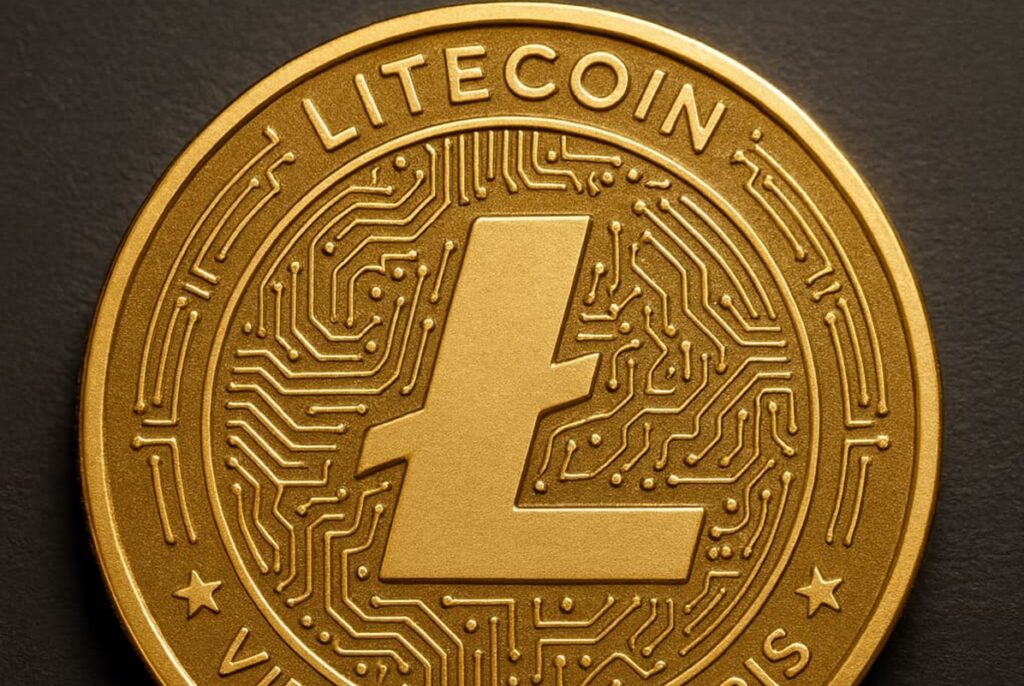
The crypto markets of 2025 have become a proving ground for projects that emphasize scalability, security, and community-driven narratives. As demand for blockchain adoption rises, three names drawing attention are: BullZilla, an early-stage meme token project currently conducting a token sale, Solana, a network known for high throughput, and Litecoin, an older cryptocurrency that continues to be used in payments and transfers.
When evaluating early-stage token sales alongside established networks and long-running cryptocurrencies, readers typically consider factors such as technology, liquidity, security, governance, and the additional risks associated with newer tokens. This article summarizes project-reported information about BullZilla’s token sale and provides general context on Solana and Litecoin.
BullZilla: An ERC-20 Meme Token Project
According to the project’s materials, BullZilla ($BZIL) is an ERC-20 token on Ethereum. The project reports that its token sale is in a multi-stage format and that the token price at the time of writing is $0.00005241. It also reports having raised over $370,000 and having more than 1,300 holders; these figures are not independently verified in this article.

The project states that its ERC-20 design is intended to support compatibility with Ethereum wallets and decentralized finance applications. Any referral, burn, or staking features described by the project should be assessed carefully, including smart-contract and liquidity risks.
BullZilla Token Summary
Project documentation describes a capped supply of 159,999,999,910 $BZIL tokens and states that a portion of the supply is allocated to early token-sale participants. The project also describes a pricing schedule that can change over time based on sale milestones. As with any token sale, published allocations and schedules may change, and participation can involve significant risk.

Access and Participation (Project Description)
The project states that participation is handled through its website and typically involves a Web3 wallet and a supported payment asset (such as ETH). Readers should review the project’s official documentation, terms, and smart-contract details, and consider independent due diligence before taking any action.
Solana: Scalability Reaches New Heights
Solana is widely known for its focus on speed and throughput. Figures commonly cited for the network include throughput of up to 65,000 transactions per second under certain conditions; real-world performance can vary depending on network load and other factors. Solana hosts decentralized applications, NFTs, and other on-chain products, and its low fees have been a key part of its user and developer appeal.
Recent reports from Messari have stated that Solana’s total value locked in decentralized finance has surpassed $5 billion. Separately, Solana has faced scrutiny in prior years due to network outages; supporters point to subsequent upgrades intended to improve stability. Institutional interest has also been cited in market commentary, though the degree and persistence of that interest can change quickly.
More broadly, Solana’s 2025 price moves and application activity reflect ongoing competition among smart-contract platforms, where adoption, security, and developer tooling remain central considerations.
Litecoin: Standing Firm in a Changing Market
Litecoin remains one of the longest-running cryptocurrencies and is often described as “the silver to Bitcoin’s gold.” While it is not typically positioned as a cutting-edge smart-contract platform, it has continued to be used for transfers and payments.
Litecoin operates with a block time of about 2.5 minutes and a capped supply of 84 million coins. Its relatively low fees and transaction confirmations have supported use cases such as cross-border transfers. According to CoinDesk, Litecoin continues to process millions of transactions monthly, indicating ongoing usage of the network.
In 2025, Litecoin’s market narrative has tended to emphasize longevity and continued network activity rather than rapid feature expansion.
Conclusion
In 2025, market attention continues to shift between established networks and newer token launches. Solana is frequently cited for throughput and application activity, while Litecoin is often discussed in terms of longevity and ongoing payment-related use. BullZilla, meanwhile, is being marketed as an early-stage meme token project with staking and other mechanisms described in its materials; readers should treat project-provided claims as unverified unless independently confirmed.
Comparisons between early-stage token sales and established cryptocurrencies can be misleading because they differ significantly in maturity, liquidity, risk profile, and available public disclosures.
For More Information:
Follow BZIL on X (Formerly Twitter)
Frequently Asked Questions
Why is BullZilla being discussed in 2025?
Because the project is conducting an early-stage token sale and describing features such as staking and token supply mechanics. These claims are based on project materials and are not independently verified here.
How does Solana maintain high throughput?
Solana uses a Proof-of-History approach alongside other consensus components intended to support parallel processing, which can increase transaction capacity relative to some other networks.
What gives Litecoin lasting appeal in the market?
Litecoin’s long operating history, capped supply, and continued use for transfers and payments are among the reasons it remains discussed by market participants.
What risks exist with early-stage token sales?
Early-stage token sales can involve heightened risks, including price volatility, liquidity constraints, smart-contract vulnerabilities, limited disclosures, and project execution risk. Independent research is essential before making any financial decision.
How is BullZilla positioned relative to other meme tokens?
The project positions itself as an ERC-20 meme token with staking and burn mechanisms. Whether those features are implemented as described, and how they affect token dynamics, depends on the underlying contracts and real-world adoption.
Glossary
APY: Annual Percentage Yield, a way of expressing potential staking rewards over a year; actual outcomes can vary and may not be realized.
ERC-20: Ethereum token standard used for creating fungible tokens.
Token sale: An early-stage offering of tokens that may occur before broader secondary-market trading.
Tokenomics: The economic design of a cryptocurrency’s supply and distribution.
Scalability: The ability of a blockchain to handle growing transaction volumes.
Liquidity: Ease of buying or selling an asset without affecting its price.
Proof-of-History: Solana’s approach for ordering transactions and improving throughput.
Vesting: The gradual release of tokens over time under a defined schedule.
Supply Cap: The maximum number of tokens or coins that can exist.
DeFi (Decentralized Finance): Financial applications built on blockchain without intermediaries.
This outlet is not affiliated with the project mentioned. This article is for informational purposes only and does not constitute financial or investment advice.

