TL;DR:
- Russia is preparing fees of up to 3% per transaction on dollarized stablecoins like USDT and USDC, classified as “unfriendly” assets by the state.
- Deputy Finance Minister Ivan Chebeskov announced the new measures at the St. Petersburg International Economic Forum.
- The bill “On Digital Currency and Digital Rights” passed its first reading in the State Duma with 327 votes in favor and 13 against.
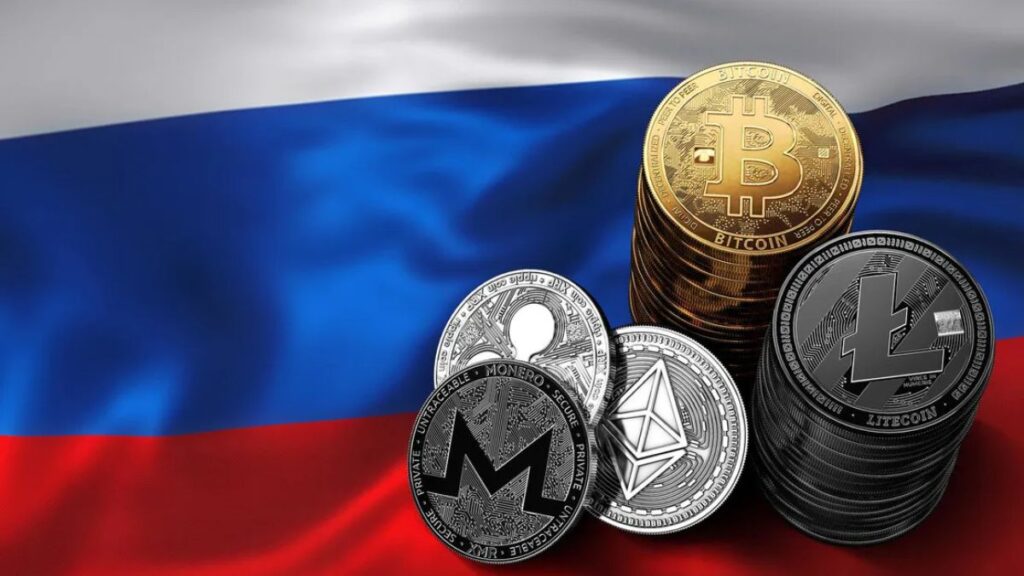
Russia is advancing toward a restrictive crypto regulation that makes no effort to conceal its geopolitical dimension. Deputy Finance Minister Ivan Chebeskov revealed at the St. Petersburg International Economic Forum (SPIEF 2026) that Moscow is preparing fees, trading limits and technical safeguards aimed specifically at crypto assets deemed “unfriendly”: USDT, USDC and BNB were named explicitly.
Russia’s Retaliation
Freedom Global analyst Vladimir Chernov estimates those fees at a range of 0.5% to 2% per transaction for assets generically classified as unfriendly, with a burden that could scale up to 3% for dollar-pegged stablecoins.
Russia’s Central Bank First Deputy Governor Vladimir Chistyukhin confirmed: From July 1, 2026, non-qualified retail investors can only trade $BTC, $ETH, and $USDT under the new Digital Currency and Digital Rights Law. Other assets are unavailable to ordinary… pic.twitter.com/NNOD32dEov
— KCEX (@KCEX_Official) June 9, 2026
The official justification is investor protection, but the targeted assets share one obvious characteristic: their issuers —Tether, Circle and Binance— are entities with Western ties that have frozen wallets associated with sanctioned Russian addresses. That track record is precisely the geopolitical grievance Russia seeks to price into its new regulatory architecture.

Chebeskov’s words to Izvestia were direct: “They could include both technical protection measures and various economic incentives, fees or recommendations that encourage citizens to hold other assets.” He is not merely describing a fee scheme; he is pointing a preferred direction for capital flows, away from dollar-pegged instruments and toward ruble-based alternatives or those aligned with the BRICS bloc.
The State Duma Moves Forward
The measures announced by Chebeskov do not yet carry the force of law. They are being negotiated ahead of the second reading of the formal bill “On Digital Currency and Digital Rights“, which cleared its first reading on April 21, 2026, with 327 votes in favor and 13 against.

That first reading established the skeleton of the regulatory framework: five license categories for crypto operators, broad supervisory authority for the Bank of Russia, an existing ban on domestic payments in cryptocurrencies, and an explicit exception enabling cross-border settlements in crypto assets — the mechanism Moscow has used to channel foreign trade while circumventing sanctions.
The chairman of the Duma’s Financial Markets Committee, Anatoly Aksakov, noted that this bill is one of his two legislative priorities. The goal is to complete the main framework by July 1, 2026, with compliance rules expected to be operational by July 1, 2027.
The term “unfriendly” carries significant legal weight in Russia: it corresponds directly to the official list of countries that imposed sanctions following the invasion of Ukraine in 2022, which includes the United States, European Union member states and the United Kingdom.