

Could Pi Network reach $7.45 by 2026? Price targets like this are speculative and depend on factors such as token liquidity, exchange availability, and broader market conditions. Pi Network has reported tens of millions of users and has outlined plans to support decentralised applications on mobile, though key parts of its ecosystem are still evolving.
Separately, Qubetics is promoting a multi-chain, non-custodial wallet that it says is designed for managing assets across multiple blockchains. The project also describes an ongoing token sale in its materials. This article summarises commonly discussed points about Pi Network’s outlook alongside Qubetics’ stated product features, without implying outcomes.
This article reviews a range of Pi-related price forecasts alongside Qubetics’ stated wallet positioning. Any discussion of future performance is inherently uncertain.
Pi Network Price Prediction 2026: Ambitious Yet Uncertain
Pi Network has been widely discussed for its mobile-first approach and its goal of supporting Web3 applications. However, exchange availability and broader token liquidity have been frequent points of debate, and access to external markets has been limited compared with more established assets.
Some third-party forecasts cited online place Pi’s 2026 price in a wide range, sometimes referenced between $1.86 and $7.45, with an average figure around $4.66. These figures are not guarantees and can change quickly depending on market conditions and how the project’s rollout develops.
Supporters point to mobile-first participation and a large community as strengths. Critics note that many users have faced restrictions on moving tokens outside the app environment. Without broader market validation and sustained liquidity, higher-end targets such as $7.45 remain speculative.
For observers of the Pi ecosystem, key variables to watch include whether exchange access broadens, whether decentralised applications see meaningful usage, and how the network’s rules on transferability evolve.
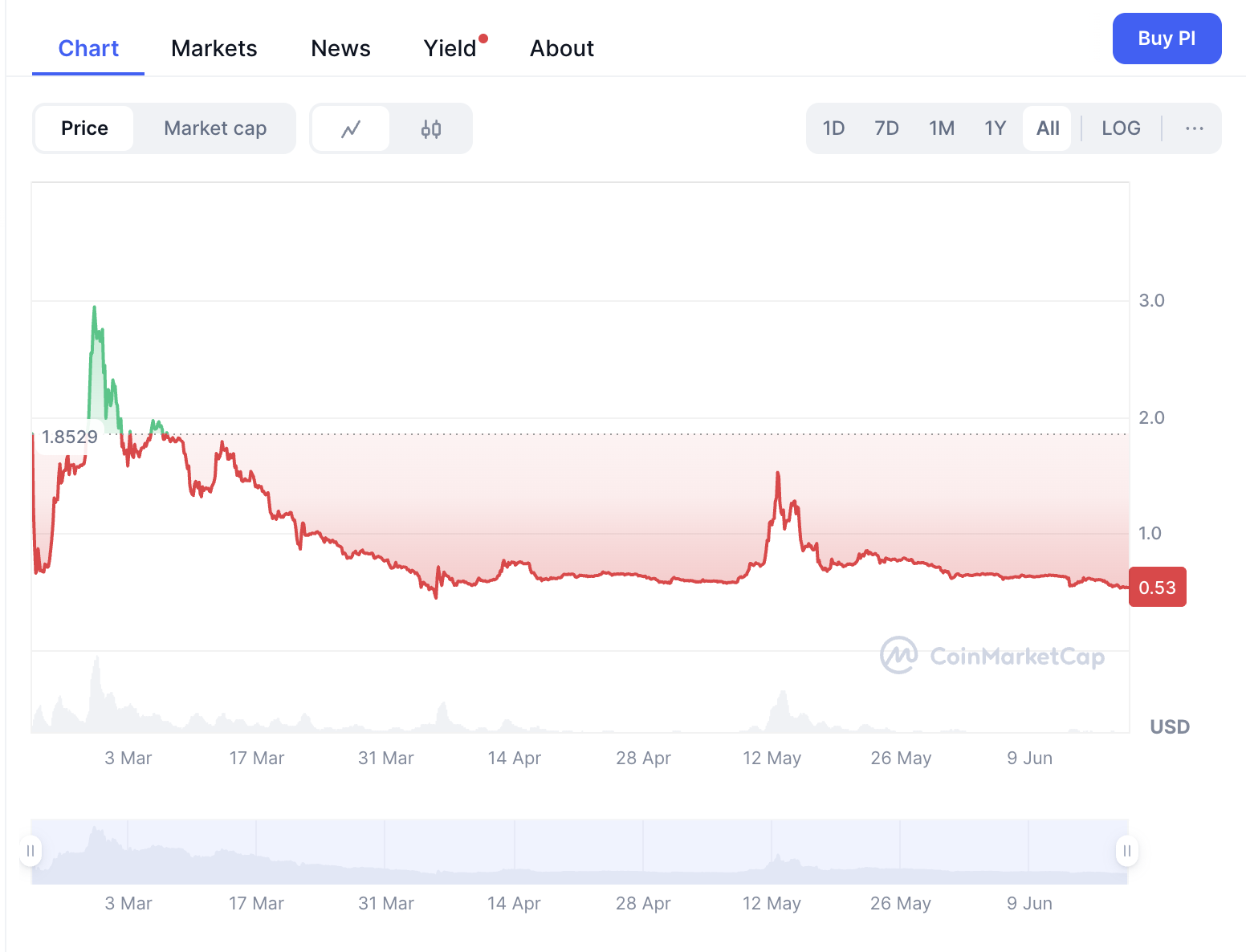
Pi Network’s Community Power and Roadblocks Ahead
Pi Network has stated it has more than 35 million users. Community size can be a meaningful indicator of interest, but it does not by itself determine token liquidity, long-term demand, or market value.
A major open question is tradability: listings, transfer rules, and the ability to move tokens through external venues remain central to how any price discovery would occur.
If Pi were to approach mid-range forecasts by 2026, it would likely require broader exchange support, measurable on-chain activity (where applicable), and sustained developer adoption. Even then, outcomes would remain uncertain given competition among Layer 1 and app-platform projects.
Qubetics Wallet Utility: Project Claims and Use Cases
Qubetics describes its product as a non-custodial, multi-chain wallet intended to support cross-chain activity. In project materials, it also references features such as asset transfers across networks, decentralised identity components, and smart contract tools.
In principle, multi-chain wallet tooling can be relevant for developers and users who interact with multiple networks. Whether Qubetics’ implementation delivers the functionality it describes would depend on technical execution, security practices, and real-world usage.
Any potential value impact from wallet utility or ecosystem development is not assured. As with other early-stage crypto projects, risks may include smart-contract issues, security vulnerabilities, changing token economics, and market volatility.

Qubetics token sale: figures as described by the project
Qubetics’ materials describe an ongoing token sale with staged pricing. The project has publicly referenced figures such as tokens sold, the number of holders, and total funds raised; these claims are not independently verified here and can change over time.
The project has also described changes to token supply and allocation percentages. Readers should treat token-sale and tokenomics statements as project-reported and review primary documentation before drawing conclusions.
Price targets, return projections, and “if X then Y” scenarios are inherently speculative and may not reflect market realities such as liquidity, circulating supply, lock-ups, and broader risk conditions.
Conclusion: Two different narratives, both with uncertainty
Pi-related 2026 price forecasts are wide-ranging and depend heavily on liquidity, listings, and ecosystem adoption. The project’s large community is often highlighted, but market access remains a critical variable.
Qubetics, meanwhile, is positioning its wallet as a multi-chain product and is also running a token sale, according to its own materials. As with any early-stage crypto project, both the technology and any associated tokens carry material risks and uncertain outcomes.
This article is for informational purposes only and does not constitute financial or investment advice.
This outlet is not affiliated with the projects mentioned.

For reference:
Project website: https://qubetics.com
Twitter: https://x.com/qubetics
Press releases or guest posts published by Crypto Economy have been submitted by companies or their representatives. Crypto Economy is not part of, and is not affiliated with, any of these agencies, projects or platforms. Crypto Economy does not provide investment advice; readers should do their own research before making any investment decisions.

