


Ozak AI says it has raised more than $1.55 million during its current token sale. The figure has drawn attention as some market participants discuss how early-stage projects might compare with larger networks such as Solana and Ethereum. Ozak AI describes itself as building AI-related tools for blockchain use cases.
The reported fundraising total reflects early interest, although independent verification may be limited at this stage. Project materials describe an architecture intended to support predictive analytics, market signals, and automated decision-making through artificial intelligence, with these features integrated into the broader ecosystem.
According to the project, the token sale is in “Phase 4,” with a listed price of $0.005 and more than 70.73 million tokens sold, raising over $1.55 million. The project also indicates that later phases may list different prices. Prices set during token sales may not reflect secondary-market pricing after tokens begin trading, and outcomes remain uncertain.
Some commentary has drawn parallels between Ozak AI and established altcoins, including on the basis of potential use cases. Any comparisons with major networks are inherently speculative given differences in maturity, liquidity, adoption, and risk.
The Token Sale Interest as a Market Signal
Ozak AI states it has exceeded $1.5 million in token-sale funding. The project says the capital is intended to support development of its decentralized AI tooling and platform integration. The team has also referenced the possibility of future exchange listings, though listings are not guaranteed and typically depend on third-party decisions.
Ozak AI positions itself as a utility-focused project rather than a meme-driven launch. The project says it plans to use raised funds for application development and infrastructure, although timelines and delivery depend on execution.
Any attempt to compete for attention alongside Solana and Ethereum would likely depend on liquidity, user activity, and ecosystem growth. Larger networks currently benefit from deeper markets and established developer communities, which may affect how newer projects are evaluated.
AI-Powered Infrastructure Sets Ozak AI Apart
Ozak AI describes using artificial intelligence for real-time data interpretation and decision-making in blockchain environments. This includes project-described predictive tools and automated data feeds across sectors, with the stated goal of delivering user-facing analytics features.
Ethereum is widely used for smart contracts, and Solana is often cited for throughput and comparatively low fees. Ozak AI’s materials emphasize analytical utility, referencing models such as neural networks and ARIMA, and describing validation through EigenLayer AVS. These are different design choices and do not imply comparable adoption or market position.
If the project gains users across retail or enterprise segments, it could occupy a niche. The team also references delivering outputs via decentralized infrastructure and execution on Arbitrum Orbit; as with other early-stage efforts, actual usage will depend on delivery, security, and market conditions.
Long-Term Value Claims and the Deflationary Model
Ozak AI’s tokenomics, as described by the project, includes a mechanism that would reduce supply over time by destroying a portion of tokens when users engage with the ecosystem. Supply changes can affect token economics, but they do not guarantee price appreciation. Comparisons with Ethereum or Solana supply models can be complex and may not translate directly into performance outcomes.
The project also references future staking and governance features. If implemented, these mechanisms could influence participation and token holding behavior, but they may also introduce additional risks and trade-offs.
Solana Approaches a Major Technical Level
Solana is again testing a price area in the $240–$245 range, with market commentary noting it as a potential support zone. Price levels can influence near-term trading behavior, but they are not predictive on their own.
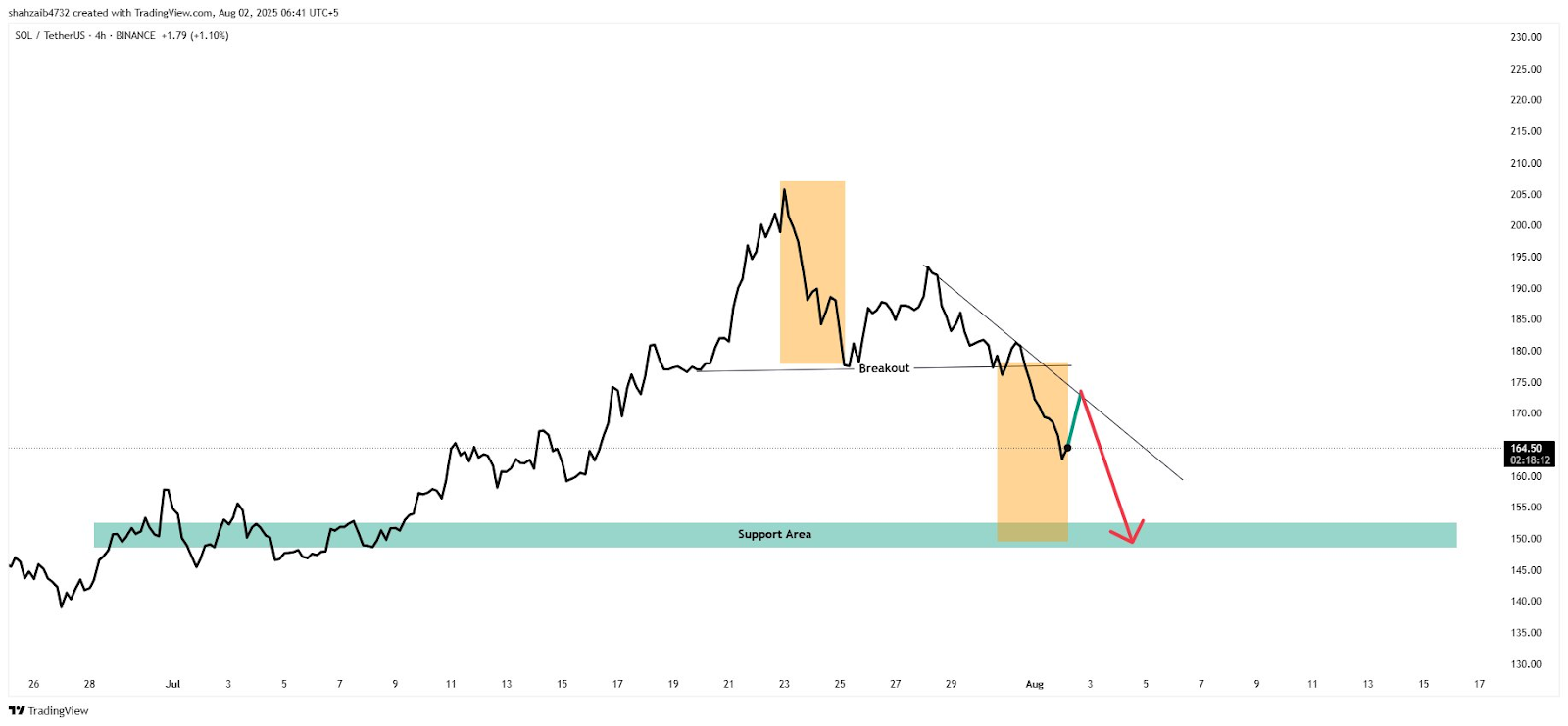
A bounce from this area could lead to a move toward higher resistance levels, while a breakdown could shift momentum lower. Traders often watch follow-through and volume around such zones, though outcomes remain uncertain.
Ethereum Trading at Short-Term Support
The 4-hour chart of Ethereum is testing a horizontal support level, with recent price action showing uncertainty around direction.
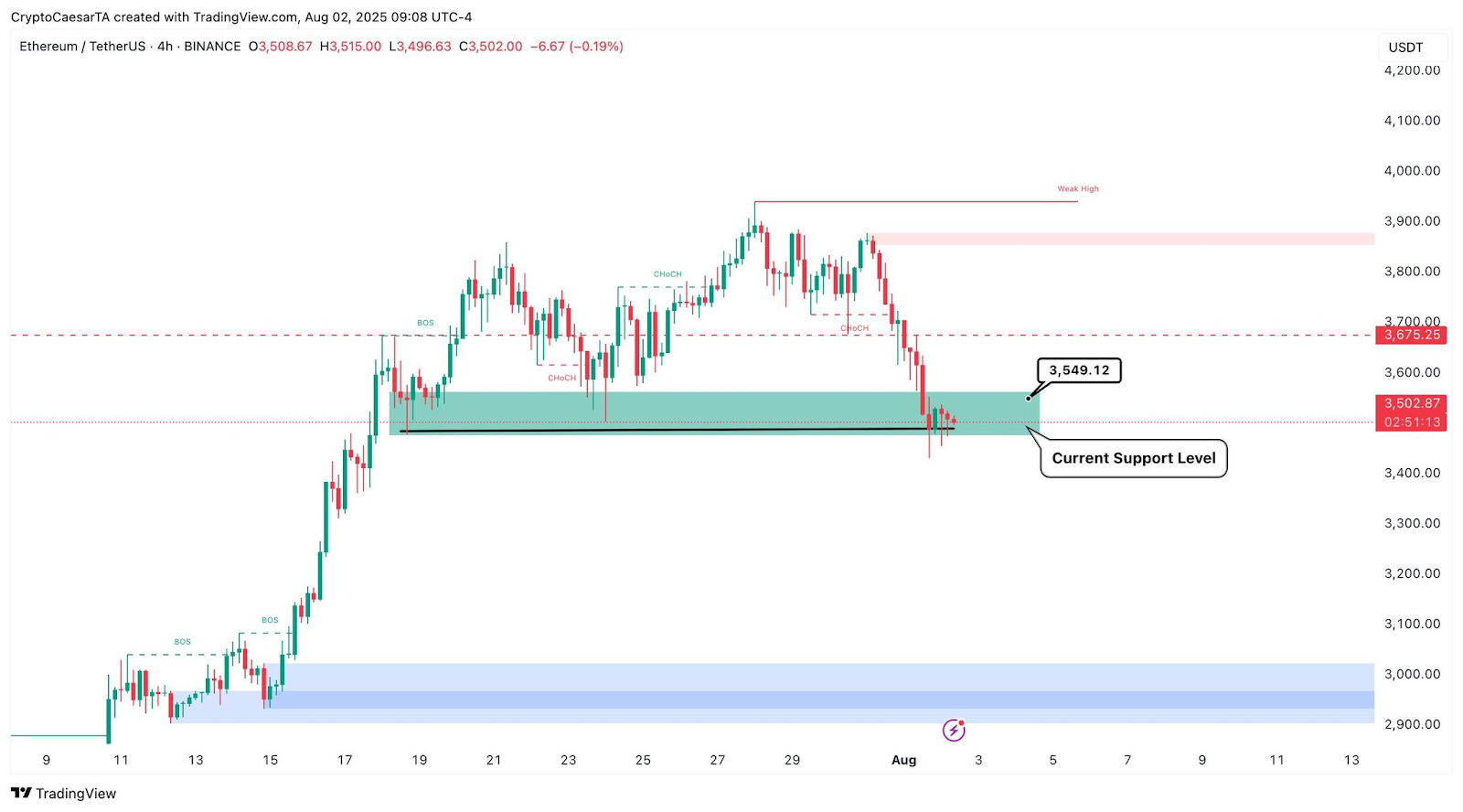
If this support level holds, Ethereum could move back toward recent swing highs; if it breaks, further declines are possible. Market sentiment and broader conditions often play a role in whether support zones hold.
Ozak AI and the broader market context
Ozak AI is an early-stage project and, by its own account, has raised more than $1.5 million through its token sale. The team is positioning the platform at the intersection of blockchain and AI, two areas that have attracted significant attention in the sector. As with other early-stage tokens, adoption, security, and delivery will be key factors in how the project is ultimately evaluated.
Greater visibility can follow from product updates, third-party coverage, or availability on additional trading venues, but none of these outcomes are assured. Execution and market conditions will likely remain central variables.
Project links (for reference):
Website: https://ozak.ai/
Twitter/X: https://x.com/OzakAGI
This article is for informational purposes only and does not constitute financial or investment advice. This outlet is not affiliated with the project mentioned.
Press releases or guest posts published by Crypto Economy have been submitted by companies or their representatives. Crypto Economy is not part of any of these agencies, projects or platforms. At Crypto Economy we do not give investment advice; if you decide to invest in any project mentioned, you should do your own research.

