
TL;DR
- A solo miner mined a full Bitcoin block and earned 3.133 BTC ($284,000) using only a few machines and ~270 TH/s.
- The probability of success for someone who operates solo via CKpool, is roughly once every 82 years.
- Although corporate mining dominates, Bitcoin allows small setups to achieve significant gains, keeping the network decentralized.
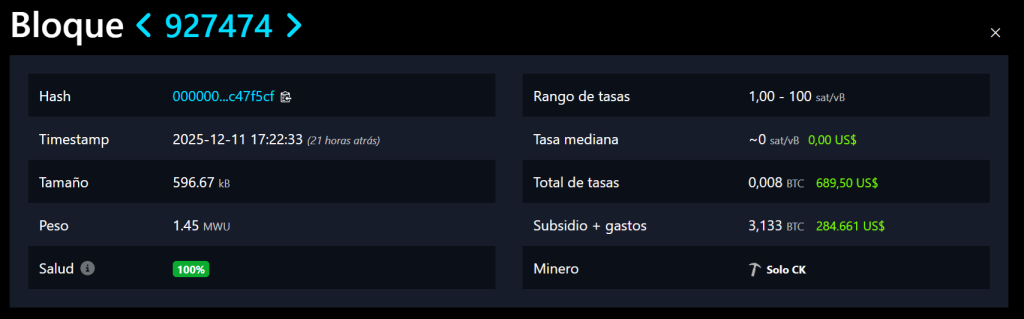
A solo miner achieved what most will never experience: mining a full Bitcoin block and claiming the entire reward of 3.133 BTC, equivalent to about $284,000.
This feat occurred this week using only a handful of machines with a hashpower of ~270 TH/s, just 0.00002% of the total network hashpower. Experts estimate the probability of this outcome at roughly once every 82 years.
The miner operated through CKpool’s solo-mining service, which means payment is only received upon independently solving a block. Unlike pools, where rewards are shared among hundreds or thousands of participants, this high-risk setup leaves miners with long stretches without income but guarantees 100% of the reward if a block is discovered.
Small Miners Winning Against All Odds
Bitcoin awards the entire block reward to the first one who solves the block’s cryptographic puzzle. This keeps the possibility open for small setups, even home rigs, to momentarily outperform industrial-scale operators controlling tens of exahashes. Last month, another one with only 6 TH/s also mined a block, valued at $265,000, confirming that these improbable outcomes can happen more than once in practice.
The event highlights that even though corporate mining dominates the network—with companies like Marathon and IREN operating fleets millions of times more powerful than the solo miner—theoretically, Bitcoin’s decentralization remains intact. The network allows even a small garage setup to earn substantial rewards, sustaining the motivation of hobbyist miners.

Bitcoin Demonstrates the Strength of Its Decentralization
Solo mining remains a viable option for those seeking a high-risk, high-reward “lottery,” offering a unique opportunity against corporate infrastructure. It also demonstrates Bitcoin protocol’s resilience and fairness, where success depends on both hashpower and pure luck.
For many independent miners, this improbable possibility is enough to continue operating solo, maintaining network diversity and the hope that a small node could someday outperform industrial giants