TL:DR:
- The platform Polymarket recorded a drop in the probability of approval for the law, descending from 62% to 48% in June 2026.
- More than 60 crypto industry leaders demand that open-source programmers do not receive the same regulatory treatment as exchange platforms.
- The United States Congress has a four-week deadline before the summer recess to submit the document for a vote.
The CEO of Galaxy Digital, Mike Novogratz, stated that the future of the CLARITY Act currently depends on the resolution of two or three critical points within the U.S. Congress. The businessman traveled to Washington to hold emergency meetings due to the tight legislative calendar.
Headed to DC for a full day of meetings. I still am an optimist and think we will get this Clarity act over the hill. Senators on both sides have spent an inordinate amount of time on this bill. It’s a very complicated piece of legislation and we are down to two or three…
— Mike Novogratz (@novogratz) June 10, 2026
Political Roadblocks on Capitol Hill
Skepticism in predictive markets increased after learning of closed-door meetings at the White House between security officials and lawmakers. According to the Polymarket report, the chances of success for the bill in 2026 fell below half due to this scenario of uncertainty. Data from the platform suggest that the backing of several Democratic senators remains frozen pending a consensus with law enforcement agencies.
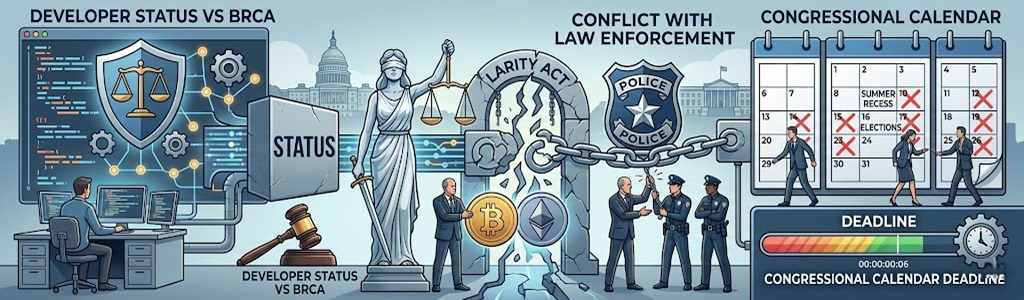
The first major dilemma of the proposal is the status of Web3 developers. Representatives of the tech sector are requesting the inclusion of protection for software creators under the Blockchain Regulatory Certainty Act (BRCA). The intention is to prevent network validators from being regulated under the same commercial parameters as brokers or exchanges.
On the other hand, the demands of the crypto industry face firm resistance from law enforcement agencies in the United States. Authorities fear that excluding programmers from direct oversight would hinder efforts to mitigate money laundering. According to Galaxy Digital’s projections, the project will not advance to a definitive vote in the Senate if lobbying firms and regulators do not reach a middle ground in the coming weeks.
The time factor is the third element conditioning the progress of the regulations. Novogratz described this four-week period as the last window of opportunity for the market before the summer recess. According to the current trend of the election year, the race toward the polls could deepen the political divide in both chambers, preventing subsequent bipartisan agreements.
The executive compared the work of lobby groups in Washington to trench warfare, highlighting the continuous effort of the participants. From Galaxy Digital’s perspective, the ratification of this legal framework would demonstrate the ability of a divided Congress to coordinate structural reforms in favor of financial innovation.
Next Legislative Milestone
The development of the emergency negotiations in Washington will determine whether the unified text manages to enter the debate agenda on the Senate floor before the closing of sessions for the summer period, scheduled for late July 2026.