

The meme coin market has once again entered a volatile phase. With prices fluctuating and sentiment shifting quickly, market participants are finding it challenging to determine a clear direction. Purely hype-driven trading appears to be giving way to projects that emphasize narratives, tokenomics, and online communities.
Shiba Inu, long regarded as one of the more established meme coins, has shown signs of cooling as new competitors attract attention. Meanwhile, Bonk has seen increased interest over the past two weeks.
One project drawing attention in online discussions is Troller Cat. According to the project’s materials, it is running a stage-based token sale on Ethereum and has raised more than $400,000 so far.
Troller Cat ($TCAT): Token-sale stage and project claims
According to the project website, the token sale is in Stage 15 of a 26-stage structure, with a listed token price of $0.00010624. The project also lists earlier and later stage prices, but price schedules and timelines are subject to change and do not indicate future market performance.
The project frames Stage 15 around the ‘Left Shark’ Super Bowl meme, leaning into a lore-driven approach to marketing and community building.
The team says the token is built on Ethereum. While Ethereum is widely used for smart contracts and DeFi applications, smart-contract and execution risks can still apply to tokens deployed on any network.
The project also states that it plans a two-year liquidity lock. Such mechanisms are typically intended to reduce certain liquidity-related risks, but the specifics depend on how the lock is implemented and audited.
Staking and the advertised 69% APY
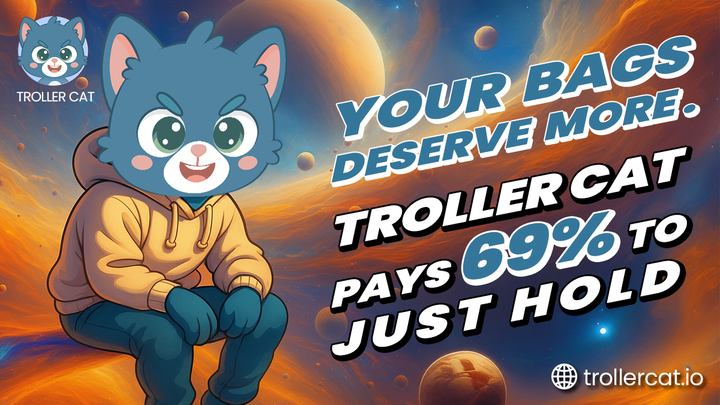
Troller Cat’s materials also describe a staking feature and advertise an APY of 69% during the token-sale period. APY figures are generally variable and depend on protocol rules, token emissions, and participation levels, and they should not be interpreted as guaranteed returns.
The project further claims staking rewards are locked for two months after launch to discourage rapid selling. Readers should review the smart-contract terms and any audit information available before relying on such claims.
Shiba Inu ($SHIB): Legacy strength, recent cooldown
Shiba Inu was one of the earlier meme coins to ride the wave created by Dogecoin, and over the past few years, it has expanded into a broader ecosystem with a DEX, NFT support, and metaverse ambitions.
Despite those developments, SHIB’s price action has recently slowed after its last major rally. Its large community and listings on multiple major exchanges continue to support liquidity and accessibility.
The Shiba Inu team has discussed updates including Shibarium (its L2 solution), which could influence interest, though outcomes remain uncertain and depend on adoption and broader market conditions.
Bonk ($BONK): Underdog turned contender
Bonk entered the market with a playful tone and an airdrop-driven community push, and it has since expanded its footprint. Built on the Solana network, it benefits from fast, low-cost transactions, although network and ecosystem risks remain relevant.
In recent weeks, Bonk’s trading activity has increased. Developers and community channels have also discussed possible additional utilities and collaborations, though plans can change and may not materialize.
Bonk remains smaller by market capitalization than legacy meme-coin leaders, but its engagement and roadmap discussions continue to draw attention within the Solana ecosystem.
Conclusion
Troller Cat is one of several newer meme-coin projects using staged token-sale pricing, staking incentives, and narrative marketing to attract attention. At the same time, more established names such as Shiba Inu and Bonk continue to trade in response to broader market sentiment and ecosystem-specific developments.
This article is for informational purposes only and does not constitute financial or investment advice. This outlet is not affiliated with the project mentioned.
For More Information:
Project website (for reference): https://www.trollercat.io/
FAQs
- What stage is the token sale currently in?
The project states it is in Stage 15 at the time of writing. - What blockchain does the project say it uses?
The project describes the token as deployed on Ethereum. - Does the project advertise staking rewards?
The project advertises staking terms up to 69% APY during the token sale, which may change and is not guaranteed. - Are there any lockup terms mentioned by the project?
The project mentions a liquidity lock and a post-launch lock period for staking rewards; details should be verified in project documentation. - Where can readers find primary sources?
The project’s website and official social channels are the main reference points for its stated terms and updates.
Glossary of Key Terms
- APY – Annual Percentage Yield. An annualized rate often used to describe staking rewards; it can vary and is not guaranteed.
- Deflationary – A model where the token supply is designed to decrease over time.
- Ethereum – A decentralized blockchain commonly used for smart contracts.
- Token sale – An early-stage sale of a cryptocurrency token before broader market trading.
- Liquidity Lock – A mechanism intended to restrict access to liquidity for a defined period; effectiveness depends on implementation.
- Referral Code – A marketing mechanism that may provide incentives to participants, as described by a project.
- Smart Contract – Self-executing code that runs on a blockchain to manage transactions and logic.
Press releases or guest posts published by Crypto Economy have been submitted by companies or their representatives. Crypto Economy is not part of any of these agencies, projects or platforms. At Crypto Economy we do not give investment advice, if you are going to invest in any of the promoted projects you should do your own research.

