TL;DR:
- Mantle launches the ERC-8004 standard to provide on-chain identity for AI agents.
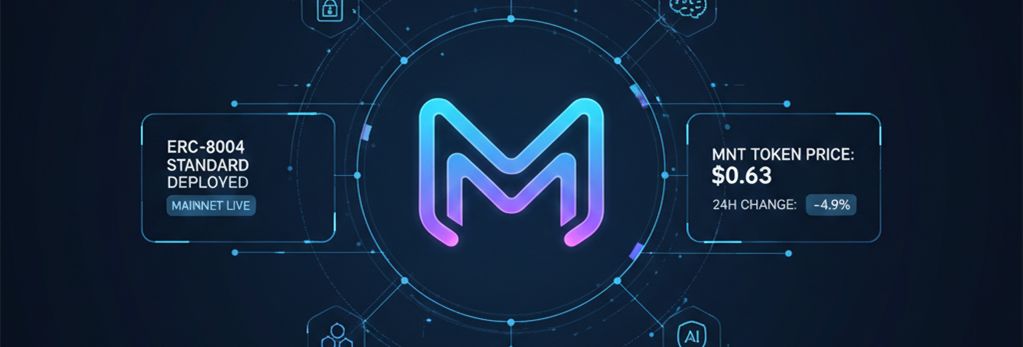
- The MNT token suffers a nearly 5% decline coinciding with the mainnet rollout.
- The update aims to resolve the “visibility crisis” in digital financial markets.
Mantle, the Ethereum Layer-2 scaling solution, has taken a firm step toward the technological future with the implementation of the ERC-8004 standard. This update is designed to transform AI scripts into full-scale, autonomous economic participants.
Through this integration, AI agents now possess an identity and authentication layer to operate within blockchain-based economies. However, the price of the native token, MNT, reacted with a 5% drop, trading near $0.63.
This retracement follows the bearish trend the asset has experienced since the start of the year, accumulating losses close to 40%. Despite market sentiment, the network remains focused on building a solid infrastructure for the agent economy.
Innovation for a Verifiable AI Agent Economy
The new trust framework introduced by the network seeks to mitigate the so-called “visibility crisis” affecting autonomous bots. To achieve this, three primary registries were established: NFT-based identity, performance reputation, and cryptographic validation of work.
The firm’s Head of Product, Joshua Cheong, highlighted that the goal is to provide AI with the “credentials” necessary to manage real capital. In this way, the connection between traditional finance and large-scale decentralized economies is facilitated.
Furthermore, figures like Vitalik Buterin have previously endorsed these types of advancements, indicating that Ethereum must facilitate economic interaction between machines. With over $4 billion in community assets, Mantle positions itself as a leader in the institutional adoption of this technology.
In summary, the deployment of the ERC-8004 standard on Mantle is a milestone for the interoperability of autonomous financial systems. Although the token price does not immediately reflect this technical optimism, the foundation for a verifiable digital workforce has now been established.