TL;DR:
- The proposed bill features more than 1,600 specific references to the Bank Secrecy Act and anti-money laundering standards.
- The Senate Banking Committee advanced the bill in mid-May through a 15-9 bipartisan vote.
- U.S. lawmakers seek to unify the regulatory framework to secure a minimum of 60 votes on the Senate floor.
U.S. Senator Cynthia Lummis vigorously defended her digital asset regulation project this Wednesday, known as the CLARITY Act, following public statements issued by Jamie Dimon, CEO of JPMorgan Chase.
During a televised interview on CNBC, the Republican lawmaker described the banking executive’s opinions as erroneous. Lummis asserted that the leader of the financial firm did not thoroughly review the legal text or is attempting to confuse market participants about the true scope of the presented regulatory proposal.
The conflict escalated after Dimon stated that the proposed bill lacks adequate consumer protections. Similarly, the Wall Street executive maintained that the regulatory framework weakens existing anti-money laundering measures by allowing the distribution of rewards based on stablecoin deposits without having traditional bank deposit insurance.
Additionally, the regulatory debate took a personal turn when Dimon attacked Brian Armstrong, CEO of Coinbase. This behavior generated an immediate rejection from the Senator from Wyoming, who categorized the comments toward the crypto industry businessman as being in bad taste.
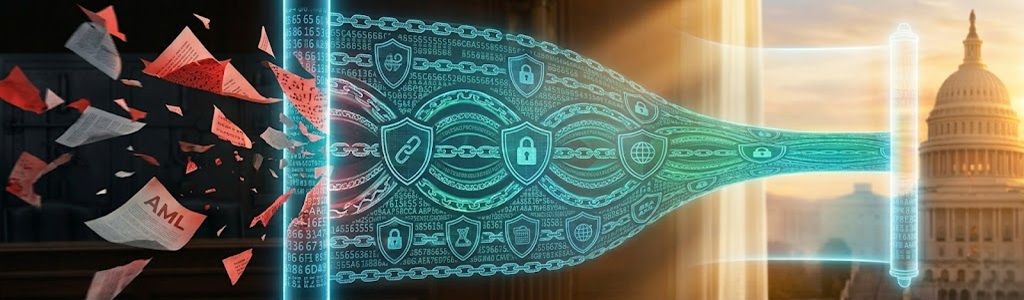
Clash Over Regulatory Compliance and Software Development
Faced with questioning from the traditional financial sector, the senator argued that the bill transfers existing operational obligations in commercial banking to the exchange and digital custody trust sector.
The congresswoman specified that the legal text includes strict regulations. Data from the legislative draft indicates that the document incorporates more than 1,600 explicit mentions of the Bank Secrecy Act (BSA) and international anti-money laundering (AML) guidelines.
On the other hand, the proposal establishes a clear division of operational responsibilities in decentralized networks. Open-source software developers on platforms like Bitcoin or Ethereum are excluded from legal liability derived from the end-use of applications by third parties. Lummis’s approach suggests that the authors of computer source codes do not possess the necessary technical mechanisms to identify the end-users of their independent protocols.
Legislative Integration and Next Steps in the United States Congress
The scope of the regulations extends to multiple areas of the financial markets. The project regulates the operation of decentralized finance ecosystems, the tokenization process of real-world assets, and bankruptcy protections for cryptocurrency users’ funds.
Currently, North American lawmakers are executing a criteria unification strategy across Capitol Hill committees. According to Congressional reports, working teams are trying to merge the Securities and Exchange Commission (SEC) guidelines contained in the law with the agricultural commodities parameters structured by the Senate Agriculture Committee.
This coordinated approach aims to consolidate a single package of reforms before the debate scheduled for after the July 4th recess. The bloc driving the legal text, which includes lawmakers like Bill Hagerty and Thom Tillis, is directing its efforts toward consolidating a strong political foundation. The central goal of the regulatory proposal is to secure 60 votes in favor on the Senate floor to guarantee institutional stability within the federal framework of the United States.