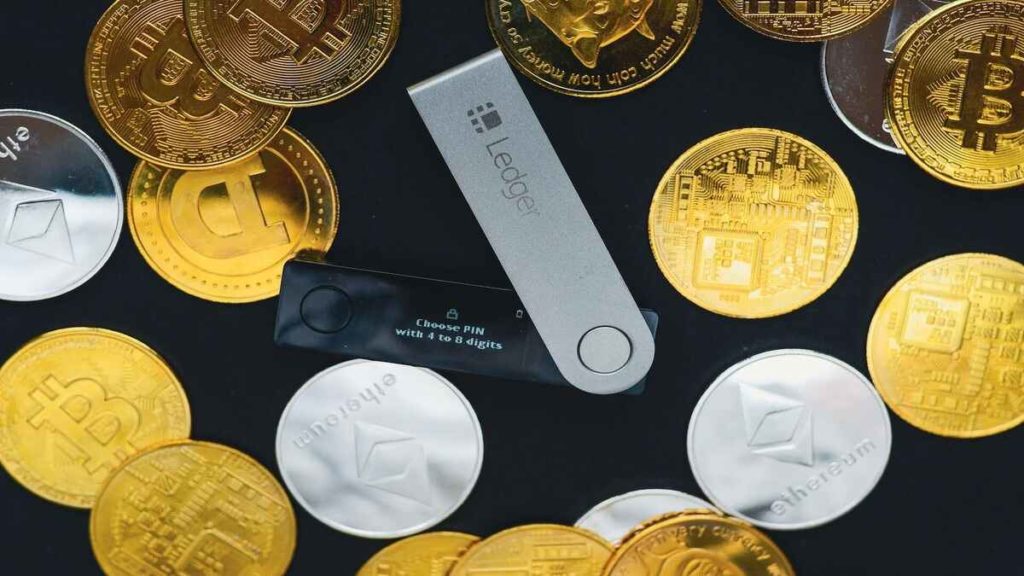
Just five years ago, explaining to a friend that to use cryptocurrencies you had to scribble down twelve random words on a piece of paper, pay fees in a different coin than the one you wanted to send, and wait several minutes for a network to “confirm” the transaction sounded like a bad joke. It wasn’t a joke: it was the standard user experience (UX) of the industry. And that experience, let’s be honest, has been the single biggest barrier preventing ordinary people — not engineers or enthusiasts — from adopting blockchain technology.
Today, in 2026, the debate has shifted. We no longer discuss whether UX is bad (it is), but whether the wallet as a primary interface is doomed to disappear. A recent article from Crypto Economy, based on opinions from exchange executives at Gate, Phemex, and Zoomex, makes exactly that point: the wallet is becoming invisible, absorbed into trading apps, embedded payments, and even artificial intelligence agents. I agree with the diagnosis, but not without warning about the dangers of this evolution. Because what we gain in convenience, we may lose in essence.
Complexity is the enemy, and the wallet is its symbol
Let’s start with the obvious: the traditional wallet is a hostile device. A 12- or 24-word seed phrase is, for the average user, a nightmare. Lose it, and you lose your money forever. Someone steals it, same result. Then comes the dance of networks: do I send via BEP-20, ERC-20, or TRC-20? And what do I do about gas fees if I don’t have the native token? Each of these questions is a small wall pushing millions of people away.

That’s why I welcome the direction the article’s experts point toward. Kevin Lee (Gate) talks about “invisible” wallets operating behind Apple Pay. Federico Variola (Phemex) anticipates a convergence with the trading platforms themselves. And Fernando Aranda (Zoomex) goes further: AI agents will execute our financial intentions without us having to sign anything. That vision is desirable. Who wouldn’t want to buy a coffee with crypto without thinking about the network, the fee, or the confirmation?
But here my doubts begin.
Abstraction comes at a price: trust and decentralization
What these executives describe isn’t magic; it’s account abstraction (EIP-4337), a standard that already exists on Ethereum. Thanks to it, we can have gasless transactions, social key recovery, or batched operations with a single signature. All of that is technically feasible and wonderful for UX.
However, the article is somewhat overly optimistic in not delving into the custody model that this simplification implies. Because an “invisible” wallet is often also a custodial wallet controlled by a third party. If you log into an app with “Sign in with Google” and automatically have a wallet, that app holds your keys. Goodbye self-custody, hello to the same risks as a bank: censorship, frozen funds, or simple provider negligence.
Proponents of this trend argue that it’s the perfect onboarding: users start with the easy version and, if they want, can later migrate to a decentralized wallet. But experience shows that laziness and habit win. Most people will stay inside the walled garden of embedded wallets, trusting their money to companies that, while transparent today, might not be tomorrow.
The silent risk of AI agents
The most futuristic point in the article is AI agents as an interface. I find it fascinating and terrifying at the same time. Imagine an agent that, on our command, rebalances a portfolio, pays bills, and seeks the best yield in DeFi, all in the background. The convenience would be extreme.

But how do we verify what the agent is doing? How do we ensure it’s not leaking our keys or signing malicious transactions? The article mentions the “agent risk” in passing, but doesn’t give it the weight it deserves.
An opaque AI agent is a black box that turns the technical complexity of the wallet into an even greater legal and operational complexity. Who is responsible if the agent “miscalculates” an order? The developer? The user? There are no clear answers.
The wallet doesn’t die, it fragments (and we must watch it carefully)
After reading the original article and reflecting, I maintain that the wallet as a single, visible interface is destined to fragment, not disappear. Its functions will be distributed across security layers, permission engines, autonomous agents, and everyday applications. That is, in essence, good news for mass adoption.
We need open standards for account abstraction that enable smooth UX without forcing custody. We need verifiable, open-source AI agents, not magical assistants owned by an exchange. And we need education so that users understand what they are delegating, even when the wallet becomes invisible.
The wallet as we knew it is in retreat. But if we bury it without ensuring that its replacement respects the principles of decentralization and self-ownership, we will have gained convenience at the cost of freedom.