TL;DR
- Bitcoin pulled back 22% and its safe-haven status is being questioned. Defensive demand shifted toward gold.
- Eleven approved spot ETFs and large corporate treasuries linked BTC’s price to the equity cycle and the performance of the S&P 500.
- Retail participation fell to multi-year lows after the ETF approvals and altered the market’s dominant narrative.
Bitcoin’s recent behavior reopened the debate over its role as a safe-haven asset. During 2025, the U.S. Dollar Index (DXY) declined by about 9%, and in 2026 it dropped another 2%. Over the same period, BTC’s price fell roughly 20–22% and trades near $68,255.
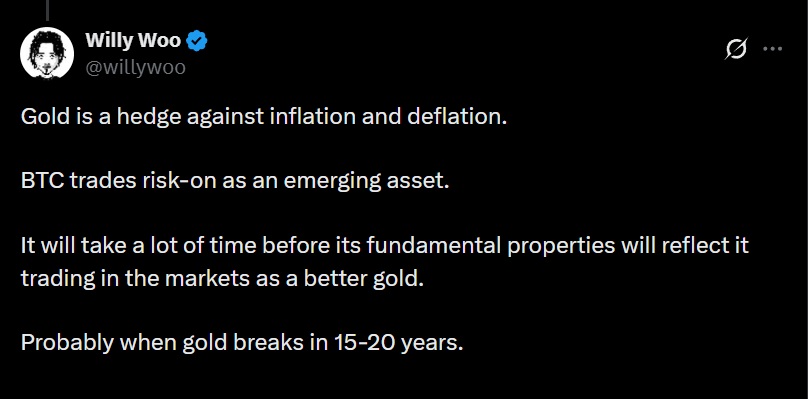
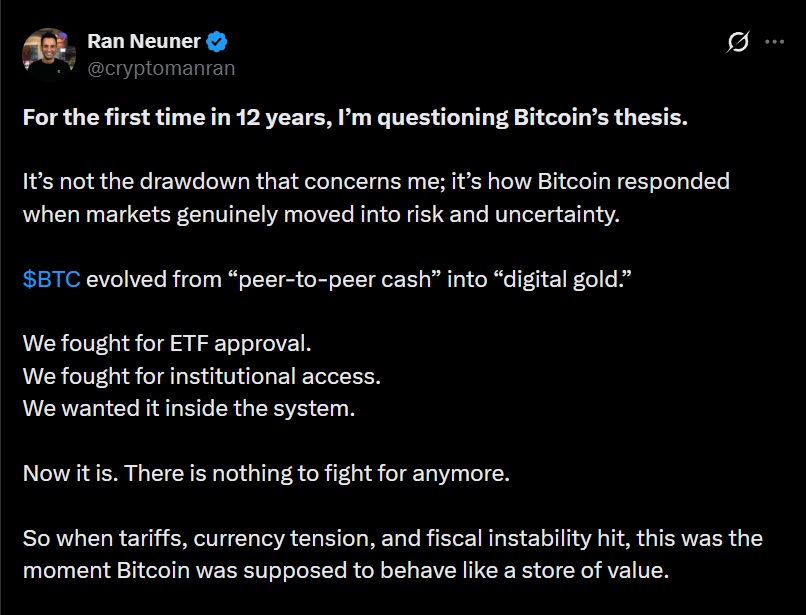
At the same time, gold climbed and absorbed defensive demand during risk-off episodes. Analysts such as Ran Neuner argued that capital rotated into the metal when fiscal, tariff, and monetary tensions appeared. Other researchers, including Willy Woo and Henrik Zeberg, noted that BTC exhibits a high-beta dynamic typical of risk-on assets.
The shift coincided with the asset’s full integration into the traditional financial system. Eleven spot ETFs are now approved and numerous corporate treasuries have built large reserves. According to Michael Burry, that integration exposes companies to sharp valuation losses if markets continue to fall. Various reports compare BTC’s behavior with equities tied to the S&P 500.
Changes in the Narrative Around Bitcoin
Market data also shows retail participation dropping to multi-year lows. Some early promoters left the market after the ETF approvals. The period following those approvals marked a change in the prevailing narrative around Bitcoin.
Meanwhile, several analysts moved the debate toward the ecosystem’s technological infrastructure. They outlined a scenario based on artificial-intelligence agents executing autonomous microtransactions. Those systems require instant and programmable settlement, a function that blockchain networks can provide.
As a result, the focus shifts from store of value to the operation of decentralized networks and automated applications. Potential uses include machine-to-machine payments, programmable transfers, and digital services coordinated by autonomous software.
Taken together, these assessments place Bitcoin within an integrated financial system, while the sector’s projected growth concentrates on operational infrastructure and protocols that execute automated transactions