TLDR
- The IBIT fund is the only capital inflow leader with a negative annual return (-9.59%).
- Despite the decline, the iShares Bitcoin Trust outperformed gold funds in terms of capital inflows.
- Total net assets of Bitcoin ETFs fell from a peak of $150 billion to $114 billion.
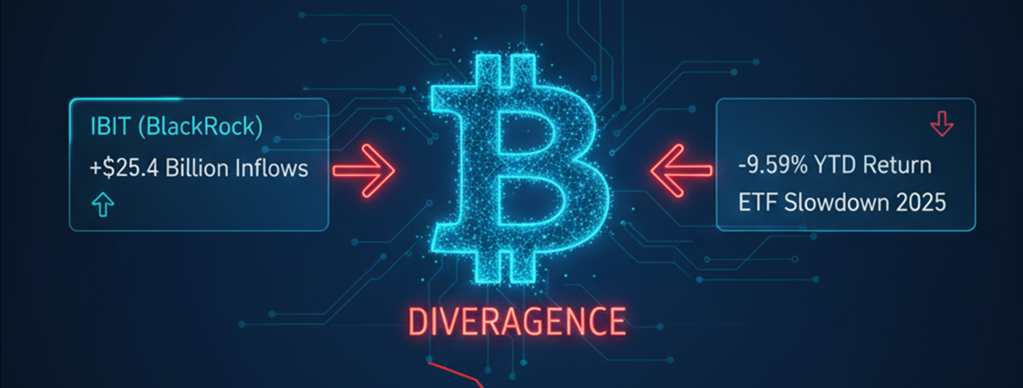
For the BlackRock Bitcoin ETF, the year ends with a financial paradox. It certainly established itself as one of the most successful financial products in terms of capital attraction—successfully pulling in approximately $25.4 billion—yet the IBIT fund recorded a cumulative drop of 9.59%.
In this regard, Eric Balchunas stated that this is the only fund on the list of leaders by capital flow to show performance in the red so far in 2025.
This phenomenon reflects a dramatic shift in risk appetite among institutional investors during the fourth quarter. Following an euphoric start to the year, the crypto-asset market entered a prolonged correction phase, causing initial enthusiasm to transform into a defensive and cautious stance.
Disconnect Between Institutional Flows and Market Performance
The slowdown is not exclusive to a single product. The global exchange-traded fund market has felt the impact of a massive retreat; the total net assets of Bitcoin ETFs dropped from a peak of $150 billion to $114 billion. This $36 billion loss in total valuation is due to both the depreciation of the underlying asset and net capital outflows recorded between November and December.
The Coinbase Premium Index is a key indicator of this behavior, and during the last quarter, it has remained mostly in negative territory. This suggests that large U.S. entities took a step back, actively reducing their exposure or selling positions.
However, the fact that the BlackRock Bitcoin ETF captured more capital than gold funds—even though the latter rose by 64%—demonstrates long-term conviction.
In summary, IBIT’s decline seems to be a matter of timing rather than structural erosion. Market history suggests that flows tend to recover once the price of Bitcoin stabilizes, setting the stage for a potential revival of institutional demand in 2026.