

Hedera, widely recognized for its consensus algorithm known as Hashgraph, has carved a niche in the enterprise-focused distributed ledger sector. Designed to offer high throughput, low fees, and predictable performance, Hedera is used by businesses exploring distributed ledger technology. The network’s governance model, which includes companies such as Google, IBM, and Boeing, is presented by the project as a way to support transparency and oversight.
Hedera is reported to process over 1 billion transactions per month, with average transaction finality achieved within 3–5 seconds. Hedera’s integration with permissioned and public blockchain ecosystems via the Hedera Token Service (HTS) and Hedera Consensus Service (HCS) is intended to support interoperability and a range of use cases.
Institutional Interest and Recent Developments
Hedera’s codebase transition to open source under the Hyperledger Foundation has been described as a significant step for the network. The change may broaden developer participation and align the project more closely with enterprise-focused and open-development standards.
The network has also announced work with enterprises and public-sector organizations in areas such as carbon markets, digital identity, and real estate tokenization. Hedera has cited collaboration with the United Nations on sustainable development tracking as an example of activity beyond trading-focused use cases.
The protocol’s stated decentralization strategy aims to reduce governance concentration and improve node distribution. A growing number of staking providers and community nodes may contribute to resilience and scalability, although decentralization levels and related metrics can vary by methodology.
HBAR in 2026: Forecasts and Uncertainties
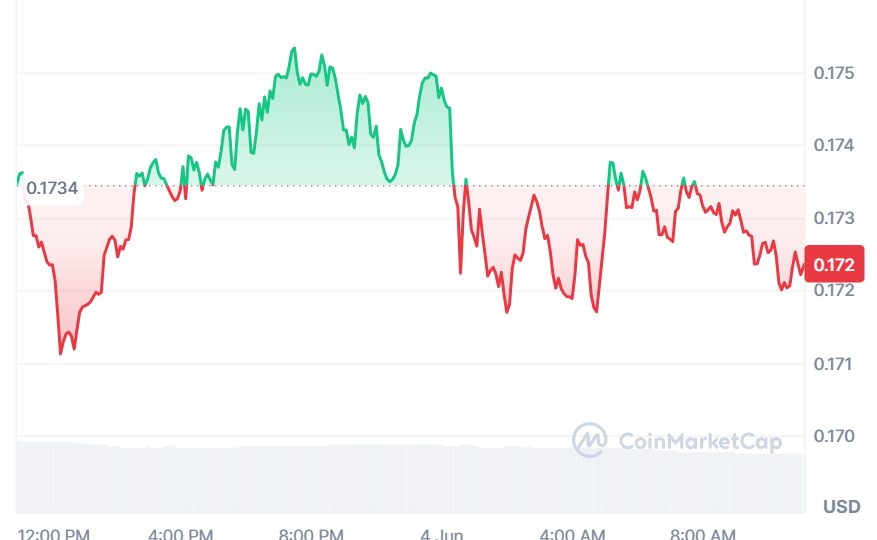
At the time of writing, HBAR has been trading around $0.17. Some third-party forecasters have published projected ranges for 2026; for example, Changelly has listed monthly figures from about $0.21 in January to about $0.357 by December. Such forecasts are speculative and should not be treated as predictions of future performance.
Commonly cited factors in HBAR price discussions include ecosystem expansion, changes in token utility, and adoption of applications such as carbon registry tooling. Any potential price outcomes depend on broader market conditions, execution, and demand for the network’s services.
Broader market volatility, potential regulatory changes, and competition from other Layer 1 networks may also influence HBAR’s performance.
This article is for informational purposes only and does not constitute financial or investment advice.
This outlet is not affiliated with the project mentioned.
Factors Often Cited in Discussions About $0.35
Commentary supporting a higher 2026 valuation for Hedera generally points to real-world utility, the project’s governance structure, and ongoing decentralization efforts. Whether HBAR reaches specific price levels is uncertain and depends on adoption, token economics, and overall market dynamics.
Qubetics: Multi-Chain Wallet Infrastructure (Project Overview)
Qubetics describes itself as building a platform focused on multi-chain interoperability and end-user tooling. Project materials describe a non-custodial, multi-chain wallet intended to support asset management across EVM and non-EVM chains, with features such as cross-chain swaps and governance functions.
According to the project, the wallet roadmap includes features such as biometric access, transaction simulation, and modular plugin support. As with any early-stage product, timelines and feature availability may change.
Qubetics Token Sale Update (Project-Reported)
Qubetics says its ongoing token sale has exceeded $17.7 million in contributions, and that more than 515 million $TICS tokens have been sold to more than 27,500 holders. These figures are project-reported and have not been independently verified in this article.
Some promotional materials also include hypothetical post-launch price scenarios; such scenarios are speculative and should not be treated as forecasts or guarantees.
Final Thoughts
Hedera and Qubetics represent different areas of the crypto ecosystem: one is an established network focused on enterprise and public-sector use cases, while the other is an early-stage project describing wallet and interoperability tooling. Any discussion of future prices or adoption outcomes remains uncertain and dependent on market conditions and execution.
Readers should consider the risks associated with digital assets, including volatility and regulatory uncertainty, and rely on primary sources and independent research when evaluating projects.
Press releases or guest posts published by Crypto Economy have been submitted by companies or their representatives. Crypto Economy is not part of any of these agencies, projects or platforms. At Crypto Economy we do not give investment advice; if you choose to engage with any project mentioned, you should do your own research.

