TL;DR
- South Korea plans to begin its tokenized-securities rollout on February 4, 2027, while Toss, KB Securities, DB Securities and Dunamu’s GIWA build on OP Stack.
- None of the four projects is in production: activity ranges from payment testing and MOUs to a two-year build and testnet chain.
- Phase one keeps the cash leg offchain, while stablecoin-linked settlement is reserved for phase three, which remains undated and dependent on future legislation.
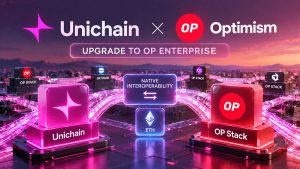
Four South Korean institutions are already building on Optimism‘s OP Stack ahead of the country’s planned tokenized-securities rollout in February 2027. In an October 14 update, Optimism identified Toss, KB Securities, DB Securities and Dunamu’s GIWA as projects at different stages of preparation, ranging from tests and MOUs to a phased build and testnet. None of the four initiatives is in production yet, making the current activity preparatory rather than evidence that South Korea’s tokenized-securities market is already live in practice. The first regulatory phase is scheduled to begin on February 4, 2027.
Korean Institutions Test Different OP Stack Models
South Korea’s first phase will cover institutional money market funds and bonds, unlisted stocks issued through trust structures and publicly offered fractional investment securities. Draft implementing rules remain open for public comment until November 11 and require ledgers used for tokenized securities to be shared with the Korea Securities Depository and at least two account managers. The regulatory framework therefore combines blockchain-based securities records with continued involvement from traditional market infrastructure rather than replacing the central depository outright. That approach provides context for KB Securities’ tokenized-fund plans on OP Mainnet.

The four institutions are using different OP Stack configurations. Toss and KOMSCO tested a local-currency voucher flow covering load, spend and settlement in a separate environment with no go-live date. KB Securities plans a tokenized money market fund and a KB Asset Management strategy on OP Mainnet. DB Securities has outlined a two-year build focused on Jeju-linked assets and Korean intellectual property. The deployments show that institutions are choosing between shared public infrastructure and dedicated chains depending on product, control and operating requirements. DB Securities’ work also extends an earlier STO and RWA infrastructure partnership with Optimism.
Dunamu’s GIWA represents the dedicated-chain model. The Upbit parent built GIWA as a Self Managed OP Enterprise chain and has recorded roughly 100 million testnet transactions, while KB Securities is taking the shared OP Mainnet route. Stablecoin settlement remains a later-stage issue: phase one keeps the cash leg offchain, and onchain payments linked to stablecoins are reserved for phase three, which has no date and depends on pending legislation. The 2027 rollout is therefore a phased regulatory opening, not a single switch that moves Korean securities fully onchain from day one. The preparation fits Optimism’s broader institutional tokenization infrastructure strategy.