TLDR
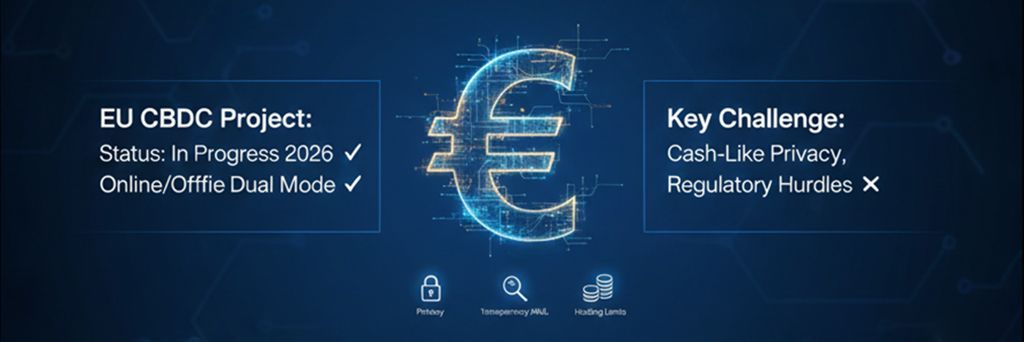
- The EU Council backs the European Central Bank’s design, which includes both online and offline functions.
- Achieving cash-like privacy while complying with anti-money laundering rules is the biggest political challenge.
- The legal framework must be ready by the end of 2026 to avoid delaying the ECB’s implementation timeline.
The digital euro project for the Eurozone is at a critical crossroads. Sector analysts assert that the most difficult hurdle to overcome is digital euro privacy; in fact, they categorize it as a political obstacle as lawmakers attempt to balance the anonymity offered by physical cash with strict anti-money laundering regulations.
Apostolos Thomadakis, from the European Policy Studies think tank, points out that the success of the European digital currency depends on finding a middle ground. While the European Parliament demands stronger operational safeguards, the ECB and the EU Council must ensure that the system remains auditable.
Finding a balance is crucial for the project to be attractive to retail users without compromising the financial security of the bloc.
Regulatory Challenges and Competition with Stablecoins
To a large extent, the project’s urgency responds to the rise of stablecoins and the pressure to modernize payment systems. ECB President Christine Lagarde has warned of the risks of capital flight toward foreign assets, urging for the closure of regulatory gaps.
In this sense, the implementation of digital euro in its offline version—which would allow transactions without an internet connection—is one of the features generating the most consensus, although holding limits to prevent a drain on bank deposits remain under discussion.
Time is running out for European institutions. If the legal framework is delayed beyond this year, the ECB’s timeline for pilot projects and commercial rollout could collapse.
In a global context where 137 countries are exploring their own CBDCs and China already allows interest payments on digital yuan wallets, the EU needs to consolidate digital euro privacy as a standard of trust. Only then can it strengthen the international role of the euro and offer a public, secure, and private alternative to the solutions provided by private tech companies.