TL;DR
- Don Davis introduced the No Betting on Your Own Race Act, which would bar federal candidates, spouses, dependent children and authorized campaign committees from holding election contracts tied to their own races.
- Violations would trigger a $10,000 civil fine or three times the net financial gain, whichever is greater, and indirect interests would also be covered.
- The bill would require a weekly candidate list and would apply only after enactment.
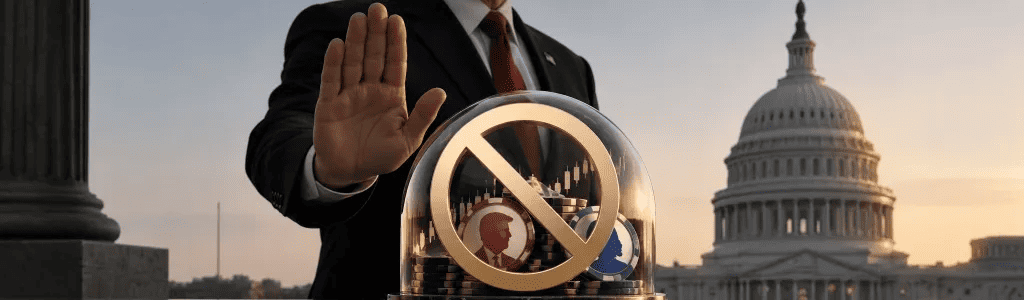
U.S. Representative Don Davis has introduced legislation that would bar federal candidates from trading contracts tied to their own elections. The proposed No Betting on Your Own Race Act would cover candidates, spouses, dependent children and authorized campaign committees, extending to direct and indirect interests. As prediction markets draw attention around political events, Congress is reconsidering guardrails. The bill targets conflicts created when candidates can financially bet on outcomes they are actively trying to influence.
Bill Targets Direct and Indirect Election Bets
The prohibition would apply to contracts whose payout or resolution depends on a candidate’s election, primary, caucus, convention or nomination contest, as well as whether that person becomes or remains a candidate, or their vote share, margin or placement. Davis’ proposal is narrowly aimed at contracts connected to a candidate’s own race rather than imposing a blanket ban on political event markets. The bill covers federal races only. That distinction matters as federal prediction-market regulation develops.
Violations would carry a civil penalty of $10,000 per offense or three times the net financial gain attributable to the violation, whichever is greater. Indirect participation includes directing another person to trade, holding a beneficial interest or knowingly supplying funds for someone else to acquire the position. The language is designed to prevent candidates from bypassing the restriction through relatives, intermediaries or financed third-party trades.
The proposal includes a divestment exception for pre-candidacy positions. Those interests could be held or disposed of during the minimum period a covered platform requires for divestment. Platforms themselves would not face penalties under the section and would receive protection for good-faith actions such as restricting accounts, cancelling positions or reporting suspected violations. The framework places the restriction on covered political actors while giving platforms room to enforce it, adding another layer to election-related prediction-market oversight.
The Federal Election Commission would maintain a free, machine-readable list of federal candidates, updated at least weekly, including the office sought and the dates each person became or ceased being a candidate. Election authorities would notify candidates about the restrictions when they file. The bill would apply only to conduct occurring on or after enactment, meaning the proposed ban is not yet in force. Its next test is whether lawmakers advance the measure amid the broader debate over regulating prediction markets.