
Cardano (ADA) remains one of the most recognized Layer-1 networks in the market, yet its current price near $0.40 highlights how investor focus has shifted compared to earlier cycles. Once a leading narrative in 2021, ADA now trades significantly below its all-time high of $3.10, reflecting broader changes in how the market values infrastructure-focused projects.
As crypto adoption evolves toward real-world usage, many participants are paying closer attention to application-layer products rather than base networks alone. In this context, newer platforms aiming to integrate crypto into everyday financial activity are increasingly entering the discussion. One such project is Digitap ($TAP), which has drawn attention after surpassing $4 million in presale funding.
Rather than competing as another Layer-1, Digitap positions itself within the fintech and digital banking space, using blockchain rails to support practical financial services.
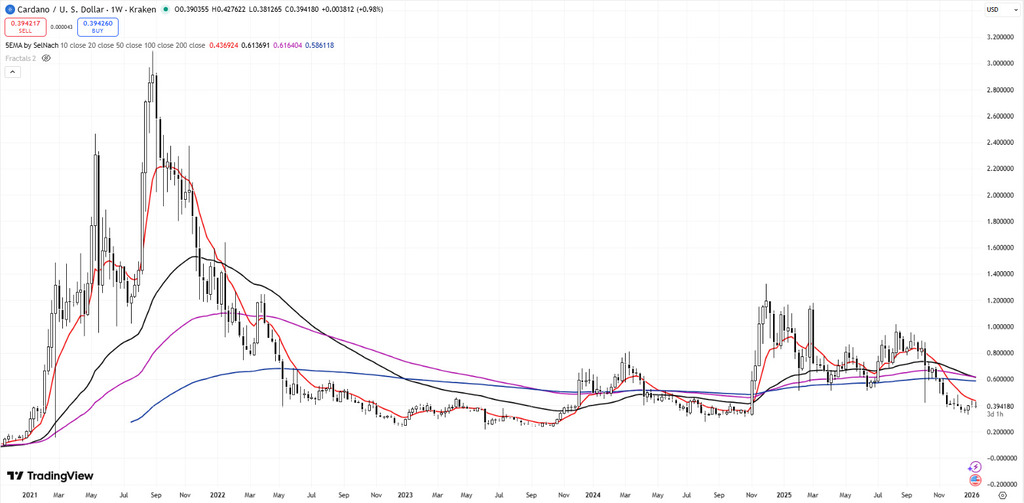
Cardano (ADA): A Mature Network in a Changing Market
Cardano has built a reputation for careful development, peer-reviewed research, and a long-term roadmap. Governance improvements, scalability upgrades, and tooling for developers continue to roll out steadily. From a technical standpoint, the network remains active and well supported.
Market behavior, however, tells a different story. At around $0.40, ADA reflects a valuation environment where investors are less willing to price in future potential without visible, large-scale user adoption. While ADA could still benefit from broader market rallies, expectations are now more closely tied to demonstrated demand on the application layer rather than protocol design alone.
This shift has led some market participants to look beyond established Layer-1s when considering opportunities aligned with consumer usage and fintech-style services.

Digitap ($TAP): A Crypto-Enabled Omni-Banking Approach
Digitap describes itself as an “omni-bank,” aiming to unify fiat and crypto functionality within a single application. The platform focuses on enabling users to send, receive, exchange, and manage both digital assets and traditional currencies through one interface, reducing the need for separate wallets or complex technical steps.
The project emphasizes:
-
A unified balance covering fiat and crypto
-
Crypto-native Visa cards for real-world spending
-
Faster cross-border transfers using blockchain rails
-
A user experience designed for non-technical users
By positioning crypto as a backend improvement rather than the main focus, Digitap aligns with a broader trend where blockchain is used to enhance familiar financial products instead of replacing them outright.
The project has reported presale funding exceeding $4.1 million, which suggests notable early interest from participants who see potential in crypto-powered financial applications rather than infrastructure-only networks.

Adoption and Utility as Key Differentiators
As the market matures, adoption metrics and daily usability are increasingly influencing how projects are evaluated. Established assets like ADA continue to serve important roles within the ecosystem, but newer platforms are attempting to capture value by addressing consumer-facing financial needs.
Digitap’s model centers on:
-
Everyday payment functionality
-
Simplified access to crypto-based financial tools
-
Integration with existing payment networks
From a token-design perspective, $TAP is positioned as part of the platform’s broader ecosystem, with mechanisms tied to platform activity rather than purely speculative use. As with any early-stage project, outcomes depend on execution, adoption, and regulatory considerations.
Looking Ahead to 2026
Heading into 2026, many analysts expect increased competition between infrastructure-focused networks and application-driven platforms. While Layer-1 protocols like Cardano remain foundational to the ecosystem, products that directly serve end users may continue to attract growing attention.
Digitap represents one example of this shift toward crypto-enabled financial services designed for mainstream use. Whether it achieves long-term adoption will depend on product delivery, user growth, and broader market conditions.
Learn More About Digitap
-
Presale: https://presale.digitap.app
-
Website: https://digitap.app
-
Social Links: https://linktr.ee/digitap.app
This article contains information about a cryptocurrency presale. Crypto Economy is not associated with the project. As with any initiative within the crypto ecosystem, we encourage users to do their own research before participating, carefully considering both the potential and the risks involved. This content is for informational purposes only and does not constitute investment advice.