TL;DR:
- Tech company Digital Asset and the American Idea Foundation introduced the RISE pilot program on August 21, 2026.
- The system will integrate monthly or biweekly payments for food, childcare, and direct assistance on Canton Network.
- The plan projects an initial rollout across three US states during the first quarter of 2027, contingent upon federal regulatory approval.
Infrastructure firm Digital Asset and the foundation led by former Speaker of the House Paul Ryan announced on August 21, 2026, a pilot project aimed at modernizing the distribution of US state benefits using distributed ledger technology.
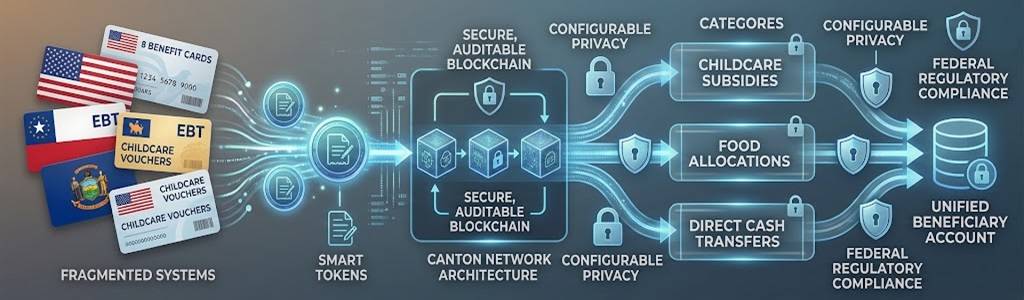
The objective of the project, named RISE (Resources for Independence, Stability, and Employment), is to unify public resource allocation through programmable smart contracts on Canton.
Canton Network’s technical architecture allows the execution of eligibility logic and transaction coordination without exposing confidential financial information between participants. According to Digital Asset’s technical report, this configurable privacy capability will enable state agencies to audit funds and verify regulatory compliance in real time.
Currently, beneficiary families across the United States manage multiple subsidies that operate under fragmented schedules, forms, and income thresholds.
The RISE program’s design will unify support programs into a periodic payment schedule that automatically adjusts received amounts as household income increases. In this regard, Paul Ryan stated that this automation aims to reduce the abrupt economic penalties beneficiaries face when entering the formal labor market.
The pilot’s rules will allocate spending toward specific categories, such as childcare subsidies, food allocations, and direct cash transfers.
Technological Integration and Federal Regulatory Framework
The Canton institutional network has historically focused its use cases on the settlement of traditional financial assets and collateral. In July 2026, the platform processed the real-time settlement of tokenized US Treasuries between institutional entities via Tradeweb.
The new pilot marks the first formal foray of Digital Asset’s infrastructure into the public government services sector. Market reports indicate that this transition represents an effort to bring capital market efficiency to social welfare administration.
The practical execution of the program will be subject to thorough regulatory reviews. Public assistance programs in the United States are governed by overlapping federal and state legislative frameworks, requiring formal authorizations before modifying the processing of monetary transfers.
The coordinating entities did not disclose the names of the three participating states or the funds allocated for this initial phase.
Independent researchers and community case managers will have access to metric dashboards to assess indicators of housing stability, job retention, and income levels among enrolled families. According to the American Idea Foundation’s institutional release, the systematic gathering of evidence will serve as the foundation to determine the feasibility of expanding the model to other jurisdictions.
The official timeline targets the launch of initial trial operations during the first quarter of 2027, at which point the finalized list of public agencies and pilot programs integrated into the protocol will be released.