


The crypto market in 2025 is expected to remain active, with new token launches and ongoing development across payments, DeFi, and trading. Attention often concentrates on projects that claim clear use cases, active developer work, and measurable adoption, although outcomes can vary widely and carry risk.

Below is an overview of four projects that are frequently discussed in current market coverage: BlockDAG, Stellar, Hyperliquid, and Chainlink. They operate in different areas of the ecosystem and are at different stages of maturity.
1. BlockDAG: Project overview and fundraising claims
BlockDAG is an early-stage project that, according to its public materials, uses a hybrid Directed Acyclic Graph structure alongside Proof-of-Work and aims to combine throughput with network security. The project also says it is EVM-compatible, which would allow Ethereum-based applications and smart contracts to run on its system.
The team reports that the BlockDAG presale has raised more than $376 million. The project has also published batch-based pricing information (for example, it has listed BDAG at $0.0276 in Batch 29 at the time of writing), though such figures can change and do not indicate future market performance. Commentary about potential exchange listing prices is speculative and outcomes are uncertain.

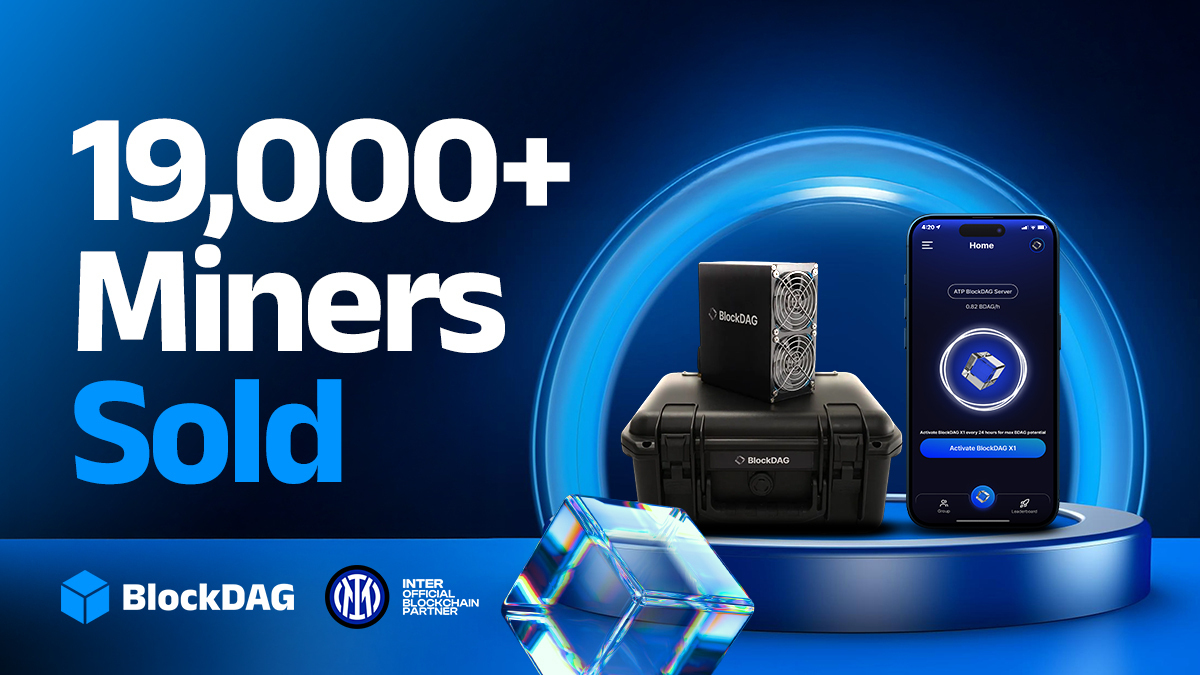
In terms of adoption, the project has published figures for its mobile mining app, miner distribution, holders, developer activity, and application count. These metrics are self-reported and may not be independently verified. The team has also referenced a demo trading platform and marketing initiatives such as competitions. The project has discussed potential exchange listings, but specific venues and timelines can change and should not be treated as confirmed.
2. Stellar: Focus on cross-border payments
Stellar (XLM) was created to support fast, low-cost payments, with an emphasis on cross-border transfers. Its network is designed to settle transactions quickly with relatively low fees, which can be relevant for remittances and microtransactions. Traditional payment rails and messaging systems can involve longer settlement times and additional intermediaries, depending on the route and providers used.
Adoption has been supported by work with fintech firms and payment-related integrations, alongside developers using Stellar to issue assets and manage transfers. Like most crypto assets, XLM’s market price can be volatile and is influenced by broader market conditions. From a product perspective, Stellar remains one of the longer-running networks focused on payments.
3. Hyperliquid: Perpetual futures trading activity
Hyperliquid is a project associated with perpetual futures trading. It aims to offer traders access to derivatives in a decentralized setting, a category that has historically been dominated by centralized platforms. As with all derivatives, these products can involve significant risk and are not suitable for all users.
Platform activity has increased alongside broader interest in on-chain trading venues. Hyperliquid has outlined plans for additional products and integrations, though delivery and adoption are not guaranteed. Its development is one example of continued experimentation in decentralized derivatives markets.
4. Chainlink: Oracles for smart-contract data
Chainlink (LINK) provides a decentralized oracle network that connects smart contracts to off-chain information, including market data feeds and other external inputs. This function is widely used in DeFi and other on-chain applications that require data beyond what is available directly on a blockchain.
Over time, Chainlink has been integrated by many projects, and its roadmap has expanded beyond DeFi into areas such as cross-chain tooling and potential enterprise and financial-market use cases. LINK’s market value remains subject to volatility, but the underlying product category—reliable data delivery to smart contracts—continues to be a recurring requirement across the ecosystem.
Final Takeaways on 2025 Picks
These four projects illustrate different segments of the market. BlockDAG is an early-stage network that is publicly associated with a fundraising campaign and published adoption metrics. Stellar is an established payments-focused network. Hyperliquid reflects ongoing growth and experimentation in on-chain derivatives. Chainlink is an established provider of oracle infrastructure used by many smart-contract applications.

Taken together, they offer a snapshot of themes investors and builders have been watching going into 2025: early-stage platform development, payment networks, on-chain trading, and data infrastructure. The risks, maturity, and information quality differ across projects, so readers should treat project-reported claims cautiously.
This outlet is not affiliated with the project mentioned. This article is for informational purposes only and does not constitute financial or investment advice.

