

In the fast-paced crypto market, readers often look for projects they believe have strong fundamentals and meaningful upside potential. However, prices can be highly volatile, and past performance does not predict future results. While Bitcoin often remains in focus, altcoins can see sharp moves in both directions.
The year 2025 is shaping new trends across well-known networks, from Ethereum’s continued engagement with institutions to Polkadot’s ongoing technical discussions. One newer project drawing attention is BlockDAG (BDAG), which the team describes as moving from early fundraising marketing into a broader ecosystem with an active user base.
This article reviews project-reported claims and market commentary around BlockDAG, Ethereum, Aave, and Polkadot. It is not a recommendation to buy, sell, or hold any asset.
BlockDAG (BDAG)
BlockDAG has been referenced in 2025 discussions largely due to its fundraising activity and growth claims. According to project materials, it has raised more than $405 million in a token sale and reports more than 312,000 holders, around 3 million mobile miners using the X1 app, and over 19,800 ASIC miners delivered worldwide. These figures are not independently verified in this article.
The project has also promoted a “Deployment Event” and cites a token-sale price of $0.0013. Any statements about future exchange listings or potential price outcomes should be treated as uncertain, and there is no guarantee of liquidity, timing, or market demand after any listing.
Some market participants have pointed to large allocations as a sign of interest, although individual wallet activity does not confirm long-term adoption or future performance. The project describes its design as a DAG plus Proof-of-Work hybrid intended to improve throughput while maintaining security, but the network’s real-world performance will depend on implementation and usage over time. BlockDAG (BDAG) should therefore be assessed with the same caution applied to other early-stage crypto assets, including technical, market, and execution risk.
Ethereum (ETH)
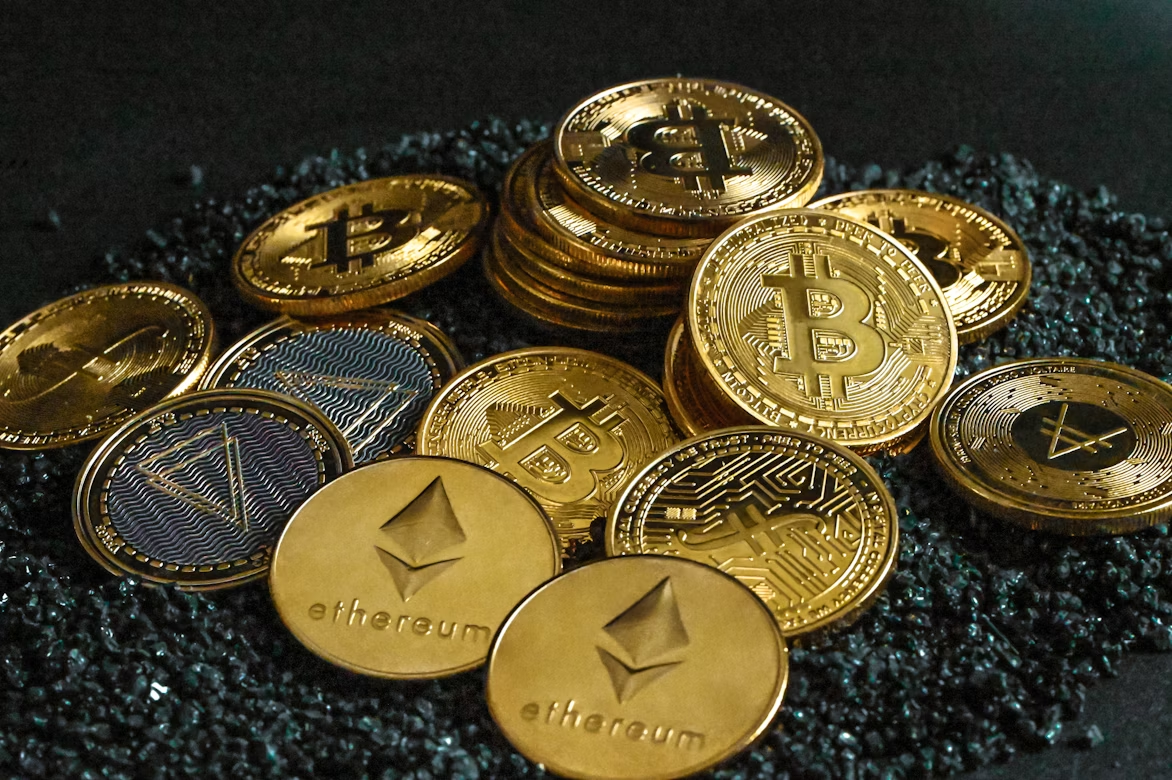
Ethereum remains one of the largest smart-contract networks and is frequently discussed in relation to institutional activity. Some reports have cited ETF inflows and corporate treasury holdings as indicators of broader participation, though figures can vary by source and time period. Ethereum has also traded above key price levels at points during recent market cycles, but price direction remains uncertain.
Market analysts sometimes publish price scenarios for ETH, but such projections are speculative and can be invalidated by market conditions. Ethereum also carries risks common to smart-contract platforms, including vulnerabilities in third-party applications, regulatory uncertainty, and changing demand for DeFi and NFT activity.
Aave (AAVE)
Aave, a lending protocol in the DeFi sector, has been discussed in connection with large wallet activity and governance proposals. Some on-chain trackers have highlighted sizable AAVE purchases and exchange withdrawals, though these data points do not, by themselves, indicate future price direction. Separately, Aave governance has considered changes to how protocol fees are handled, including mechanisms that could affect token economics if implemented.
As with other DeFi-related assets, AAVE is exposed to smart-contract risk, potential changes in user activity, and broader market volatility. Any discussion of “breakouts” or technical targets should be viewed as opinion rather than a forecast.
Polkadot (DOT)
Polkadot has been monitored by traders following a period of price weakness, with some technicians pointing to candlestick patterns as potential signs of changing sentiment. Separately, co-founder Gavin Wood has discussed a proposal related to supply mechanics (including a potential cap at 2.1 billion DOT), with any decision dependent on governance processes and timelines that may change.
The ecosystem has also been mentioned in connection with ETF-related filings and plans for regional initiatives, though outcomes depend on approvals, execution, and market conditions. As with other networks, development announcements do not guarantee increased usage or token appreciation.
Final Word: Themes to Watch
Altcoins can draw attention during strong market periods, but they also tend to carry elevated risk. In 2025 commentary, BlockDAG has been framed around its token sale and adoption claims; Ethereum is often discussed in the context of institutional participation and network effects; Aave is followed for DeFi governance and protocol changes; and Polkadot remains tied to ongoing ecosystem development and governance proposals. Readers should evaluate primary sources, understand risk disclosures, and consider the possibility of loss before engaging with any crypto asset.

Any “early entry” framing or time-limited messaging around token sales is marketing language and does not reduce investment risk. Prospective participants should be aware that token-sale terms, allocations, and post-launch liquidity can change, and losses are possible.
This article contains information about a cryptocurrency token sale. This outlet is not affiliated with the project mentioned. This article is for informational purposes only and does not constitute financial or investment advice.

