

Market cycles can include periods when alternative cryptocurrencies (“altcoins”) outperform Bitcoin and other large-cap assets. This phase is often referred to as an “altcoin season.” Because these moves can be volatile and uneven across tokens, discussions about what to monitor typically focus on liquidity, supply schedules, and project disclosures rather than short-term price narratives.
What crypto assets are some traders watching ahead of a potential 2025 altcoin cycle?
Rather than relying on hype, market participants commonly look at factors such as circulating supply changes, unlock and vesting schedules, exchange liquidity, and on-chain activity. For early-stage assets, that can also include reviewing how a token sale is structured and what information the team publishes.
Below is a breakdown of commonly cited signals and a summary of one project’s token sale mechanics, as described in its public materials.
Why Traders Look for Emerging Tokens Ahead of an “Altcoin Season”
When broader market sentiment shifts, prices can move quickly and liquidity can change across venues. Some traders try to identify assets earlier in their lifecycle, but that approach also comes with higher uncertainty, thinner order books, and limited historical data. Here are a few reasons people cite when researching earlier-stage tokens.
1. Lower Liquidity and Valuation Sensitivity
Smaller assets may react more sharply to changes in liquidity and attention. That can work in either direction, and volatility can be materially higher than in large-cap markets.
2. Clearer Supply Disclosures (When Available)
Some newer projects publish vesting schedules and token distribution plans that can be reviewed alongside on-chain data where applicable. In practice, the level of transparency varies by project.
3. Different Risk Profile vs. Large-Cap Assets
In a risk-on environment, lower-cap tokens may see larger percentage moves than established assets, but they also carry greater risks, including smart-contract, governance, liquidity, and execution risk.
This is why research discussions often include micro-cap tokens and early-stage token sales—while emphasizing that outcomes are uncertain.
Low-Unit-Price Tokens Ahead of a 2025 Altcoin Cycle: What People Evaluate
Low unit prices can make a token appear “cheap,” but unit price alone does not reflect overall valuation, supply, or liquidity. Analysts who do look at low-unit-price tokens typically focus on a few structural factors.
Scarcity and Supply Mechanics
Supply changes can be influenced by burns, emissions schedules, or vesting locks. Whether these mechanisms are meaningful depends on the full token distribution and the rules governing them.
Transparency
Projects that publish clear, verifiable information—such as token allocations, contract addresses, and ongoing disclosures—tend to be easier to analyze. Limited disclosures can make independent evaluation difficult.
Roadmap and Distribution Details
Market participants often review whether a project outlines milestones and distribution terms, and whether those disclosures can be corroborated over time.
Some discussions currently focus on early-stage token sales that provide on-chain visibility and published supply rules, though these structures can also introduce additional risks and information asymmetries.
Early-Stage Token Sales in 2025: Commonly Cited Features
Early-stage token sales are often discussed because, depending on the project, they may include:
- A published pricing schedule
- Public tracking of token distribution or sale stages (where provided)
- Disclosed supply and allocation controls
- Optional staking programs (terms vary by project)
- On-chain activity that can be independently observed when contracts are public
These details can help with analysis, but they do not remove market risk, and project dashboards or claims should be verified where possible using primary sources.
With that context, the sections below summarize Noomez ($NNZ) based on information the project publishes.
Noomez ($NNZ): Project-Reported Details
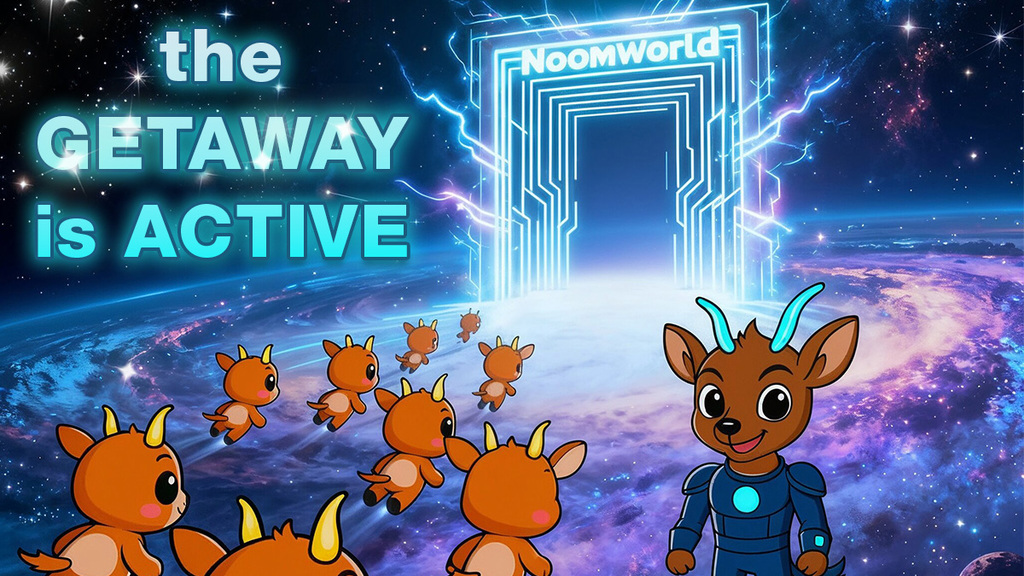
Noomez is an early-stage project that, according to its website, is running a staged token sale and publishing live metrics via a dashboard.
The following points are described by the project and have not been independently verified in this article.
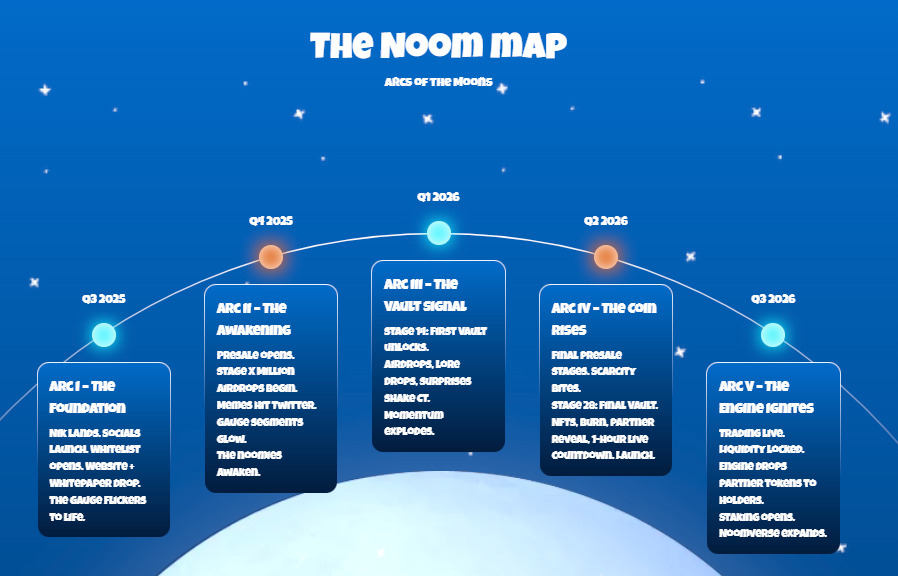
- A 28-stage token sale with changing prices between stages: The project describes set pricing for each stage.
- Unsold tokens burned at each stage: The project states that unsold allocation is removed, which would reduce total supply under the stated rules.
- A public dashboard (“Noom Gauge”): The project says it displays figures such as funds raised, holder count, burn status, and stage timing information.
- A staking program: The project advertises staking terms with variable rewards; its materials mention figures up to 66% APY depending on conditions and lockups. These figures are not guarantees and may change.
The Noom Engine
Noomez also describes a post-launch mechanism (“Noom Engine”) in which partner projects may distribute tokens to $NNZ holders under project-defined criteria. Details, eligibility, and timing would depend on the project’s implementation and any partner arrangements.
As with other early-stage tokens, risks can include smart-contract vulnerabilities, liquidity constraints, token distribution changes, and legal or jurisdictional considerations.
Conclusion
Ahead of any potential altcoin cycle, analysts commonly focus on liquidity, supply schedules, transparency, and verifiable on-chain data. Early-stage token sales may provide additional disclosures, but they also tend to involve elevated risk and limited operating history.
Noomez ($NNZ) is one project being discussed in that context, based on its staged token sale structure and dashboard claims, as described by the project.
For reference:
Twitter/X: Follow Noomez on X (formerly Twitter)

This article is for informational purposes only and does not constitute financial or investment advice. This outlet is not affiliated with the project mentioned.

