On‑chain reserve data from Arkham Intelligence shows Binance holds $130.1 billion in digital assets. Coinbase holds $87.96 billion. OKX holds $23.21 billion. Upbit holds $19.12 billion. Robinhood holds $18.6 billion. Bitfinex holds $18.59 billion. Kraken holds $16.11 billion. Bybit holds $13.99 billion. Total reserve figures vary widely. Exchange reserve size alone does not determine financial safety. Reserve composition is the factor that defines actual risk exposure.
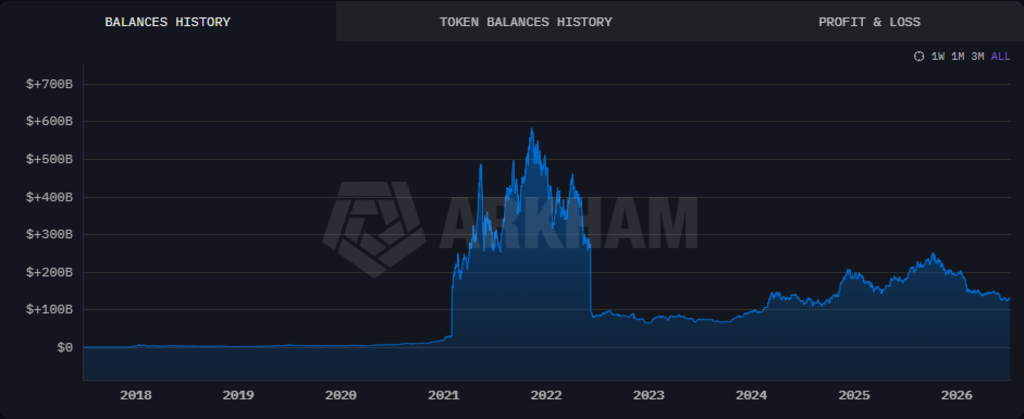
Binance reserve composition and liquidity strategy
Binance holds 130.1 billion. Its wallet contains 673,071 Bitcoin, valued at $42.8 billion. It holds $40.98 billion in USDT. It holds $58 billion in stablecoins (USDT, USDC, USD1, USYC). Ethereum exposure (including WBETH) exceeds $13.8 billion.
Binance stablecoin reserves provide immediate liquidity for trading operations. Bitcoin in Binance wallets offers a hedge against fiat inflation. Binance chooses a balance between volatile and stable assets to keep operations smooth. This Binance reserve composition reduces the impact of Bitcoin price drops on total asset value.
Coinbase and high Bitcoin concentration
Coinbase shows $87.96 billion in reserves. Bitcoin represents over 70% of Coinbase reserves. Coinbase holds 975,503 BTC, worth $62.03 billion. Ethereum is second with 4.146 million ETH, valued at $7.41 billion. Coinbase depends heavily on Bitcoin price. A 20% Bitcoin decline reduces Coinbase reserves by approximately $12.4 billion.
Same decline reduces Binance reserves by $8.56 billion from Bitcoin and ETH, but stablecoins retain nominal value. This difference in reserve composition produces different outcomes under identical market moves. High Bitcoin concentration poses a risk to Coinbase in bear markets.
OKX and Bybit: stablecoin priority and counterparty risk
OKX holds $23.21 billion. Its primary asset is USDT at $9.34 billion. Bitcoin is second at $7.92 billion. Bybit holds $13.99 billion. USDT is Bybit primary asset at $4.41 billion. Bitcoin is second at $3.82 billion. Bybit third position belongs to MNT, native token of Mantle network, tied to its ecosystem. OKX and Bybit prioritise stablecoins over Bitcoin.
But it introduces a significant counterparty risk linked to stablecoin issuers (Tether and Circle). A USDT de‑peg from the dollar would affect OKX and Bybit reserves more severely than Coinbase reserves. Stablecoin dependence is a vulnerability users must consider.
Bitfinex and proprietary token risk as primary reserve
Bitfinex presents a special case. Total reserves stand at $18.59 billion. Bitcoin is the main asset at $10.42 billion. Second asset is LEO, Bitfinex own exchange token. LEO value in wallet is $6.18 billion. LEO position is seven times larger than Ethereum position. Bitfinex also holds tokenised gold (XAUT). This dependence on proprietary token risk creates correlated risk. If Bitfinex faces operational issues, LEO value may fall alongside exchange confidence.
Reserves based on an own token do not provide same backing as Bitcoin or USDT. An exchange using its own token as primary collateral creates a negative feedback loop: selling LEO to cover withdrawals depresses the token, which lowers remaining reserve value. This proprietary token collateral risk is unique to Bitfinex among the eight analysed exchanges.
Robinhood, Kraken, and Upbit: distinct profiles by user base
Robinhood holds $18.6 billion. Bitcoin is its primary asset at $12.07 billion. Ethereum is second at $2.99 billion. Robinhood stands out for memecoin holdings. It holds the largest Dogecoin amount among eight exchanges. It holds significant Shiba Inu and Pepe positions. Memecoins in Robinhood reserves reflect its retail user base. This memecoin exposure adds extra volatility to reserve value. Kraken shows a different profile. Kraken holds $16.11 billion. Bitcoin is primary at $10.37 billion. Ethereum is second at $1.72 billion.
Kraken maintains a sizable Zcash position, a privacy‑centric cryptocurrency. Zcash presence at Kraken suggests focus on users who value anonymity. Upbit holds $19.12 billion. Bitcoin accounts for nearly two‑thirds of its wallet. Upbit includes Dogecoin, Shiba Inu, and RWA tokens. Upbit reserve composition reflects specific South Korean market demand. Each exchange adapts its portfolio to user preferences, and adaptation is not risk‑neutral.
Asset concentration: common pattern across all exchanges
Arkham Intelligence reveals a common pattern. All eight exchanges have at least 40% of reserves concentrated in three categories: Bitcoin, Ethereum, or a major stablecoin. Reserve concentration in few assets is universal but asymmetric. Coinbase concentrates 70% in Bitcoin. Binance concentrates 44% in stablecoins and 33% in Bitcoin. OKX concentrates 40% in USDT. This exchange asset concentration risk matters to users.
An exchange with high Bitcoin concentration loses more value during a bear market. An exchange with high stablecoin concentration loses less nominal value, but stablecoins can de‑peg. Reserve diversification across multiple assets does not exist in any of the eight cases. Lack of diversification exposes all exchanges to specific shocks.
Relationship between address count and total reserve value
Arkham data includes active address counts. Binance has 64.4 million addresses. Coinbase has 68.5 million addresses. Robinhood has only 1.6 million addresses. Robinhood holds $18.6 billion for 1.6 million addresses. Binance holds $130.1 billion for 64.4 million. Reserve per address is higher at Robinhood. Robinhood users access more liquidity per person. But a small user base means coordinated fund movement from Robinhood could impact market disproportionately. Coinbase and Binance have large user bases, distributing mass withdrawal risk. Correlation between address number and total reserve value is not linear.
A trader should evaluate exchange against trading pairs used
A trader trading Bitcoin often finds liquidity at Coinbase or Binance. A trader trading altcoins finds variety at OKX or Upbit. Upbit includes memecoins and RWA tokens in its wallet. Upbit reflects South Korean market demand. A trader who values reserve stability in fiat terms prefers exchanges with high stablecoin ratio (Binance, OKX, Bybit). A trader who values decentralised assets prefers Coinbase or Kraken. Kraken offers Zcash exposure, an asset with privacy features not present on other platforms. Exchange choice should be based on reserve composition, not only total value. On‑chain transparency allows objective choice.
Arkham on‑chain data offers unprecedented transparency. Users can verify balances in real time. But transparency does not remove risk. Reserve composition remains a critical factor. Exchanges do not hold diversified portfolios. Each exchange chooses a risk profile based on business model and user base. Systemic risk arises from asset concentration. If Bitcoin drops 30%, Coinbase loses $18.6 billion in reserve value.

Binance loses $12.8 billion from Bitcoin and ETH, but stablecoins remain stable. OKX loses $2.3 billion from Bitcoin, but stablecoins remain stable. Reserve value loss does not imply immediate insolvency. An exchange can operate with lower reserves if liabilities also shrink. But stablecoin reserves offer a nominal buffer to cover user withdrawals during panic.
Arkham data does not include exchange liabilities. Reserves are assets. Liabilities are user deposits. Difference between assets and liabilities determines solvency. An exchange may have $130 billion in reserves and $120 billion in liabilities. Another may have $18 billion in reserves and $17.9 billion in liabilities. Reserve‑to‑liability ratio is not public in the report. Total reserves indicate operational scale, not financial health. Solvency requires liability comparison. Without liability data, reserves are an incomplete metric. Exchange solvency analysis requires liability data, which is unavailable in this report.
Bitfinex case: liquidity problem of proprietary token as reserve
Bitfinex illustrates the proprietary token reserve problem. LEO is less liquid than Bitcoin or USDT. Selling large LEO amounts to cover withdrawals could depress LEO price. Lower price reduces remaining reserve value. A vicious cycle is possible with proprietary tokens as collateral.
Coinbase and Binance do not rely on proprietary tokens as primary reserve. BNB is Binance token, but it does not appear among main wallet assets. BNB represents a minor fraction of total reserves. This absence of own token among primary reserves signals prudence.
Upbit and Robinhood show local culture influence on reserve composition. Upbit serves the South Korean market. South Korean market has high demand for altcoins and memecoins. Robinhood serves the US retail market. US retail market has high Dogecoin demand. Kraken serves privacy‑focused users with Zcash.
Each exchange tailors reserve portfolio to user preferences. Tailoring is not risk‑neutral. Memecoins show higher volatility than Bitcoin and Ethereum. An exchange with high memecoin exposure (Robinhood) faces wider reserve value fluctuations than an exchange with Bitcoin exposure (Coinbase).
Binance scale versus Coinbase Bitcoin concentration
Binance total reserves exceed Coinbase and OKX combined. Binance holds $130.1 billion. Coinbase and OKX sum to $111.17 billion. Difference is $18.93 billion. Binance scale is undeniable. But scale does not imply superiority across all dimensions. Coinbase holds largest Bitcoin custody.
Coinbase holds 975,503 BTC. Binance holds 673,071 BTC. Coinbase is largest Bitcoin holder among analysed exchanges. A user seeking Bitcoin exposure finds greater backing at Coinbase in BTC quantity. A user seeking nominal stability finds greater backing at Binance in stablecoins.
User must read portfolio composition, not only total dollar headline. An exchange with $130 billion in stablecoins and Bitcoin differs from an exchange with $87 billion in Bitcoin and little else. An exchange with $23 billion in USDT differs from an exchange with $18 billion in Bitcoin and memecoins. Risk profile of each exchange is unique. No exchange holds a perfectly balanced portfolio. All have a bias toward a specific asset.
That bias reflects commercial strategy and user demographics. Informed trader chooses an exchange whose bias aligns with personal strategy and bear‑market tolerance. On‑chain transparency allows objective selection. Data interpretation requires understanding that total reserve is a starting point, not a conclusion. Composition is the destination for serious counterparty analysis.