

Not every market move tells the complete story; often, it’s the design behind the asset that shapes its future. Recent commentary around the Near Protocol price move has pointed to institutional participation and ongoing ecosystem expansion as possible factors.
Bitterson (TAO) has also drawn attention due to third-party forecasts that assume continued adoption growth. Separately, Cold Wallet is being discussed for a model that, according to the project, links wallet usage to user-facing incentives.
Cold Wallet describes its framework as cashback-based with tiered rewards designed to encourage ongoing usage. Some market commentary has been highly optimistic about potential outcomes; however, future performance is uncertain and depends on execution, adoption, market conditions, and other risks. Cold Wallet is one of several projects being discussed alongside larger, more established networks.
Cold Wallet’s Utility-Driven Rewards (Project Description)
Cold Wallet has been promoted by its team and some third-party commentators as an early-stage project focused on wallet-related incentives. The project states it has raised funds through a token sale and has published indicative pricing and launch plans, though such information may change and should be independently verified.
According to project materials, users may receive CWT tokens as cashback when paying gas fees, executing swaps, or transferring funds across supported networks. The stated goal is to tie token distribution to on-chain activity rather than purely to holding.
The project also references integration with Plus Wallet’s user base and a CoinMarketCap listing. These points are presented by the project as visibility and distribution catalysts, but they do not guarantee adoption or market outcomes.
Cold Wallet describes a tiered cashback structure in which higher token balances may correspond to higher rewards, and it says this does not require staking or lockups. As with any incentive model, real-world impact can vary depending on usage patterns, token liquidity, fees, and broader market dynamics.
When evaluating wallet and token projects like this, readers may want to review documentation, token distribution terms, smart-contract audits (if available), and the sustainability of incentives, rather than relying on promotional projections.
Institutional Activity and the Near Protocol Price Move
Near Protocol recently posted a 4.2% gain, climbing from $2.43 to $2.53 within a day. Some analysts have attributed the move to rising institutional interest and ongoing ecosystem activity, though short-term price changes can have multiple drivers.
This movement has coincided with developments involving Aurora Labs and Subzero Labs. Aurora’s incubator program introduced new projects, while Subzero Labs secured $20 million in funding, highlighting continued investment into parts of the Near ecosystem.
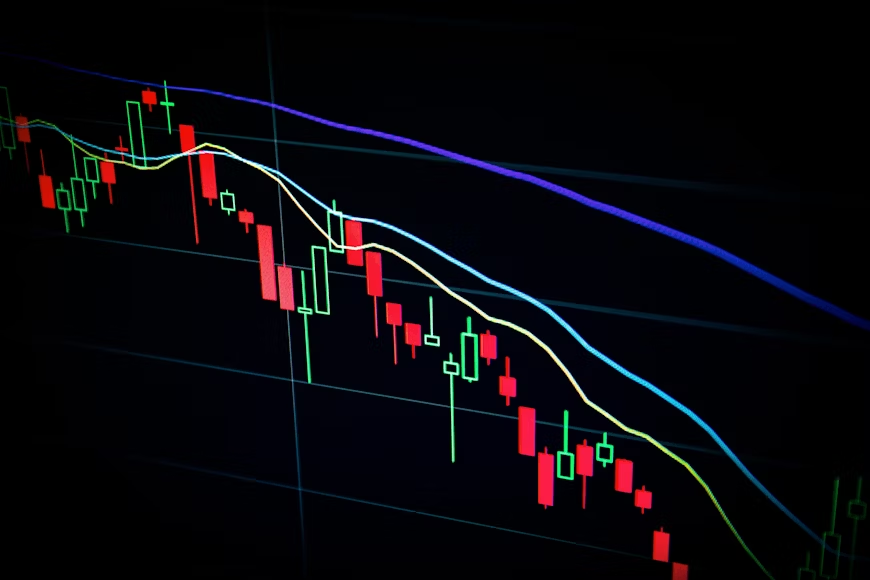
For market watchers, the Near Protocol price move is often discussed as reflecting a combination of fundamentals and market positioning rather than purely technical factors. Even so, expectations about sustained momentum remain speculative, and investors typically monitor on-chain activity, developer traction, and macro conditions.
Bitterson (TAO) Price Forecasts and Uncertainty
Bitterson (TAO) price predictions vary widely across forecasting models and websites, and the assumptions behind them are not always transparent. Some projections point to prices in the mid-hundreds to above $1,000 during 2025, while others present broader ranges. These estimates are often tied to expectations around network utility, demand growth, and adoption, but they are not guarantees.
Longer-dated forecasts extending into the early 2030s can be even more uncertain, with some sources publishing multi-thousand-dollar targets. Readers should treat such figures as speculative scenarios rather than reliable outlooks, particularly in volatile crypto markets.
For those monitoring Bitterson (TAO) forecasts, the key takeaway is the uncertainty: different models can produce very different outcomes depending on inputs such as adoption, fees, competition, regulation, and overall risk appetite.
Final Thoughts
Near Protocol is often discussed in the context of ecosystem development, while Bitterson (TAO) attracts attention through third-party forecasting narratives. Cold Wallet, meanwhile, is being promoted for a usage-linked incentive model that the project says returns value to users through cashback-style rewards.
Any comparison across projects should account for differences in maturity, liquidity, risk, and data availability. Incentive structures and fundraising events can influence interest, but they do not, on their own, indicate future price performance.
Project links (for reference):
Website: https://coldwallet.com/
X: https://x.com/coldwalletapp
This article is for informational purposes only and does not constitute financial or investment advice. This outlet is not affiliated with the project mentioned. As with any initiative within the crypto ecosystem, readers should do their own research and consider relevant risks before making decisions.

