

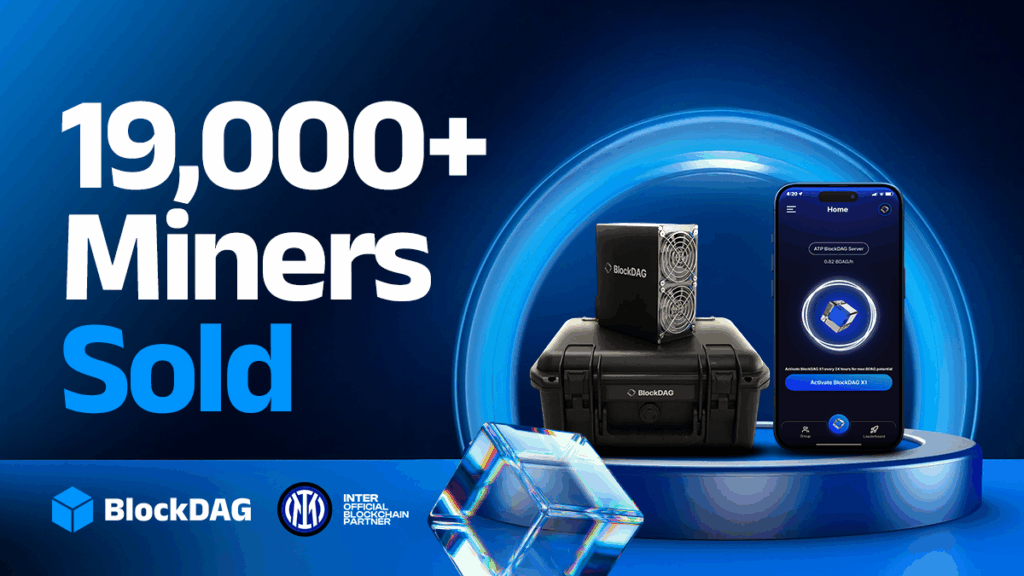
Most Layer-1 projects begin constructing mining or validation systems after mainnet, but BlockDAG (BDAG) says it has taken a different route. The project states it has shipped more than 19,400 mining devices before its network debut, aiming to distribute mining capacity across a larger number of participants at launch.
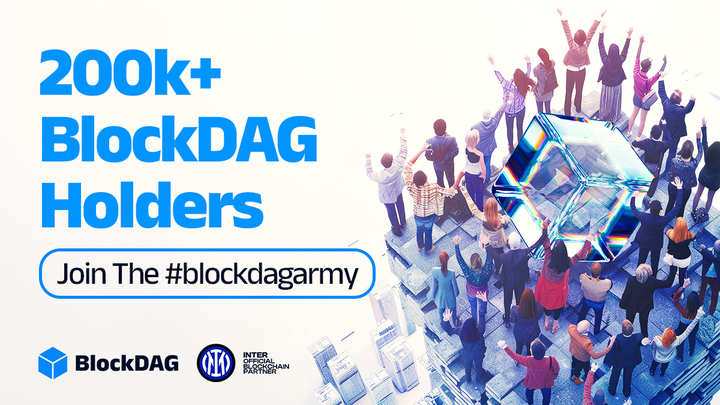
According to BlockDAG’s public materials, the project has raised $383 million, sold 25.4 billion BDAG, and reported more than 200,000 holders, alongside 2.5 million mobile miners using the X1 app. These figures are project-reported and have not been independently verified.
Inside the BlockDAG Mining Ecosystem
BlockDAG describes its architecture as combining Directed Acyclic Graph (DAG) processing with Proof-of-Work (PoW). In general terms, DAG-based designs aim to increase throughput by allowing more parallel processing, while PoW systems use computation to help secure network history. The project also says its mining is designed to work across multiple hardware types, from smartphones to larger rigs.
X1 Mobile Miner: Mobile-focused participation
The X1 miner app is presented by the project as a way to participate using a smartphone. BlockDAG’s materials state the app can generate up to 20 BDAG per day under its rules; outcomes can vary based on program terms and other factors.
X10 Miner: Entry-level hardware
The X10 is described as a plug-and-play device intended for home use. The project positions it as a lower-power option with a modest output relative to higher-tier devices.
X30 Miner: Mid-tier hardware
The X30 is marketed as a mid-tier device. BlockDAG says it offers higher hashrate than entry-level options while aiming to keep energy use comparatively lower than higher-end systems.
X100 Miner: Higher-end hardware
At the top tier, the project presents the X100 as a higher-performance device intended for larger-scale use. Specific performance and efficiency depend on real-world conditions and device configuration.
Why Shipping 19,400 Miners Matters
If the reported shipment figure is accurate, having more than 19,000 miners distributed ahead of mainnet could affect launch dynamics in several ways:
- Decentralization at launch – A broader miner base can reduce reliance on a small number of operators.
- Early security participation – More participating devices can contribute to PoW activity from day one.
- Incentive alignment – Hardware ownership may encourage ongoing participation, though behavior can change over time.
- Geographic distribution – Wider shipment dispersion can reduce single-region concentration, depending on where devices ultimately operate.
Direct comparisons with earlier PoW launches can be difficult because networks differ in maturity, distribution methods, and market conditions. However, pre-mainnet hardware distribution is one approach some projects use to encourage early participation.
The Technology Behind DAG–PoW
BlockDAG says its hybrid design is intended to address common trade-offs between scalability and security. In this framing, DAG processing enables more parallel confirmation, while PoW secures blocks through computational work.
The project claims this setup supports:
- Higher throughput – BlockDAG materials reference transaction capacity above legacy PoW networks; real-world throughput depends on implementation and network conditions.
- Lower latency – The project attributes faster confirmations to parallel DAG processing.
- Hardware flexibility – Designed to accommodate different device categories, from mobile to dedicated mining hardware.
- EVM compatibility – The project states Ethereum-based applications can be ported, subject to engineering and tooling constraints.
BDAG pricing and token-sale details (project-reported)
BlockDAG’s materials describe BDAG being offered in batches (including “batch 29”) at $0.0276, and they reference a planned listing price of $0.05. Any future market price, listing outcome, or liquidity conditions are uncertain and can differ materially from project statements.
- Ecosystem readiness – The project claims more than 300 dApps from 4,500 developers are intended to launch with mainnet; this depends on project delivery timelines and third-party deployment choices.
- Community size – BlockDAG reports more than 200,000 holders and millions of mobile miners.
- Funding – The project reports $383 million raised; the uses of funds and the impact on market structure are not guaranteed.
- Network rollout – Hardware distribution, mobile participation, and compatibility claims may influence adoption, but outcomes are uncertain.
Final Thoughts
The reported pre-mainnet shipment of 19,400 miners is a notable element of BlockDAG’s rollout strategy, alongside the project’s stated fundraising and user metrics. As with other early-stage networks, many of the outcomes discussed—such as adoption levels, network security, and application launches—depend on execution and external market conditions.

Project website (for reference): https://blockdag.network
Telegram (for reference): https://t.me/blockDAGnetworkOfficial
This article discusses a cryptocurrency token sale and related participation mechanics. This outlet is not affiliated with the project mentioned. This article is for informational purposes only and does not constitute financial or investment advice.

