
Bitcoin’s hashrate recorded its first drop in six years during the first quarter of 2026, breaking a five-year streak of double-digit growth. The total computational power securing the network fell around 4% so far this year and sits near 1 zettahash per second (ZH/s), according to Glassnode data. Between 2021 and 2025, the rate had grown more than tenfold, from approximately 100 exahashes per second.
The driving factor behind the decline is primarily economic. With production costs near $90,000 per Bitcoin and the spot price hovering around $67,000, operating margins are negative. Faced with that scenario, several public miners in the United States are redirecting capital toward artificial intelligence and high-performance computing infrastructure, financing that transition through debt issuance and BTC sales, which reduces reinvestment in mining operations.
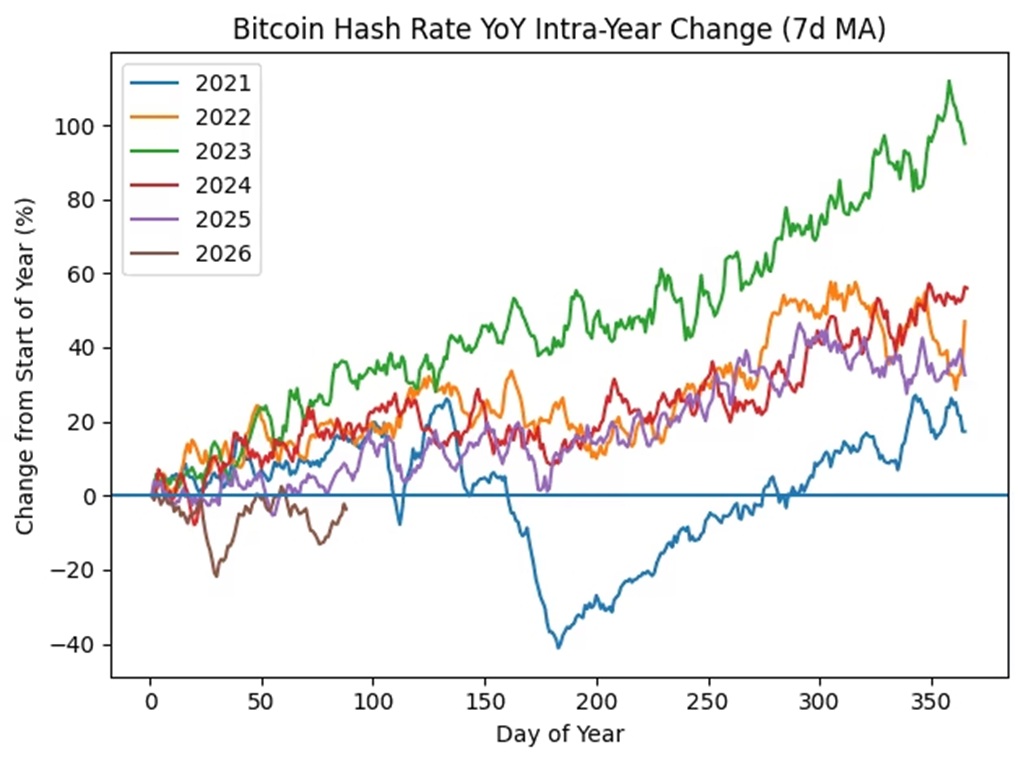
Nevertheless, the exit of large miners could benefit network decentralization. Listed mining companies represent more than 40% of global hashrate, and a reduction in their relative weight would allow for a wider geographic distribution of computing power. Hashrate could recover to 1.8 ZH/s by year-end, though that estimate depends on Bitcoin approaching $100,000 again.
Source: https://studio.glassnode.com/charts/mining.HashRateMean?a=BTC&mAvg=7&s=1589696260&u=1774874873&zoom=
Disclaimer: Crypto Economy Flash News are based on verified public and official sources. Their purpose is to provide fast, factual updates about relevant events in the crypto and blockchain ecosystem.
This information does not constitute financial advice or investment recommendation. Readers are encouraged to verify all details through official project channels before making any related decisions