TL;DR
- Binance co-founder Changpeng Zhao argues that leaked personal data and phishing attacks pose more immediate risks to crypto users than AI breaking Bitcoin’s cryptography.
- Zhao urges investors to strengthen account security through hardware security keys, cautious browsing and better protection of sensitive information.
- As AI tools become more capable, crypto holders must address emerging cryptographic threats and existing vulnerabilities involving human behavior and digital identity.
Changpeng Zhao, the co-founder of Binance known as CZ, has challenged concerns that artificial intelligence could undermine Bitcoin’s cryptographic foundations. He argues that criminals can already exploit exposed personal information to target cryptocurrency holders, making data privacy and account protection urgent priorities.
Everyone worried about AI hacking crypto, but the internet and banking systems rely on weaker encryption.
That said, AI doesn’t need to break Bitcoin’s cryptography to cause damage, leaked data already enables more phishing, social engineering, etc,
Stay SAFU!
— CZ 🔶 BNB (@cz_binance) October 23, 2026
In a recent post on X, Zhao pointed out that internet services and traditional banking systems also depend on encryption, while public debate increasingly focuses on AI-driven attacks against blockchain networks. His warning shifts attention toward risks that investors can face today, rather than concentrating exclusively on hypothetical breakthroughs in cryptography.
The Real Risks Behind AI Cryptography Threats
Zhao’s argument centers on the difference between compromising blockchain cryptography and exploiting the people who use it. Bitcoin relies on established cryptographic mechanisms to secure transactions and ownership, and an attacker generally cannot reverse a properly signed transaction simply by persuading a victim to reveal personal information.
However, criminals do not necessarily need to defeat those mechanisms. Leaked email addresses, phone numbers, identity documents and other personal details can help attackers create convincing phishing messages, impersonate service providers or manipulate victims into disclosing passwords and wallet recovery phrases. Personal data can become a powerful tool for targeting crypto holders without directly attacking the blockchain.
Artificial intelligence can make these operations more efficient by generating personalized messages, translating scams and imitating legitimate communications. Although these capabilities do not automatically translate into successful attacks, AI can lower the effort required to target cryptocurrency users at scale.
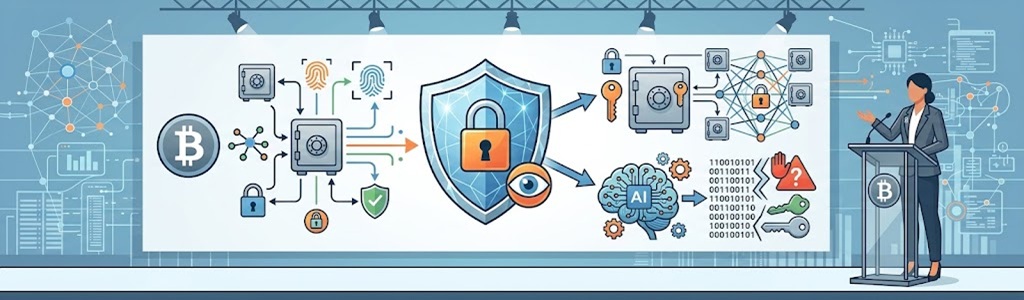
Why Wallet Security And Data Privacy Matter For Crypto Investors
The warning reflects a broader distinction between protecting blockchain infrastructure and securing individual accounts. A decentralized network may continue operating as designed even when an investor loses access to a wallet, exposes a recovery phrase or falls victim to an impersonation scam. Blockchain security cannot fully protect users from mistakes or social engineering.
Hardware wallets can keep private keys isolated from internet-connected devices, while hardware security keys add another layer of protection to compatible accounts. Password managers, unique passwords and withdrawal allowlists can further reduce common attack risks. None of these measures eliminates every vulnerability, so users should also maintain secure backups and verify transaction details before signing. Layered security helps reduce risks without relying on a single protective measure.