StablecoinsNews
U.S. Workers Can Now Receive Paychecks Directly in USDC
Coinbase Wallet enabled direct deposit in the United States on November 25 to receive up to $3,000 per payment in USDC on Base with zero fees.


Key points
- Coinbase Wallet began rolling out direct deposit for eligible users in the United States on November 25, 2026, allowing them to receive all or part of their salary in USDC on the Base network at a 1:1 conversion rate.
- The platform set a maximum limit of $3,000 per individual deposit and a daily cap of $10,000 per virtual account.
- Coinbase charges no fees for the service, identity verification can take up to 24 hours, and transfers take between one and three business days to settle.
Coinbase Wallet enabled a new direct deposit feature that allows eligible workers in the United States to receive all or part of their USDC paycheck directly on the Base network. The tool converts U.S. dollars sent by employers at a one-to-one parity without charging deposit fees on the wallet’s end.
Your paycheck, delivered onchain.
Direct Deposit is now available in Coinbase Wallet.
Receive all or part of your paycheck as USDC on Base, with zero deposit fees. pic.twitter.com/CCeBA40a8R
— Coinbase Wallet (@CoinbaseWallet) November 25, 2026
Coinbase Wallet stated on its X account that users can decide what percentage of their payroll they wish to allocate to their self-custodied wallet. The employer or payroll provider executes the standard dollar transfer using the account and routing numbers supplied inside the app.
Technical Operation and Service Operating Limits
Coinbase‘s official help page indicates that eligible users find the option under the “Direct Deposit” tab within the “Add Funds” section of the mobile wallet. Official documentation adds that some versions of the interface still display the option under the name “Receive USD” in the “Transfer” tab, meaning availability depends on the active configuration on each device.
To activate the tool, the applicant must enter their personal information and complete an identity verification process. Coinbase‘s support guide notes that this review can take up to 24 hours before enabling the virtual account and displaying the corresponding banking credentials.
Once the account is approved, the worker provides the routing and account numbers to their human resources department. According to the market report, if an employee routes $500 through their payroll, they receive exactly 500 USDC at their Base address. This mechanism eliminates the need to purchase the stablecoin on an exchange platform and subsequently transfer it manually.
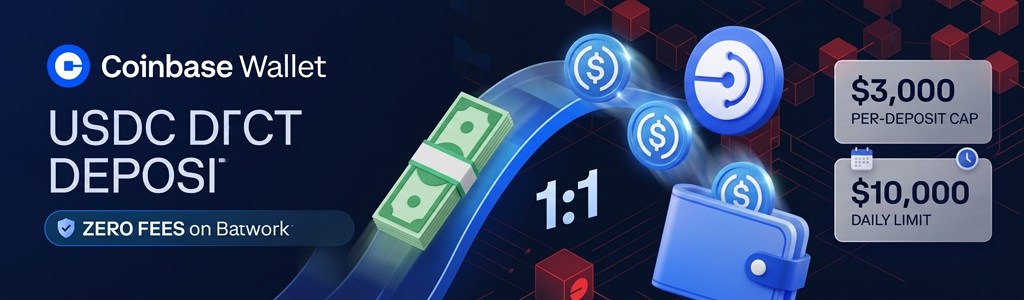
The informational graphic released during the November 25 launch specifies that each user is entitled to a single virtual account. The system imposes a limit of $3,000 per incoming deposit and a cumulative cap of $10,000 per day.
The operational structure establishes that the $3,000 per-transaction cap applies even if the user has not reached their daily limit. Market analysis points out that the payroll-splitting option allows workers with salaries exceeding that threshold to use the service by routing only a fraction of their pay.
Regarding settlement times, the company details that funds typically credit within one to three business days after being sent. Although Coinbase charges no fees to receive the funds, its terms note that third-party payroll providers may apply their own administrative charges.
As for the underlying infrastructure, an earlier company guide identified payment provider Bridge as the entity responsible for verifying users and processing the conversion in the “Receive USD” flow. However, documentation published this November 25 for the U.S. rollout omits the name of the banking partner backing the virtual accounts, and the initial announcement also did not include figures on registration volume or processed deposits.
Holding Rewards and Payroll Market Context
The platform’s loyalty program includes rewards for eligible USDC balances held on the Base network. However, Coinbase‘s rewards guide clarifies that users in the United States must link a primary Coinbase account and manually opt into the benefit from the asset page.
Internal service rules specify that yields are calculated on the total balance stored in the wallet and do not offer a separate rate for payroll-derived income. The app displays the current percentage rate in real time and distributes accrued payouts on the Base network during the first five business days of the following month.
Within the digital payments sector, stablecoins already operate across various consumer applications. Data from a DWF Labs study on crypto card usage suggest that customers spend between $0.65 and $0.75 for every dollar they load onto these financial instruments. According to an industry source’s report, Coinbase‘s integration expands these funding channels by incorporating recurring salary flows rather than sporadic top-ups.
Among specialized payroll providers, platforms such as Bitwage allow U.S. employees to allocate a portion of their compensation to digital assets or local currency. However, Bitwage‘s payment guide indicates that its direct USDC disbursements are restricted exclusively to users located outside the United States, leaving U.S. dollar bank transfers as the primary option for residents within U.S. territory.
For Coinbase Wallet users who experience delays exceeding the stipulated three business days in receiving their payroll, the support protocol establishes that they must first verify the routing and account numbers with the sender before opening a support ticket with the amount, send date, and payer’s name.