The cryptocurrency industry is approaching a significant institutional transformation as traditional financial companies increasingly explore blockchain infrastructure, digital asset custody and regulated stablecoins. While retail investors remain focused on daily price movements, major financial institutions are building the foundations of a different financial system. In a recent analysis published on the YouTube channel Money Rules, the creator examined Ripple’s latest regulatory developments and explained why the company’s expanding banking relationships could strengthen the long-term investment case for XRP.
Ripple’s National Trust Bank Approval Opens A New Institutional Chapter
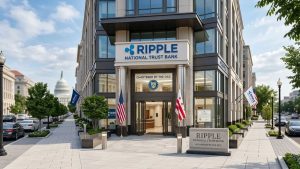
On October 26, 2026, Ripple announced that it had received final approval from the Office of the Comptroller of the Currency (OCC) to establish Ripple National Trust Bank. The decision completed an important regulatory process that began with conditional approval in December 2025, placing the proposed institution under direct federal supervision. According to Ripple’s official announcement, this structure strengthens its ability to provide institutional digital asset custody and fiduciary services, while managing the segregated reserves backing its RLUSD stablecoin.
An important distinction, however, is that this approval does not transform Ripple into a traditional commercial bank. A National Trust Bank focuses on fiduciary responsibilities, asset custody and reserve administration rather than accepting ordinary retail deposits or providing conventional commercial loans. Furthermore, RLUSD will continue to be issued by Standard Custody & Trust Company, Ripple’s New York-regulated subsidiary. The new federal structure therefore introduces an additional layer of oversight without automatically transferring stablecoin issuance to the national trust bank.
The next potential development involves obtaining a Federal Reserve master account, a separate authorization that could significantly expand Ripple’s financial capabilities. According to the Federal Reserve, eligible institutions with master accounts can maintain balances directly with Reserve Banks and access their payment services. If Ripple eventually secures this access, it could establish a more direct connection with the US financial settlement infrastructure, potentially reducing its dependence on certain banking intermediaries. Nevertheless, the OCC charter does not automatically grant this privilege, and approval remains subject to separate eligibility and regulatory requirements. This distinction is essential when evaluating the company’s institutional progress.
BNY And Robinhood Strengthen Ripple’s Commercial Expansion
Beyond regulatory developments, Ripple’s commercial expansion provides another indication of its institutional ambitions. On October 27, the company announced an expanded strategic collaboration with BNY, one of the world’s largest financial services institutions. The agreement strengthens BNY’s role as the primary reserve custodian for RLUSD and expands its digital asset custody capabilities to support XRP and RLUSD. The companies are also exploring blockchain applications for tokenized trade finance, a sector where distributed ledger technology could improve the management, transfer and financing of commercial assets.
Ripple also announced a strategic partnership with Robinhood, expanding the distribution opportunities for its stablecoin and financial infrastructure. The collaboration introduces RLUSD into Robinhood’s digital asset ecosystem, with applications across retail and institutional markets, including treasury management and settlement solutions. These agreements are particularly relevant because institutional adoption depends not only on issuing digital assets but also on integrating them into existing financial operations.
The company’s reported financial performance reinforces this expansion. On October 28, Ripple indicated that it was on track to reach $900 million in annualized product revenue by the end of 2026. This figure represents an annualized revenue run rate rather than a completed, independently audited annual result. Nevertheless, it illustrates the scale of the company’s commercial ambitions and the growing importance of its institutional services.
For XRP investors, this distinction matters. Ripple’s business expansion does not automatically generate equivalent demand for its native cryptocurrency. RLUSD adoption, custody services and corporate partnerships can strengthen the broader ecosystem without necessarily requiring every transaction to use XRP. However, greater utilization of the XRP Ledger and the integration of blockchain settlement into traditional financial operations could create additional opportunities for the token over time.

Standard Chartered Maintains Its $28 XRP Target For 2030
Long-term institutional projections provide another perspective on XRP’s potential valuation. Standard Chartered, through its digital assets research team led by Geoffrey Kendrick, maintains a price target of $28 for XRP by 2030, according to its outlook reported by 24/7 Wall St. in September 2026. This projection reflects expectations surrounding institutional adoption, the expansion of digital asset investment products and the increasing integration of blockchain infrastructure into financial markets.
However, the bank’s outlook is more cautious over shorter periods. In February 2026, Standard Chartered reduced its year-end XRP forecast from $8 to $2.80, reflecting weaker market conditions and deteriorating short-term expectations. Its longer-term $28 projection remained unchanged, illustrating the difference between temporary market weakness and its broader expectations for digital asset adoption.
The forecast should be understood as an analytical scenario rather than a guaranteed outcome. Reaching that valuation would require sustained institutional demand, deeper integration into financial markets and favorable conditions for the cryptocurrency industry. The expansion of spot XRP exchange-traded funds and Ripple’s growing banking relationships could support that process, although neither development guarantees a specific token price. The contrast between the $28 long-term target and the reduced short-term forecast also demonstrates why institutional progress and market performance do not always move together.

Final Reflection: Ripple’s Success And XRP’s Long-Term Opportunity
The developments discussed in the Money Rules analysis suggest that Ripple is increasingly positioning itself as a provider of regulated financial infrastructure rather than competing exclusively in the retail cryptocurrency market. The OCC approval, expanded relationships with BNY and Robinhood, and the company’s projected revenue growth demonstrate the scale of its institutional ambitions. These developments could strengthen Ripple’s position in the evolving digital financial system.
Nevertheless, investors must distinguish between Ripple’s corporate success, RLUSD adoption and actual demand for XRP. They are connected developments, but they are not interchangeable. A potential Federal Reserve master account remains an uncertain regulatory possibility, while Standard Chartered’s $28 target represents a long-term projection rather than a promise.
Ultimately, the most important question is not simply whether Ripple becomes a bigger financial company, but whether its expanding infrastructure translates into measurable economic utility for XRP. Institutional partnerships can create the conditions for broader adoption, but the token’s long-term value will depend on whether that adoption generates sustainable demand. For investors, understanding this difference may be more valuable than reacting to every short-term market movement.