TL;DR
- Zakura proposes one-time incoming viewing keys for Zcash swaps, limiting how much a future quantum attacker could link if a shielded address is publicly exposed.
- The risk is theoretical today: it depends on sufficiently powerful quantum computers recovering a viewing key from an exposed address, not on a demonstrated breach.
- The design keeps spending authority unchanged and uses encrypted memos, filters and Private Information Retrieval to make wallet recovery practical.
Zcash developers are proposing a wallet-level change to limit a future quantum privacy risk affecting shielded swaps. In a technical explanation, Zakura engineer Adam Tucker said shielded transactions remain private against quantum adversaries in many ordinary cases, but publicly posted shielded addresses create a different exposure. For readers following the Zcash privacy model, the proposal targets future linkability when swap addresses become permanently visible on another blockchain.
One-Time Viewing Keys Aim to Limit Quantum Linkability
The concern centers on swaps using NEAR Intents. A Zcash wallet can publish a shielded refund or recipient address on NEAR’s public chain, and diversified addresses from the same account normally share one incoming viewing key. A sufficiently powerful quantum computer using Shor’s algorithm could theoretically recover that key from one exposed address and link payments received across the account. This differs from an active exploit today and fits broader work on quantum-safe Zcash payments. The risk depends on future quantum capability plus access to an exposed shielded address.
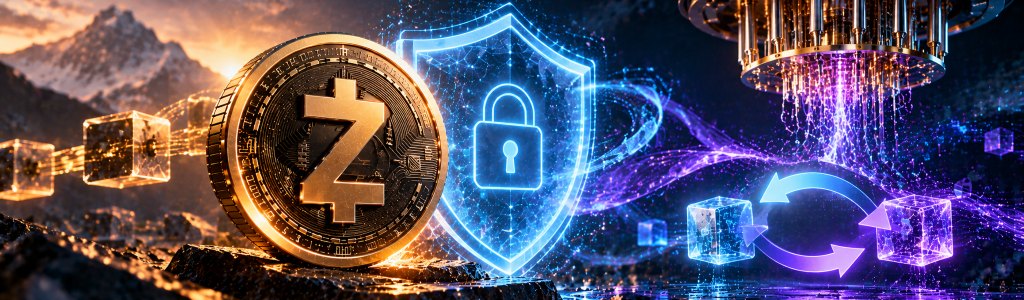
Zakura’s proposed solution derives a separate one-time incoming viewing key for each swap while leaving the account’s spending authority unchanged. If a future quantum attacker recovered the key associated with one published address, exposure would be limited to payments sent there rather than revealing the account’s wider receiving history. The design keeps funds spendable from the original account, avoiding problems created by generating a separate account for every swap. The objective is compartmentalization: one compromised swap address should not reveal unrelated shielded payments.
Wallet recovery creates another challenge because every extra viewing key could otherwise require historical scan. The design records the swap index in an encrypted memo and uses public filters plus Private Information Retrieval to locate relevant NEAR payouts without revealing the queried address to the server. That approach extends privacy techniques around Zcash wallet infrastructure. PIR is intended to preserve practical seed recovery without forcing wallets to rescan the chain separately for every swap key.
Zakura says software wallets using its open-source cryptography and wallet libraries, including Vizor, should integrate the one-time feature in coming weeks, while hardware-wallet support will require firmware changes. The work sits alongside post-quantum research such as Project Epoch, but it does not make Zcash universally quantum-safe. The proposal addresses a narrow privacy weakness in exposed swap addresses, not a demonstrated quantum breach of shielded transactions today.