TL;DR
- Bernstein analysts project Robinhood Chain will generate $160 million in annual fees by 2028, driven by tokenized stock trading.
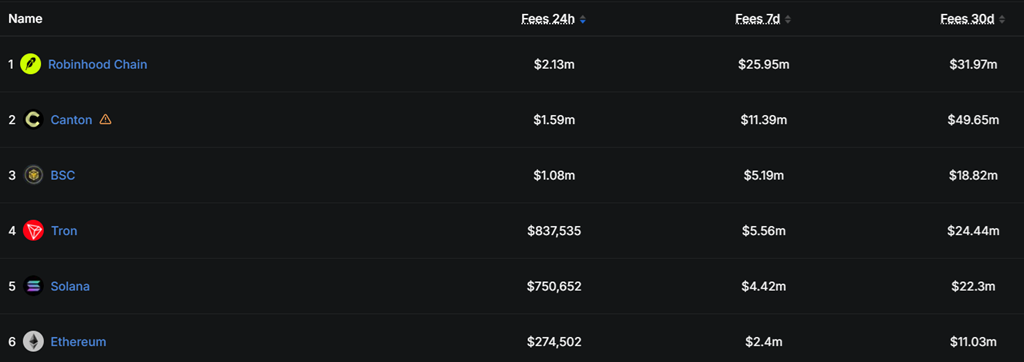
- Just two months after its launch, the network positioned itself as the leading blockchain by daily fees, reaching $2.13 million in the last 24 hours according to DefiLlama.
- AMC Entertainment CEO Adam Aron called Robinhood’s tokenized stock offering “outrageous” and announced a legal investigation.
The blockchain network of Robinhood could generate up to $160 million in annual fees by 2028, according to a report published by Bernstein analysts. This projection is based on the growing demand for tokenized stock trading within the network, which already accounts for approximately 27% of the total volume traded on the chain.
Since its launch on July 1, the composition of traffic on the network underwent a significant shift: memecoin pairs, which represented 100% of activity at the outset, retreated to 36% of total volume. Bernstein attributes this displacement to automated market-making pools on Uniswap, which combine memecoins with stock tokens and generate what analysts describe as “reflexive demand” on both sides of the pair.
Leading Network in Performance
In terms of performance, Robinhood Chain already positions itself as the leading blockchain by daily fees globally, recording $2.13 million in the last 24 hours according to data from DefiLlama. On July 20, Bernstein raised its price target for the HOOD stock from $130 to $160 per share on the Nasdaq, maintaining its Outperform rating and citing projected growth in prediction markets and asset tokenization.
Robinhood’s Tokenized Stocks to Face Investigation
However, the platform’s expansion has generated some controversy. Adam Aron, CEO of AMC Entertainment Holdings, publicly questioned the offering of tokenized stocks by Robinhood that grant economic exposure to AMC shares.

Aron described the situation as “outrageous” and clarified that the tokens have no affiliation with the company. He also announced that AMC will request an investigation from its external legal advisors on securities matters.
This particular case highlights a tension between the tokenization of traditional financial assets and the obligations of the companies that issue those securities, a debate that could define the regulatory boundaries of this segment in the coming years.