Stablecoins moved somewhere between $33 trillion and $46 trillion on-chain over the past year, depending on whose dashboard you trust. Visa and Mastercard combined process roughly $25 trillion annually. The stablecoin figure already beats the two largest card networks on earth, combined.
Meanwhile Ethereum trades near $1,800. That level would have looked like a crash at almost any point in the last three years. That gap is not noise. It marks a structural handoff. Settlement value is migrating from public blockchains to regulated, corporate-controlled rails. The shift is further along than most token holders have registered.
Reserve Yield Replaced the Transaction Fee
Start with the incentive that actually runs the industry. Circle’s Q2 2025 filing shows $634 million of $658 million in total revenue came from interest on reserve assets. That is over 96%, mostly short-term Treasuries. Not transaction fees. Not service take-rates. The revenue is Treasury yield.
The GENIUS Act, signed into US law in July 2025, requires 100% reserves in high-liquidity assets. MiCA does something similar across the EU. Both rules turn a stablecoin issuer into something closer to a narrow bank holding Treasury paper than a crypto protocol charging gas. The yield doesn’t come from DeFi anymore. It comes from the Treasury’s own balance sheet, filtered through a compliant custodian.
For anyone still modeling stablecoin issuers as software companies, the correction is overdue. Compliance became the product itself.
Three Corporate Rails, One Land Grab
The clearest evidence of where the shift goes sits in three separate projects, each announced within the last twelve months.
Circle is building Arc, an institution-focused settlement chain. A token presale raised $222 million, valuing the project near $3 billion before mainnet even shipped. Stripe and Paradigm built Tempo, a payments-first L1.
It went live in March 2026 with sub-second finality and gas payable in any stablecoin. In early July 2026, a coalition of more than 140 companies announced Open USD. The group includes Visa, Mastercard, Stripe, Coinbase, and BlackRock. Open USD routes reserve yield back to the businesses that adopt it, rather than to a single issuer.
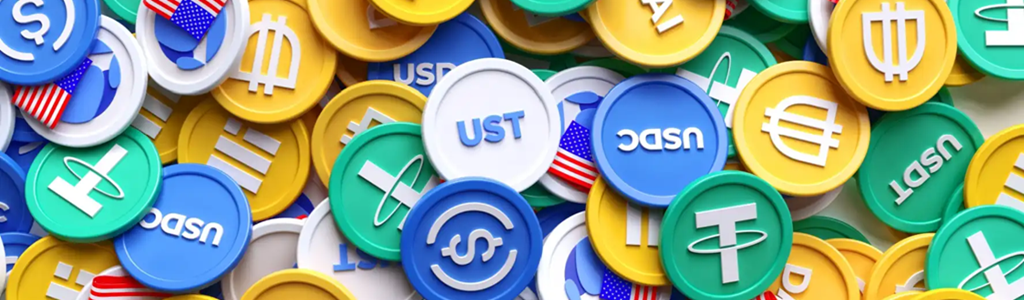
None of the three rails need Ethereum, Solana, or any existing public chain to succeed. That is the point. Circle, Stripe, and the card networks are not building on public infrastructure. They are replacing it. Each project treats general-purpose blockchains the way a payments company treats a legacy vendor. Useful, until you can own the pipe yourself.
The Price Story Is Messier Than the Clean Version
Here is where the popular narrative overreaches, and it is worth being precise about the correction. The easy story says token prices fell because value rotated cleanly into crypto-adjacent equities and corporate rails. CoinDesk’s own Q2 2026 review complicates that picture directly.
The CoinDesk 20 index fell 17.9% that quarter. The S&P 500 gained 14.9% and the Nasdaq 100 gained 27.2% over the same stretch. Capital did not rotate into a basket of crypto-linked stocks outperforming tokens. It rotated into AI-driven equities generally, pulling money out of digital assets as a category, tokens and crypto-adjacent stocks alike.
The honest read: L1 tokens are correcting for two separate reasons that get conflated. One is the real structural shift documented above. The other is a broader capital rotation into AI names that has nothing to do with stablecoin architecture. Treating both as the same phenomenon overstates how much of the token weakness is actually about settlement-layer migration.
What is well supported: stablecoin issuance concentrates hard. USDC and USDT together hold roughly 84% of the stablecoin market. That concentration is the more durable story than any single quarter’s price action.
What Public Chains Actually Lose
The operational case for corporate rails is concrete, not theoretical. Hyundai ran a treasury pilot on Avalanche using USDT. It cut cross-border settlement from several hours to roughly seven minutes. That is the kind of number a corporate treasurer takes to a board meeting. Public chains can match the settlement speed.
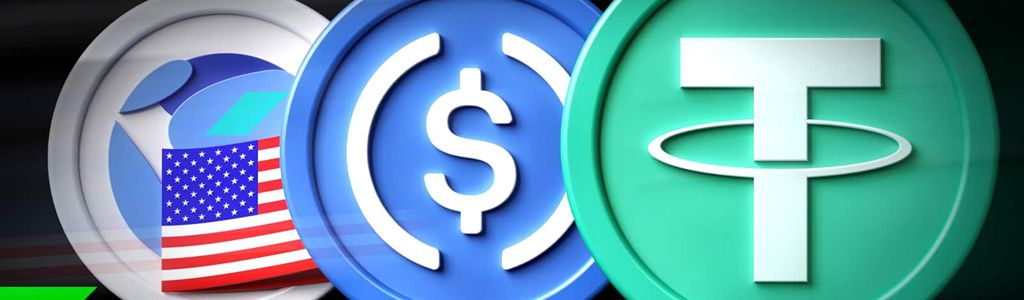
What they cannot yet match is the reconciliation layer. That means matching an invoice to a transaction hash. It means handling a dispute raised outside business hours. It means proving to an auditor that a Tuesday-afternoon transfer cleared compliance in four separate jurisdictions.
Crypto built genuinely good infrastructure for moving value. It built almost nothing for resolving exceptions, and exceptions are where corporate treasuries actually spend their operational budget.
Where the Real Opportunity Sits
The point is not that public chains lose everything. It is an argument about where the next layer of value gets captured. Middleware focused on decentralized identity, compliance oracles, and dispute arbitration sits exactly at the gap corporate rails haven’t closed. Regulation answered what issuers must hold. Nobody has answered how a smart contract reconciles against an ERP system when the two disagree. That question remains wide open.
The fee model shifts too. Public L1s earn from gas. Corporate rails earn from reserve margin and operational efficiency. More settlement volume migrates to Arc, Tempo, and Open USD each quarter. Gas revenue on public chains compresses toward the bare cost of consensus. Validators and miners feel that first. Some networks will feel it longer than others. The ones that cannot find a new incentive layer, whether through specialized blockspace for regulated data or rollups that aggregate liquidity fragmented across the corporate rails above, will feel it longest.