TL;DR:
- Compromised infrastructure: U.S. authorities seized the cloud computing account used by subsidiaries of the Asian conglomerate to provide technical support to illicit marketplaces.
- Transacted volume: According to records from independent analytics firms, platforms linked to the entity processed multibillion-dollar amounts in digital assets prior to the judicial intervention.
- Regulatory scope: The criminal enforcement measure transcends standard digital wallet freezing by directly targeting the secondary technical support services layer.
The United States Department of Justice (DOJ) announced the intervention and seizure of the cloud computing infrastructure belonging to subsidiaries of Huione Group.
This federal operation was carried out as part of a global campaign against electronic fraud networks. This action represents a tactical shift in government enforcement efforts. The suspected services, based in Cambodia, operated as the technological backbone for communication channels and payment gateways oriented toward processing illicitly sourced capital.
The dismantling of the money-laundering technological layer
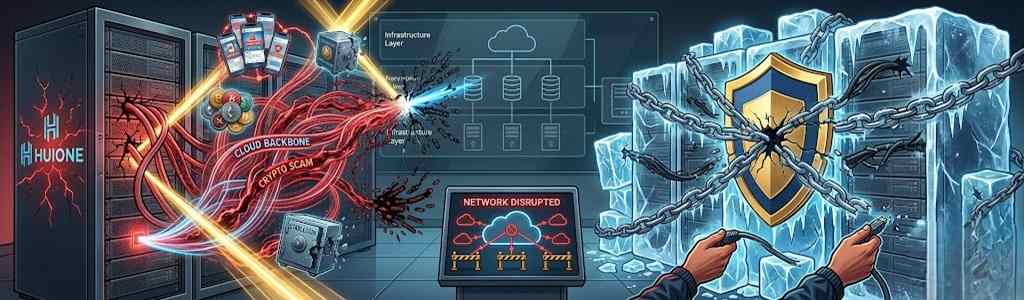
The Department of Justice report indicates that the seized computing account hosted the technical support ecosystem that enabled the transfer of funds originating from cryptocurrency investment scams. Investigation data suggests that the platform directly facilitated the conversion of digital assets into the traditional banking system without leaving a regulatory trail.
The affected operational core sustained the activities of Huione Guarantee, a section of the conglomerate specializing in custody services and digital marketplaces which, according to court records, mobilized capital flows originating from scam hubs in Southeast Asian.
The organization’s operational complexity required a framework that combined encrypted messaging applications, automated payment processors, and over-the-counter (OTC) brokers. Technical analyses shared by blockchain intelligence firms reveal that the infrastructure processed high-liquidity stablecoin transactions due to their speed and low volatility characteristics.
Additional data provided by the digital asset analytics platform Elliptic points out that Huione Guarantee channels reached historical flows exceeding $31 billion dollars in illicit transactional volume.
Unlike conventional procedures focused on freezing specific smart contract addresses, the approach adopted in this offensive targeted the physical and network layer. The decentralized nature of blockchains allowed operators to constantly migrate digital wallets, which diminished the long-term impact of individual sanctions.
The U.S. authorities’ report details that disabling the cloud storage substantially disrupts the continuity of support services, preventing the immediate reconfiguration of the black market portals linked to the organization.
Regulatory impact on the global crypto ecosystem
Enforcement on infrastructure providers could raise corporate compliance requirements for legitimate companies in the tech and financial sectors. Platforms providing web hosting, liquidity aggregators, and payment gateways stand as the new targets of scrutiny for the early detection of money-laundering patterns.
The current market trend shows that the inherent transparency of distributed ledgers continues to assist public safety agencies in tracking complex financial flows. However, the actual effectiveness of these analytical tools depends on the speed of cooperation between internal compliance teams and international government agencies.
This event is part of the federal initiative known as “Operation Riptide”, an ongoing compliance program led by the FBI and the Internal Revenue Service (IRS) that actively tracks advanced digital fraud. According to data collected by the FBI’s Internet Crime Complaint Center (IC3) in its 2025 annual report, reported losses from cryptocurrency investment fraud exceeded $7.2 billion dollars in U.S. territory.
The legal proceedings against the conglomerate’s subsidiaries remain open in the Northern District of California, where prosecutors assigned to the case will process the final liquidation of the intercepted servers and residual assets linked to the case.