
TL;DR:
- Bitcoin could fall to $55,000 before bottoming out in this bear cycle, according to an analysis published on the 10x Research website.
- Markus Thielen points out that the strengthening dollar and the Fed’s hawkish pivot under Kevin Warsh are generating pressure across the crypto market.
- Three key indicators —global liquidity, seasonal patterns and the macro calendar— are pointing to a cycle low between August and October.
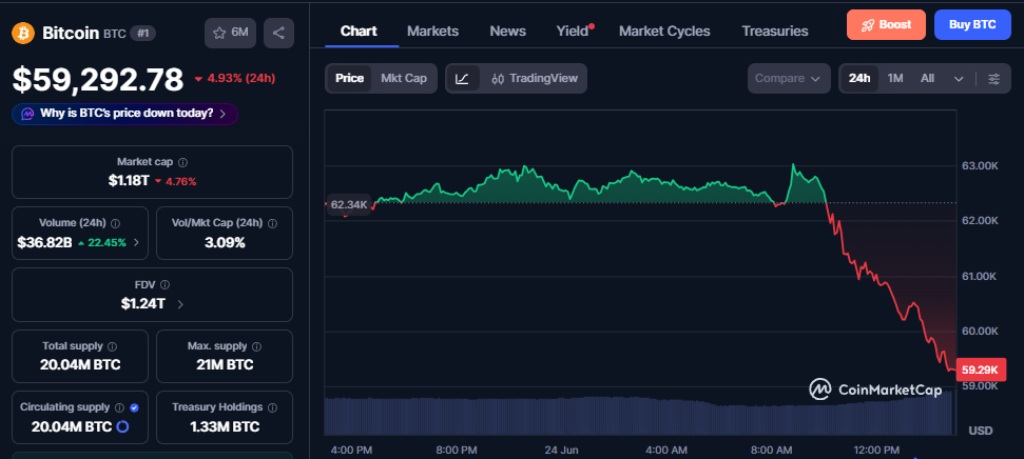
The founder of 10x Research, Markus Thielen, projected that Bitcoin will lose the $60,000 support level and reach $55,000 before establishing the floor of the current bear cycle. According to the latest data from CoinMarketCap, Bitcoin (BTC) is trading near $59,300 per unit, with a 5% drop over the past 24 hours and trading volume climbing 22.5% to approximately $37 billion. Its market capitalization stands at around $1.18 trillion.
Thielen’s analysis rests on two macro pillars. The first is the strengthening of the U.S. dollar, which historically acts as a headwind for Bitcoin. The second is the hawkish pivot of the Federal Reserve under its new chairman, Kevin Warsh, who took office amid a heated debate in markets over whether the next rate move will be a hike rather than a cut. That scenario supports the dollar and puts pressure on risk assets like BTC.
The Bitcoin Bear Market Low: We Know the Time. We Know the Price.
The bear market low is coming.
Three independent frameworks, dollar cycles, global liquidity, and seasonality, are converging on the same window.
We know the timing. We know the price.
Not a guess. A roadmap.… pic.twitter.com/ljpUc3pRJE
— 10x Research (@10xResearch) June 24, 2026
Three Signals Point to the Same Destination for Bitcoin
Thielen identified three independent indicators converging on a similar time window. The first is a model that tracks the rate of change in global liquidity, which —according to the analyst— correctly identified a buying opportunity in March and an exit signal in April.
That model points to late August as the next key inflection date. The second indicator is Bitcoin’s seasonal pattern: September has historically been a weak month for the asset, frequently followed by a recovery in October. The third is the macroeconomic calendar, which includes the Fed meetings in September and October, the U.S. midterm elections and the Treasury Department’s quarterly refunding announcement at the start of November.
The convergence of those signals leads Thielen to estimate that the cycle low will occur between August and October, with the $55,000 level as the target before a sustained recovery takes shape.