TL;DR:
- The Artificial Superintelligence Alliance introduced FabricPC, an open-source Python framework designed for training neural networks using predictive coding.
- The ASI:Chain bridge infrastructure expanded into a multichain system by integrating native support for the Cardano network.
- The Agent Launch funding program opened the reception of proposals with estimated response times between three and five days.
The eighth biweekly product and development report of the Artificial Superintelligence Alliance was presented this Friday. The summary covers the period from May 31 to June 12, detailing the technical advances aimed at optimizing network infrastructure, the security of its virtual agents, and the deep learning tools of its ecosystem.
— Artificial Superintelligence Alliance (@ASI_Alliance) June 12, 2026
Innovation in neural networks and infrastructure optimization
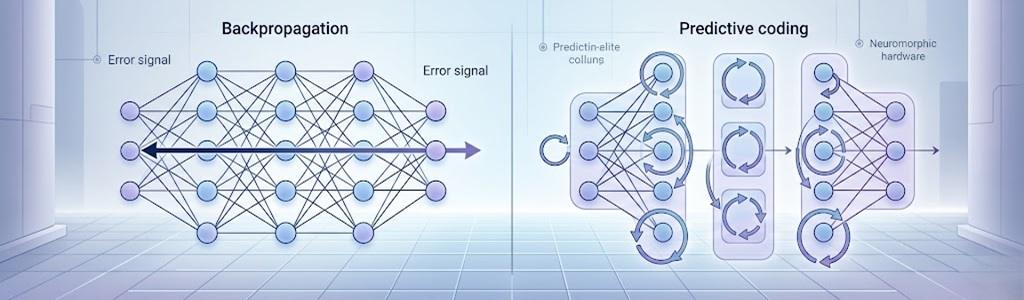
The report highlights the main novelty, which was the launch of FabricPC. This is an open-source library that exposes the group’s advances in neural research. This framework facilitates the development of predictive coding networks. Unlike traditional backpropagation, this approach allows each section of the network to generate predictions and correct itself locally and independently. The institution notes that this system adapts efficiently to the next generation of neuromorphic hardware.
On the other hand, ASI:Chain developers implemented structural modifications to resolve the saturation of the read-only API. Technical data from the report indicates that the HTTP runtime environment was moved to a multi-threaded system, complemented by the replacement of a global lock in the blockDAG layer with a read-write equivalent. According to performance tests conducted by the engineering team, these modifications increased overall processing throughput and reduced latency under sustained high-load scenarios.
In the area of cross-chain connectivity, the bridge infrastructure expanded its reach to a total of five operational networks. Engineers integrated support for Cardano using the Pallas library in Rust and validated end-to-end transfers through a specific test node called Preprod. Likewise, the decentralized application incorporated an address schema validation module to mitigate erroneous transfers.
Updates in intelligent agents and digital wallets
The security of the OmegaClaw agent received a comprehensive review during the first half of June 2026. The technical team proceeded to hide the language model (LLM) authentication tokens within the agent’s process to prevent leaks to external networks. According to data from the development report, file system policy restrictions were applied and automated security scans were activated in the continuous integration workflow.
The Telegram agent, Oma, also experienced changes in its internal architecture. Its active model was updated to version GLM-5.1 and compatibility with the OpenRouter provider was added. Regarding the user interface, the ASI:Create and ASI:One applications implemented navigation improvements, Markdown file previews in side panels, and the integration of responsive media galleries.
It was highlighted that the problems detected in chain stabilization after a cold restart of the validators were formally referred to the F1R3FLY team for resolution in upcoming source code builds.
The ecosystem will keep accepting grant applications through the Questbook platform for developers focused on the Agentverse tool catalog.