L;DR:
- The developer toolkit includes support for the X402 protocol, enabling transactions with XRP and the RLUSD stablecoin.
- Operations on the ledger feature a deterministic finality that resolves within a 3-to-5-second range natively.
- The system leverages existing institutional controls on the network, such as multi-signature schemes, deposit authorization, and escrow contracts.
Ripple presented the XRPL AI Starter Kit this Wednesday. This is a set of developer tools designed for AI agents to conduct financial transactions independently. With this innovation, they aim to mitigate the limitations of conventional payment tools, which strictly require human intervention to process and approve capital transfers.
Technical infrastructure and protocol capabilities
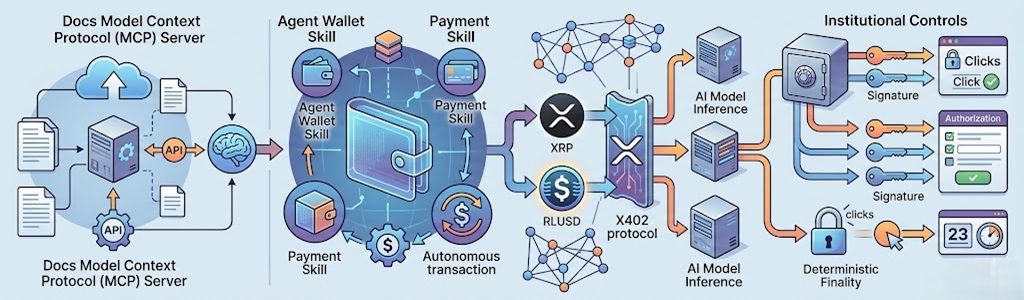
In its first phase, the toolkit introduces a Model Context Protocol (MCP) server for network documentation. Ripple sources pointed out that this component makes it easier for integrated development environments to query technical data directly. Likewise, the kit adds specific skills for digital wallets, allowing balance inquiries and the tracking of financial operations without the need to program custom integrations from scratch.
The integration with the HTTP-native X402 open standard, developed in collaboration with technology partner t54, enables autonomous agents to pay for API calls and computing services. According to Ripple’s report, artificial intelligence entities can make payments using both the native asset XRP and Ripple’s USD stablecoin, RLUSD. Technical materials provided by the company project that the initial setup of this testnet environment takes less than 30 minutes.
Operational efficiency and risk mitigation in autonomous finance
The architecture of the XRP Ledger eliminates common issues found in networks that use gas auctions to determine fees. Transactions on this network have predictable fixed costs, which facilitates budget accounting and the setting of automated spending limits for software systems. Technical data from the platform indicates that processes confirm or expire within a 3-to-5-second interval, avoiding ambiguous pending states in the workflow.
The network’s built-in decentralized exchange (DEX) handles currency conversion internally at the protocol layer. According to infrastructure analyses, this eliminates the need to use external blockchain bridges to swap RLUSD for XRP. By dispensing with intermediaries, the operational risk of suffering hacks based on smart contract vulnerabilities is reduced. Data from DefiLlama’s DeFi exploit tracker suggests that cumulative losses from smart contract vulnerabilities exceeded $16.6 billion dollars in the period from 2020 to the present.
The ecosystem integrates native enterprise security features such as multi-signatures and escrow channels. These tools regulate fund limits and define which commercial counterparties the artificial intelligence can interact with. The company has operated the ledger since 2012 without recording any transaction rollbacks, a track record presented as a reliability factor for security audits in corporate environments.
The deployment of this first phase will continue its technical evolution based on the feedback received from the developer ecosystem in the coming months.