TL;DR:
- Anchorage Digital Bank obtained its federal charter from the Office of the Comptroller of the Currency (OCC) in January 2021.
- The new Agentic Banking infrastructure integrates spending limits and real-time risk monitoring for transactions executed by artificial intelligence.
- The collaboration with Google Cloud combines MPC key management technology with AI capabilities to support agentic economies.
On Wednesday, May 6, Anchorage Digital presented a comprehensive infrastructure strategy that seeks to unify the custody, settlement, and issuance of regulated stablecoins with financial systems driven by autonomous agents. This move positions the firm as a technical bridge between traditional banking and next-generation applications based on artificial intelligence.
The information indicates that the company’s approach responds to a transition toward programmable money systems that prioritize regulatory compliance. The platform allows for the processing of transactions initiated by AI agents, incorporating identity verification and audit controls to mitigate operational risks associated with digital autonomy.
— Nathan McCauley ⚓ (@nathanmccauley) May 5, 2026
The firm’s co-founder and CEO, Nathan McCauley, noted via X that the integration of AI into finance requires rigorous controls. Under this premise, the developed infrastructure seeks to prevent autonomous agents from having unrestricted access to corporate funds, establishing instead an environment where every financial movement is verifiable.
Regulated Infrastructure and Technological Collaboration
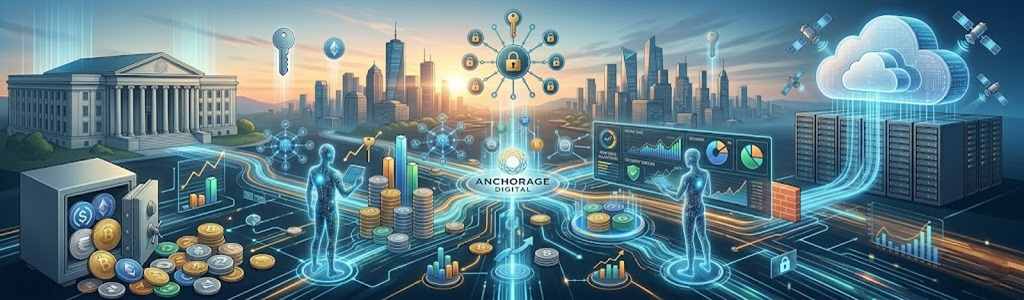
The company is currently expanding its cooperation with Google Cloud to integrate the necessary intelligence layer into the agent economy. Technical data from the project suggests that Google’s AI functions will be combined with multi-party computation (MPC) key management technology to secure institutional digital assets.
According to McCauley, this model is viable thanks to the federal banking license that the institution has held since the first quarter of 2021. This regulatory structure allows the system to maintain immutable records, facilitating risk tracking and compliance with banking standards in automated transactions.
The proposal operates under a consolidated B2B2C framework that includes wallets, trading operations, staking, and workflow management. According to the company’s vision, this design allows other financial firms to incorporate crypto assets into their final commercial products without compromising operational security.
The firm’s report indicates that the agentic banking system not only seeks to inform decisions but also to allow agents to act in the real economy with regulated access to capital. To this end, specific functions were included to limit spending and track risk constantly, protecting the integrity of institutional accounts.
Strategic Alliances for Stablecoin Issuance
In an effort to address the demand for digital liquidity, the firm confirmed an agreement with M0 to support stablecoin issuers. The intent of this union, according to a joint statement, is to merge M0’s technological infrastructure with the issuance capabilities approved under the banking institution’s regulatory framework.
The CEO of M0, Luca Prosperi, estimates that this collaboration could reduce operational complexity and costs for companies wishing to deploy their own stable assets. The proposed model seeks to develop new use cases while adhering to the security and compliance frameworks established by the current partners.
Other entities in the financial sector are adopting similar stances. For example, Fidelity International Services (FIS) recently announced a collaboration with Anthropic to create an AI agent specialized in financial crimes. This system is projected to complete money laundering checks in reduced times, a tool that banks like BMO and Amalgamated Bank are already preparing to implement.
By the end of this semester, the deployment of stablecoin issuance capabilities under the M0 and Anchorage Digital infrastructure is expected to begin its initial operational phases.