TL;DR:
- Iran is reportedly considering crypto toll payments for fully loaded oil tankers passing through the Strait of Hormuz during the current two-week ceasefire.
- The proposal would push digital assets into a more strategic role, tying them directly to maritime transit, energy flows, sanctions pressure, and geopolitical leverage.
- Even as a reported plan, it signals governments may increasingly view blockchain-based settlement as a tool for access and control.
Iran is considering a startling new use for digital assets: charging oil tankers in crypto for passage through the Strait of Hormuz during the current two-week ceasefire with the United States. The proposed fee would apply to fully loaded vessels moving through one of the world’s most sensitive energy corridors. This is not another story about consumer payments or fintech convenience, but about crypto entering the operational core of a geopolitical chokepoint. That alone gives the idea far more significance than a routine blockchain headline across global markets.
Why the proposal feels bigger than a payment experiment
At one level, the concept is brutally simple. Ships pay, ships pass. But the strategic meaning runs much deeper. If transit through Hormuz begins to involve crypto-denominated tolls, digital assets would no longer sit at the margins of trade finance. They would become part of the working logic of a corridor tied directly to oil flows, sanctions pressure, and state leverage. That is why the plan reads less like a technical experiment and more like an attempt to insert new payment rails into a zone where energy, diplomacy, and coercive power already collide.
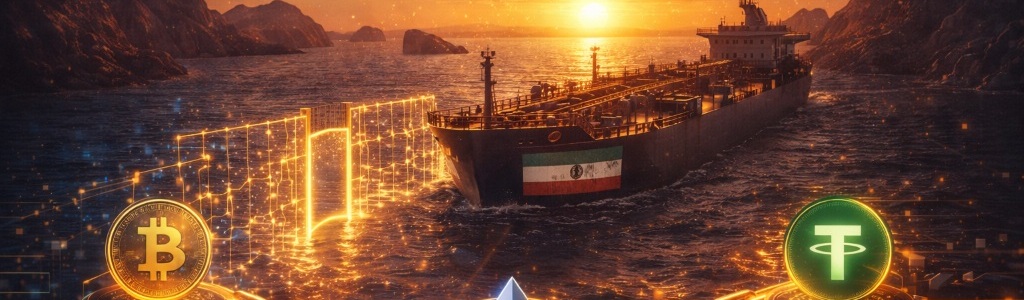
The timing makes the proposal even more charged. The reported plan has surfaced during a two-week ceasefire, which gives it the feel of a temporary instrument rather than a settled policy framework. That matters. A crypto-based toll floated during a fragile pause in hostilities looks less like long-term modernization and more like tactical optionality. In that kind of setting, payments infrastructure becomes another variable in negotiation, control, and signaling, rather than a neutral economic tool detached from the surrounding conflict.
The broader implication is difficult to miss. Digital assets keep resurfacing where traditional financial channels become politically constrained, strategically inconvenient, or vulnerable to sanctions. Even without a final framework in place, the fact that such a toll is reportedly under consideration says something important about how state-linked actors may now view blockchain-based settlement. Crypto is no longer being tested only by startups and speculative markets, but by governments thinking about access, pressure, and continuity in real time. If implemented, the proposal would mark a remarkable convergence of maritime transit, energy politics, and digital-asset settlement at a moment when logistics, diplomacy, and financial infrastructure are colliding in plain sight.