TL;DR:
- Bitcoin’s global hashrate fell to 1,004 EH/s in Q2 2026, a 5.8% contraction from the previous quarter, driven by the decline in BTC’s price.
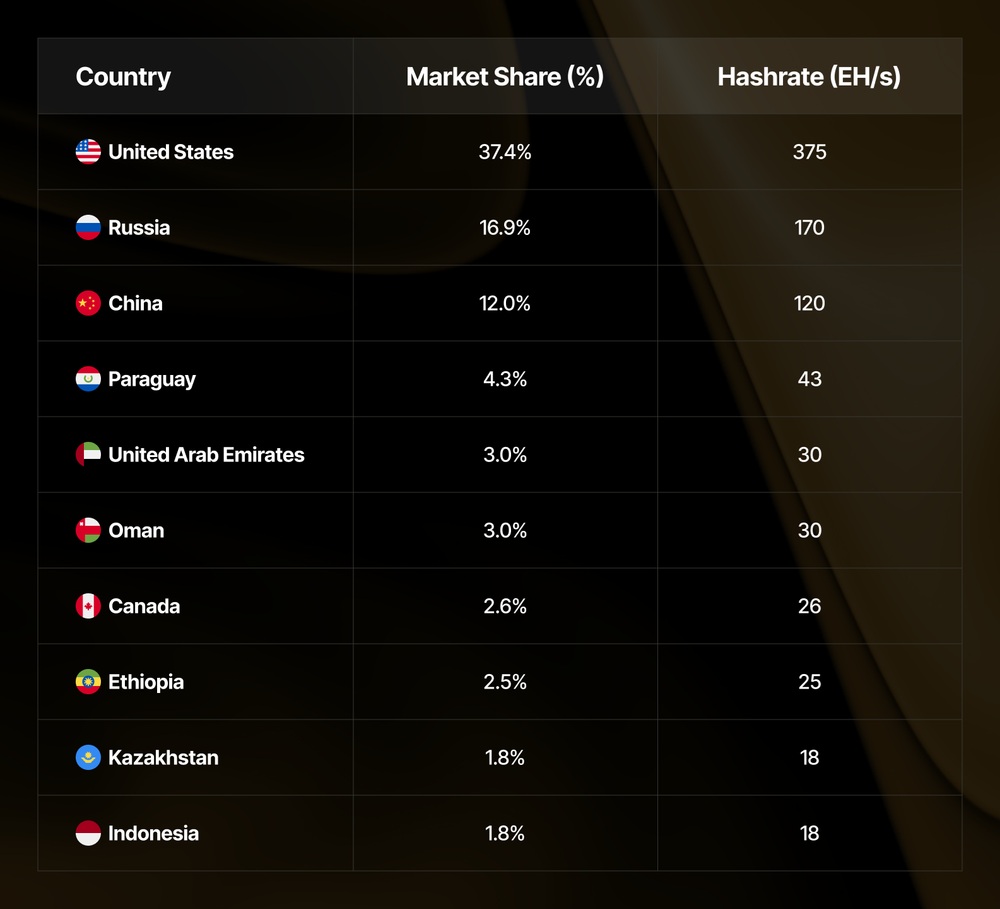
- The United States controls 37.4% of the total, followed by Russia (16.9%) and China (12%), with the three countries concentrating 65.2% of the network.
- Kyrgyzstan, Paraguay, Laos and Finland grew during a full bearish cycle, thanks to modern hardware and concrete energy advantages.
Bitcoin’s global hashrate recorded its sharpest drop in several quarters: the 30-day moving average reached 1,004 EH/s in Q2 2026, down from 1,066 EH/s the previous quarter, according to the Hashrate Index report.
The 5.8% quarterly contraction is not the result of regulatory tensions or geopolitical conflicts, but of a clear economic cycle: Bitcoin’s price fell approximately 50% from its peak of $124,000 in October 2025 to $65,000 in February 2026, pushing the hashprice to an all-time low of $27.89 per PH/s/day.
At those levels, older-generation equipment —with efficiencies above 25 J/TH— operates at negative gross margins. Hashrate Index estimates that approximately 252 EH/s of marginal capacity remains offline, with most of the obsolete hardware already permanently retired.
Stable Leaders and Margins Under Pressure
The network’s geographic concentration remains high. The United States retains 37.4% of global hashrate with approximately 375 EH/s, though it posted a slight quarterly decline attributed to equipment retirement and some operators shifting toward artificial intelligence infrastructure. Russia holds 16.9% despite sanctions pressure and regulatory ambiguity, while China, at 12%, reflects the impact of compliance actions in Xinjiang in December 2025, which took approximately 13% of its capacity offline.
Among the most notable cases of the period, Kyrgyzstan posted 300% year-over-year growth and 167% quarter-over-quarter growth. Its parliament approved transparent mining regulations in mid-2025, which attracted capital at a time when regulatory clarity is scarce. Paraguay grew 54% year-over-year and controls 4.3% of the total through professional operators. Laos and Finland, each with 100% year-over-year growth, benefit from hydroelectric energy and climate advantages respectively.

Argentina Lost 42% of Its Hashrate, Brazil Keeps Growing
Ethiopia climbed to eighth place globally with 2.5% of the hashrate, a notable result given that the government froze permits for new mining operations in mid-2025. The decision to honor already-granted approvals generated enough confidence among existing operators to sustain growth.
At the opposite end, Iran lost approximately 7 EH/s during the quarter due to regional geopolitical conflict, and Argentina continues its decline with a 42% year-over-year drop, a direct reflection of macroeconomic instability. Brazil, by contrast, shows signs of structural investment, posting 133% year-over-year growth to 3.5 EH/s, though the report notes that Q3 and Q4 will determine whether this represents a sustained expansion or a short-term spike.