TL;DR:
- XRP’s price fell 4.58% in the last 24 hours, trading near $1.29 after failing to hold the technical support at $1.33.
- Geopolitical tensions in Iran and capital outflows from XRP ETFs have fueled a risk-aversion sentiment affecting the entire sector.
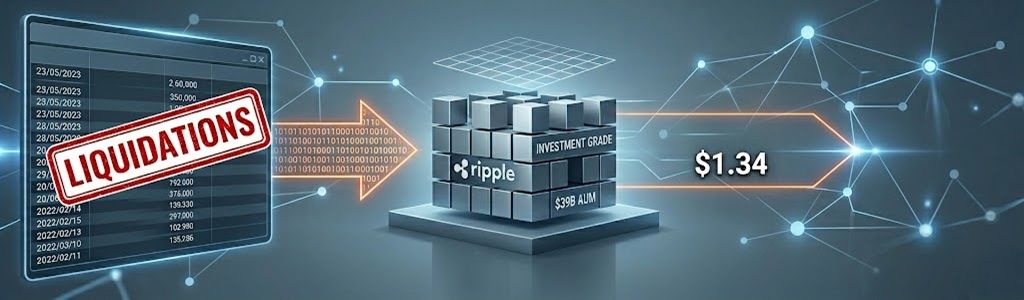
- Despite the dip, Ripple strengthened its ecosystem, achieving an investment-grade credit rating and reaching $39 billion in assets under management.
On April 2nd, XRP deepened its red trend, sliding into a “danger zone” as global market weakness accelerates liquidations. The current context of uncertainty has forced investors to seek refuge in traditional assets.
Technical indicators currently show a complex landscape; the RSI stands at 33.28, nearing oversold levels, while trading volume reflects persistent selling pressure. The 50-period moving average, located at $1.34, now acts as critical resistance that the price has failed to overcome.
Divergence Between Market Price and Ripple’s Growth
Despite the negative price action, Ripple’s fundamentals present a narrative of institutional resilience. The company has integrated digital asset capabilities directly into corporate treasury platforms, aiming to optimize real-time liquidity for global corporations.
However, the retail market seems to be ignoring these advancements in favor of the “supply inflation” narrative. The recent release of 1 billion tokens from Ripple’s escrow has generated a perception of oversupply, weighing on the price in the short term.
XRP remains trapped in a structure of lower highs and lower lows. To invalidate this bearish bias, the asset must decisively reclaim the $1.34 level; otherwise, the risk of a drop toward lower support levels remains imminent.