TL;DR:
- The Austrian regulator FMA prohibited KuCoin EU from onboarding new customers due to a lack of key AML personnel.
- The recent departure of two compliance executives created these gaps in the organizational structure.
- KuCoin claims the pause is voluntary and will not affect its long-term regional strategy.
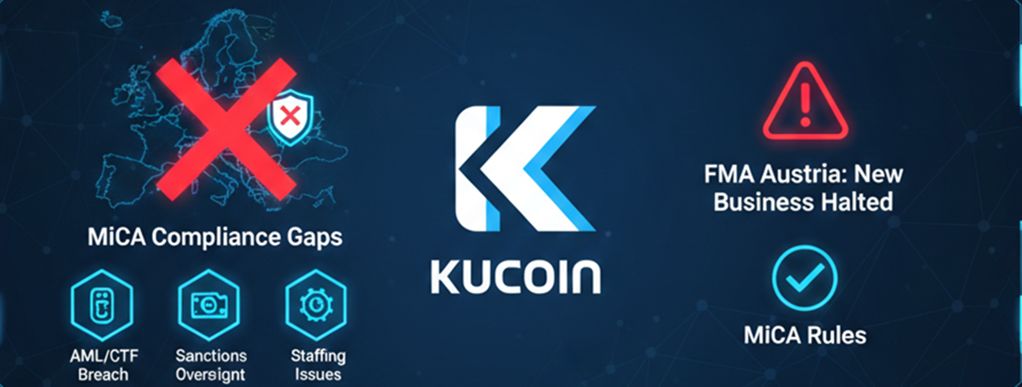
The Austrian Financial Market Authority (FMA) has decided to halt the commercial operations of exchange KuCoin’s local entity. With this decision, the exchange’s expansion in Europe under MiCA has come to a standstill due to internal gaps in Anti-Money Laundering (AML) prevention requirements.
As a result of this ruling, KuCoin EU will not be able to add new users or launch products until its compliance functions are “adequately covered.” Management indicated that the situation arose following the recent departure of professionals responsible for sanctions oversight and countering the financing of terrorism.
Despite the incident, the company reported that it is already in the process of recruiting to fill these critical vacancies. Furthermore, they emphasize that the Vienna operations center remains a fundamental pillar for its deployment within the European Economic Area.
The Rigor of MiCA and the Vigilance of European Regulators
Holding a license does not guarantee immunity from constant supervision by national authorities, as evidenced by this case. The halt of KuCoin’s expansion in Europe under MiCA will serve as a warning to other companies in the sector regarding the importance of maintaining a solid and permanent governance structure.
On the other hand, regulators in countries such as France and Spain have warned that the MiCA transition period ends in July 2026. Those firms that fail to strictly comply with personnel and security standards will have to cease their activities in an orderly manner within the bloc.
In summary, KuCoin reaffirms its commitment to long-term regulatory compliance, describing this episode as a temporary structural gap. Nevertheless, the market is closely watching how the exchange resolves this administrative challenge to resume its growth path in the European Union.