TL;DR
- Adam Back rejects BIP-110, arguing it threatens Bitcoin’s stability as sound money.
- Only 3% of nodes support the initiative, far from the required 55%.
- Bitcoin Knots pushes the change and its share climbed to 22.7%.
Adam Back, CEO of Blockstream, firmly rejects Bitcoin Improvement Proposal 110 (BIP-110). The executive believes implementing a spam limit at the consensus level threatens the stability and reputation of Bitcoin as a reliable monetary system.
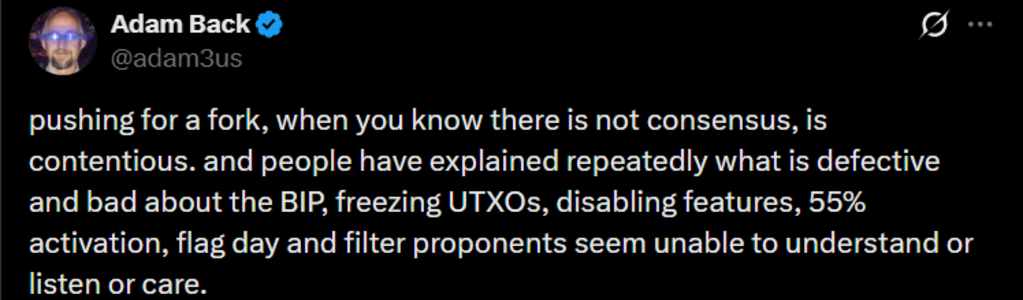
Back’s stance emerges after confirming approximately 7.5% of network nodes, primarily Bitcoin Knots users, support the proposal. However, actual backing reaches merely 3% of total nodes, a figure far from the 55% required to approve the soft fork.
Dathon Ohm presented BIP-110 last December. The proposal suggests a temporary 12-month reduction in transaction data limits. The goal consists of preventing images and media files from saturating the blockchain.
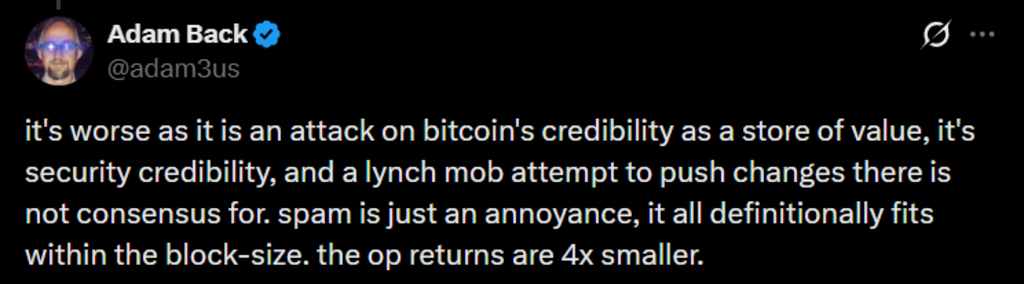
Back defends Bitcoin’s role as sound, hard money but rejects any intervention in its consensus mechanisms. According to the executive, spam represents a minor nuisance posing no threat to network security. Last Sunday, February 15, Back posted on X claiming a modification of such magnitude lacks valid justification.
Bitcoin Knots Gains Ground Amid Debate
The Blockstream CEO labeled the proposal an “attack” and compared the attempt to force changes without consensus to a “lynch mob” effort. Despite the warnings, support for BIP-110 grows among Bitcoin Knots validators. The software began gaining significant market share in late 2024 and accelerated its adoption in early 2025.
In late October 2024, Bitcoin Core v30 modified its default policy by removing the 80-byte OP_RETURN restriction. The change aimed to reduce UTXO bloat by encouraging the use of non-spendable data outputs.
OP_RETURN functionality sparked intense debate within the community. As a result, Bitcoin Core’s share dropped to 77.2%, a reduction of 20.8%, while Bitcoin Knots climbed to 22.7%. The discussion fueled controversies about which transaction types should receive permission on the network.

The Bitcoin Knots team leads the BIP-110 proposal, designed to operate for one year and adjust according to community feedback. As of January 25, none of the top 20 mining pools showed interest in backing the initiative.
The gap between current support and the required threshold generates uncertainty about the proposal’s future. The debate exposes existing tensions in Bitcoin governance regarding blockchain data management. Back maintains his position against consensus-level interventions, arguing Bitcoin’s value proposition depends on maintaining its foundational principles intact.
The controversy highlights the ongoing struggle between preserving Bitcoin’s original design and adapting to emerging challenges like transaction spam and blockchain bloat.