TL;DR:
- Trading volume quadrupled in a year, concentrating on platforms like Polymarket and Kalshi.
- CertiK warns that up to 60% of volume on some platforms could be “wash trading” or simulated trades.
- Flaws in hybrid security architecture put user funds at risk despite solid smart contracts.
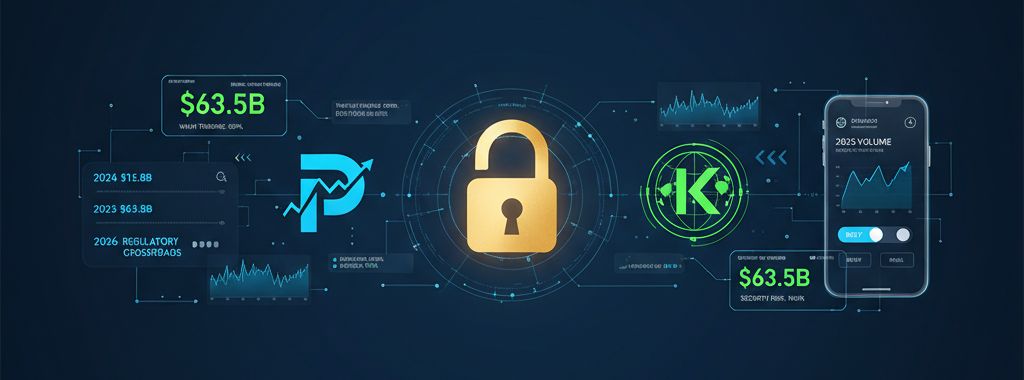
The latest report from security firm CertiK reveals that prediction markets in 2025 recorded an annual volume of $63.5 billion, a figure that represents a significant jump from the $15.8 billion recorded a year earlier.
While this is certainly meteoric growth, it hides deep structural tensions that could call into question the long-term sustainability of the ecosystem. In fact, they warn that most of this activity has been driven by temporary incentives rather than organic user demand.
CertiK’s report revealed an alarming data point: “wash trading” reached peaks of 60% on dominant platforms like Polymarket over the last year. Although this inflates liquidity metrics to attract investors, analysts maintain that, for now, prices and probabilities remain mostly reliable.
Security Risks and the Regulatory Challenge for 2026
Beyond volume manipulation, the report reveals that security has not evolved at the same pace as mass adoption. The hybrid architecture of these platforms creates critical vulnerabilities, especially in third-party authentication processes that expose user accounts.
As a result, recent incidents demonstrated that even with audited smart contracts, failures in email access services can compromise capital. For this reason, CertiK urges companies to treat security as a single surface that includes both the backend and the frontend.
In summary, the prediction markets in 2025 sector finds itself at a strategic crossroads as it enters the new fiscal year. Future success will depend on its ability to retain users without subsidies, navigate state restrictions, and strengthen its infrastructure against increasingly sophisticated attacks.