
TL;DR
- Altcoins underperformed Bitcoin for the fourth consecutive year in 2025, breaking the historical cycle pattern.
- Bitcoin dominance stayed high (~60%), as liquidity and risk control drove capital toward larger, more liquid assets.
- The TOTAL3/BTC ratio, tracking altcoins excluding BTC and ETH, fell to multi-year lows.
Altcoins closed 2025 weaker versus Bitcoin, extending a four-year run of underperformance. Traders tracked the TOTAL3/BTC ratio, which excludes Bitcoin and Ethereum, and saw fresh declines for 2022, 2023, 2024, and 2025. The pattern breaks with old cycle lore where smaller tokens often rallied after Bitcoin advances.
Reports across desks point to larger flows into highly liquid assets. Bitcoin dominance hovered around 59–60% during the late-year selloff, narrowing room for rotation into altcoins. Portfolio managers who favored breadth earlier in the year now cite risk control and execution depth as primary filters.
Median performance among the top 30 altcoins ended negative for the year, according to multiple data providers. Small-cap tokens printed four-year lows against Bitcoin during the fourth quarter. Bitcoin also retreated from an October high and finished the year down, marking the first annual loss since 2022, yet the leader still outpaced most rivals on a relative basis.
TOTAL3/BTC ratio signals a persistent advantage for Bitcoin
The TOTAL3/BTC ratio remains the simplest lens for relative strength. A falling line means one unit of BTC buys more altcoin market cap than before. Desk commentary framed the drawdown as a re-rating toward liquidity, fees transparency, and custody clarity. Order books for many altcoins thinned during stress, while spot BTC and major ETH pairs handled redemptions and rebalancing with fewer price gaps.
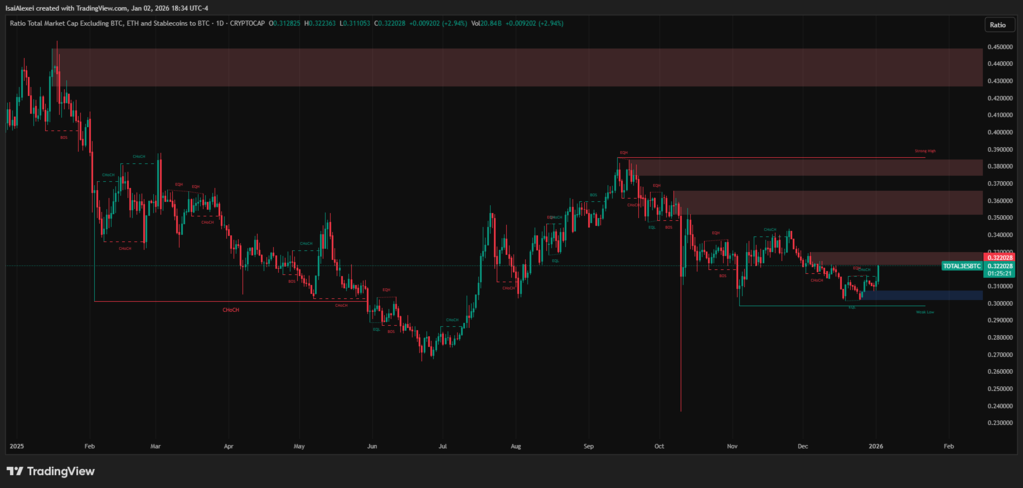
Higher real yields earlier in the year punished long-duration risk and curtailed speculative flows. As conditions eased only modestly into December, allocators preferred vehicles with deeper derivatives support and steadier funding. That framework favored Bitcoin over smaller tokens, even as absolute prices cooled.
Market structure added friction for recovery rallies
Many altcoins rely on exchange incentives, cross-chain liquidity, or staking yields that compress when prices fall. Developers shipped updates across networks, yet end-user metrics lagged price action, and order-flow concentrated in majors. Without sustained spot demand, rebounds faded near overhead supply.
Keep Bitcoin as core exposure, use ETH for smart-contract beta, and size altcoins tactically when volumes confirm. Screens prioritize pairs with tight spreads, ample depth, and clear collateral treatment across venues. Where those attributes weaken, sizing shrinks.
Risk remains two-sided into early 2026
A durable shift in funding costs, stronger spot inflows, or a reacceleration in user activity could lift altcoin breadth. Absent that, relative charts likely reward patience in majors.
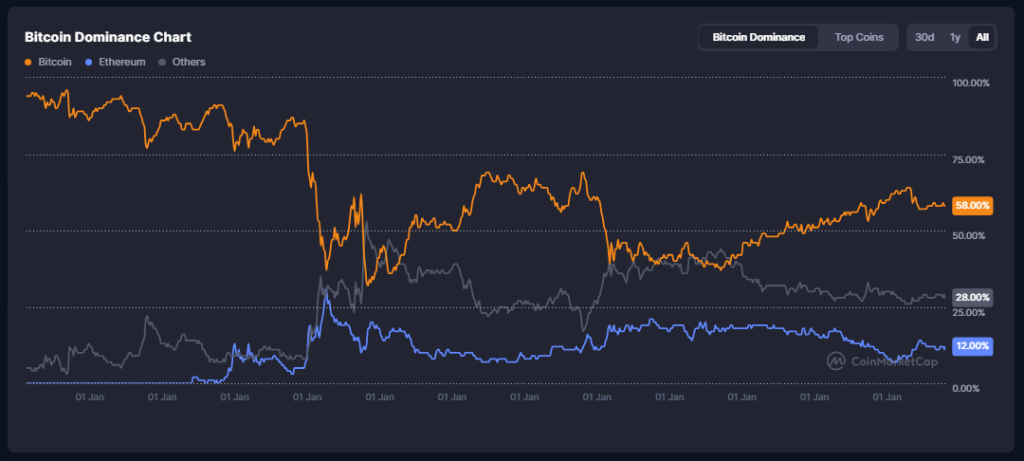
For now, the scoreboard is unambiguous: Bitcoin dominance near 60%, a fourth straight annual decline in the TOTAL3/BTC ratio, and a median loss across leading altcoins.