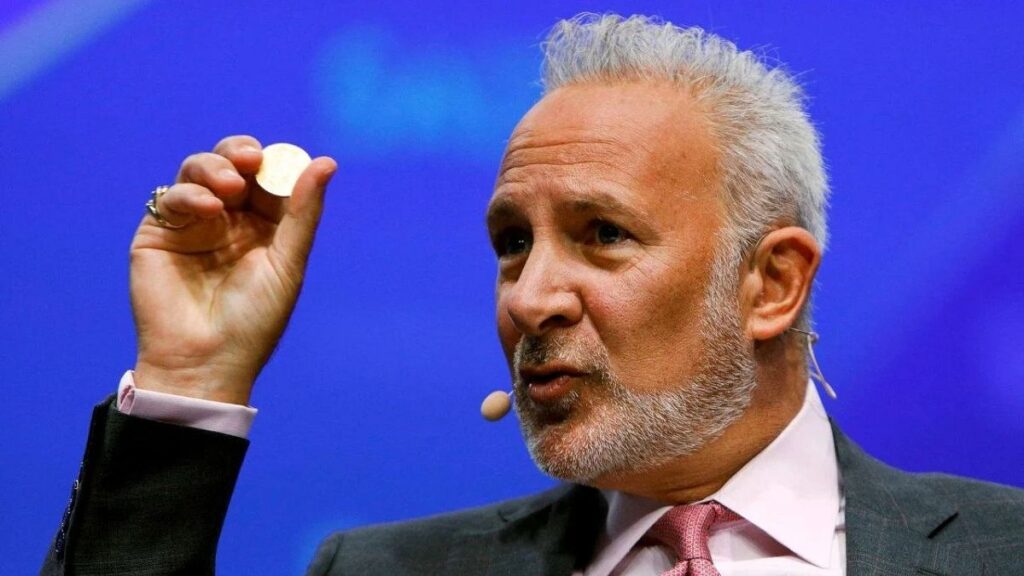
TL;DR
- Peter Schiff labeled Bitcoin a “fake asset” amid recent market declines, emphasizing its 28% drop from all-time highs.
- BlackRock reports its Bitcoin ETF lineup is now its most profitable product, holding around $70 billion in assets.
- Despite volatility, global adoption continues, with corporations and central banks increasing crypto exposure, showing that institutional confidence in Bitcoin remains strong and growing.
Peter Schiff returned to social media this week with renewed attacks on Bitcoin. He argued that the digital currency’s recent slump from $110,000 to $81,000 proves it is a “fake asset,” contrasting it with the Nasdaq, which remains within 2% of its record high. Schiff claims that the $500 billion market value loss in November reflects a rotation from crypto to traditional assets, questioning Bitcoin’s ability to serve as a stable store of value or medium of exchange. He also criticized media coverage, arguing that mainstream outlets often fail to highlight structural weaknesses in the crypto market, leaving investors misinformed.
BlackRock Turns Bitcoin Into Institutional Profit Engine
While Schiff highlights volatility, BlackRock demonstrates a different narrative. Its Bitcoin ETF lineup, launched less than two years ago, has become the firm’s most profitable product. The iShares Bitcoin Trust ETF (NASDAQ:IBIT) now holds approximately $70 billion in assets, with inflows continuing even during November’s market dip. BlackRock has increased Bitcoin allocations across its portfolios, signaling growing institutional trust and proving that Bitcoin can generate substantial revenue despite price swings. Analysts note that this momentum suggests institutional adoption is expanding at a faster pace than most critics anticipate.
Global Adoption Expands Despite Price Swings
Institutional interest in Bitcoin continues beyond BlackRock. Robinhood Markets is evaluating adding Bitcoin to its corporate balance sheet, and Kazakhstan’s central bank announced plans for a crypto allocation up to $300 million funded by gold and foreign reserves. Meanwhile, several hedge funds and family offices in Europe and Asia have reportedly increased Bitcoin exposure this quarter, seeing it as a hedge against inflation and currency volatility. These developments indicate that corporations and governments are integrating Bitcoin strategically, suggesting that short-term volatility does not deter long-term investment or adoption.

Peter Schiff’s criticism underscores skepticism from traditional gold advocates, but real-world adoption and institutional profitability present a contrasting story. Bitcoin continues to attract major investment and strategic interest, demonstrating resilience. While price fluctuations remain, evidence shows Bitcoin is far from a “fake asset,” with institutional players actively positioning for its continued growth.