

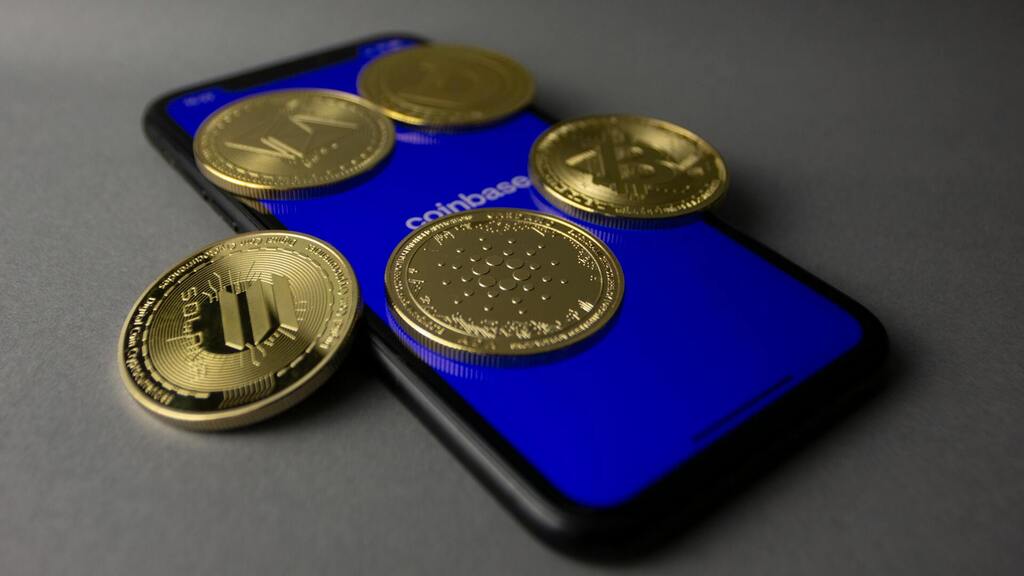
For years, Solana has been among the larger altcoins by market capitalization. The project is known for high throughput and access to dApps. However, the $SOL price has faced volatility in recent months. Some market participants have pointed to weaker price performance even as Solana ETF-related headlines have circulated, which has contributed to mixed sentiment.
Although it’s common for altcoins to underperform during broader market weakness, the latest news highlighting downside risks for SOL, including the possibility of a move below $100, has added to uncertainty.
A key question is whether Solana can maintain relevance as new projects and alternative technical approaches emerge. One example often mentioned in marketing materials is Bitcoin Hyper ($HYPER), which describes itself as a Bitcoin Layer 2 that incorporates elements associated with Solana’s execution environment.
Below is a review of commonly cited factors and third-party projections for SOL, followed by a high-level overview of what Bitcoin Hyper claims to offer.
Solana price outlook: what could influence $SOL?
One factor discussed by some commentators is ETF inflow momentum. Reports cited peak daily inflows of $69.45 million on October 28 and $70.05 million on November 3, followed by a drop to $6.78 million. If accurate, such shifts may reflect changing short-term demand, but they do not determine future price direction on their own.
On the other hand, some analysts point to institutional participation, staking activity, and DeFi incentives as possible tailwinds. For example, BraveNewCoin has published a scenario in which SOL revisits $200. These estimates are inherently speculative and can change quickly with market conditions.
Below are three example scenarios for $SOL that appear in various public forecasts. They are not predictions and should not be treated as a basis for financial decisions.
Conservative Scenario
If SOL continues to weaken, some forecasts suggest it could trade in the $140 to $160 range through late 2025. Other commentators cite a lower retest near $80 as a downside case if key support fails and flows weaken further. (Coinpedia)
Some longer-horizon projections extend into later years as well. For example, Kraken includes a model-based estimate of $195.53 by 2030 under a stated 5% annual growth assumption; this is a model output, not a guarantee.
Moderate Scenario
In higher-growth scenarios, some forecasters suggest SOL could trade in the $250 to $280 range. A separate scenario describes a move above $200 in 2025 followed by $400–$450 in 2026, depending on adoption and broader crypto market conditions. (Coindcx)
Higher-growth Scenario
Some projections assume a set of favorable developments, such as product launches, increased institutional activity, ecosystem partnerships, or regulatory clarity. Under those assumptions, forecasts sometimes place SOL nearer to $300, with additional upside scenarios discussed for 2026.
It’s important to note that outcomes like these would depend on multiple uncertain variables, including user and developer activity, competition, liquidity, and overall risk sentiment.
Overall, SOL’s prospects are often described in terms of network usage, ecosystem development, and broader market conditions. At the same time, the sector remains highly competitive, and newer projects frequently position themselves as alternatives.
One such project is Bitcoin Hyper, which has been promoted as a Layer 2 approach that borrows concepts associated with Solana’s tooling.
Bitcoin Hyper: what the project says it is building

Bitcoin Hyper ($HYPER) is a newer crypto project that describes itself as a Bitcoin Layer 2. Project communications say it leverages a Solana Virtual Machine (SVM)-compatible environment to support smart contracts and faster transactions, while also using Bitcoin as a settlement layer. These are project claims and should be independently verified.
According to the project, the network is intended to support dApps, DeFi, and staking functionality in a Bitcoin-adjacent environment. As with any early-stage crypto effort, the technical design, security assumptions, and operational details may change over time.
The project has also promoted a fundraising token sale. In project materials, Bitcoin Hyper claims it has raised over $26 million and advertises staking rewards (including a stated 43% APY). Reward rates in crypto can be variable and may depend on token emissions, participation levels, and other conditions.
Some third-party articles discuss demand from large buyers or high-return scenarios, such as interest from whales and other promotional framing. Another example is a piece that uses extreme-return language (the next 1000x crypto). Such claims are not verifiable in advance and should be treated as marketing, not analysis.
Solana vs. Bitcoin Hyper: key differences and risks
Solana is an established smart-contract platform with an active ecosystem and identifiable on-chain history, but it remains exposed to market cycles and broader risk sentiment.
Bitcoin Hyper, by contrast, is presented as an early-stage project. If it proceeds as described, it would carry different risks related to execution, security, liquidity, and adoption. Any staking or reward program may also introduce additional token-specific risks, including changes to reward rates, lockups, and smart-contract risk.
Comparisons between the two should account for differences in maturity, track record, and market structure, rather than assuming similar outcomes.
This article is for informational purposes only and does not constitute financial or investment advice. This outlet is not affiliated with the project mentioned.

