

Crypto markets often generate competing narratives around new launches and established networks. In September 2025, discussion has focused on three names: BullZilla, a meme-themed project running an early-stage token sale; Tron, a long-running smart-contract blockchain used heavily for stablecoin transfers; and Monero, a privacy-focused cryptocurrency.
These projects reflect different priorities—community-driven launches, payment and settlement infrastructure, and privacy—each with distinct risk profiles and levels of maturity.
BullZilla: Token-sale launch with supply-reduction mechanics
According to the project’s website, BullZilla has been running a staged token sale in September 2025. The project describes its current phase as “Stage 2D” and reports raising more than $370,000 at a listed price of $0.00005241 per token, with more than 1,300 holders. The project also describes a “Roar Burn Mechanism,” which it says reduces supply over time as milestones are reached.
The project’s materials state that certain milestones trigger token burns from a designated reserve. While supply reductions can affect token economics, market price outcomes remain uncertain and depend on broader factors such as liquidity, demand, trading venues, and overall market conditions.
BullZilla also describes a treasury component referred to as the “Roarblood Vault.” Project materials reference marketing incentives such as referral and bonus programs; details and eligibility can change and should be reviewed directly in the project’s documentation.

Illustrative pricing example (non-predictive)
Any example that converts a token-sale purchase into future profit relies on assumptions about liquidity, listings, adoption, and future market pricing that cannot be verified in advance. Readers should treat any “target price,” “projected value,” or return multiple as speculative rather than indicative of outcomes.
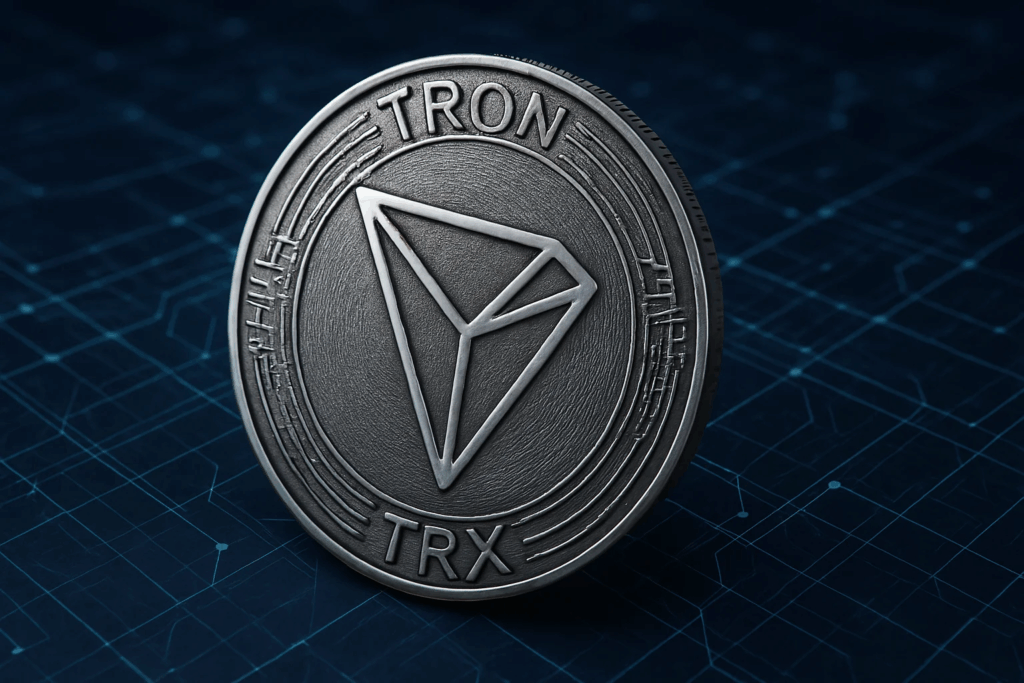
TRON: Network used for stablecoin transfers and payments
TRON (TRX) is a smart-contract blockchain often used for high-volume transactions, including stablecoin transfers. Supporters cite its throughput and relatively low transaction fees as factors behind its usage for payments and settlement in some regions.
As with other networks, usage metrics, ecosystem activity, and governance participation can change over time. Evaluations of TRON’s role in payments should consider security, decentralization, regulatory considerations, and how activity is distributed across exchanges, applications, and on-chain addresses.
Monero: Privacy-focused cryptocurrency
Monero (XMR) is known for privacy-focused transactions. It uses cryptographic techniques such as ring signatures, stealth addresses, and confidential transactions to obscure sender, recipient, and transfer amounts on-chain.
Monero’s privacy features have also drawn regulatory scrutiny in some jurisdictions due to concerns about misuse. The project’s community and developers continue to maintain the software, but availability and exchange support can vary depending on local rules and platform policies.
Conclusion
BullZilla, Tron, and Monero illustrate different themes in crypto: early-stage token launches that emphasize token mechanics and community marketing; payment-oriented infrastructure used for stablecoin transfers; and privacy technologies designed to reduce on-chain traceability. Comparing them directly can be difficult because they differ in maturity, purpose, and regulatory exposure.
For readers following the sector, the key questions are typically about transparency, token distribution, security assumptions, real-world usage, and whether project claims can be independently verified. These considerations can matter as much as headline narratives during periods of heightened market attention.
References:
Frequently Asked Questions about early-stage token sales (September 2025)
What makes BullZilla’s token sale different from others?
Project materials describe a “Roar Burn Mechanism” tied to milestones, which the team says reduces supply by burning tokens. The effect of any burn on market value is not guaranteed and depends on external market conditions.
How much has BullZilla raised so far?
The project reports that, as of September 2025, it has raised over $370,000 during its staged token sale. This figure has not been independently verified in this article.
What role does Tron play in the crypto ecosystem?
Tron is commonly used for on-chain transfers, including stablecoin transactions, and supports smart contracts and decentralized applications. Its relevance is often discussed in the context of payments, settlement, and exchange activity.
What is Monero’s main focus?
Monero’s primary focus is privacy in peer-to-peer cryptocurrency transactions, using cryptography to make transfers difficult to trace on public ledgers.
Is BullZilla a safe investment?
Early-stage tokens can involve significant risks, including volatility, limited liquidity, smart-contract vulnerabilities, and regulatory uncertainty. Readers should consider independent research and risk management.
Can Monero compete with established DeFi platforms?
Monero is generally discussed as a privacy-focused cryptocurrency rather than a DeFi platform. Comparisons with DeFi ecosystems may be limited because the use cases and technical designs differ.
What factors could affect BullZilla’s token price after launch?
If the token becomes tradeable, price can be influenced by liquidity, exchange availability, token distribution, demand, broader market conditions, and whether the project delivers on its stated roadmap. Any future price appreciation is uncertain.
Glossary
- Roar Burn Mechanism: BullZilla’s described feature where tokens are burned at milestones, reducing supply.
- Roarblood Vault: BullZilla’s described treasury component, which the project says supports incentives and rewards.
- Oracle Network: A system that connects blockchain smart contracts with external data sources.
- DeFi: Decentralized Finance, blockchain-based financial applications that may operate without traditional intermediaries.
- Token Burn: The permanent removal of tokens from circulation to reduce supply.
- Staking: Locking tokens (where supported) to help secure a network or participate in consensus, sometimes in exchange for rewards.
- Liquidity: Ease of buying or selling an asset without materially affecting its price.
- Token sale: An early distribution event in which a project sells tokens, often before broader trading availability.
- Volatility: Rapid price fluctuations common in crypto markets.
This article is for informational purposes only and does not constitute financial or investment advice. This outlet is not affiliated with the project mentioned. As with any initiative within the crypto ecosystem, readers should do their own research and consider the risks involved before taking any action.

