

Not every project in crypto is built equally. While some chase headlines with hype, others focus on building tools that people can use. In 2025, adoption and usability are often discussed as factors that may matter more than short-term speculation. Rather than labeling any asset as the “best” to buy, the projects below are examples frequently cited for product development, ecosystem activity, or real-world use cases.

Here are four names that are often discussed, with BlockDAG drawing attention for its mobile-mining concept and ongoing token-sale marketing.
BlockDAG (BDAG): Mobile Mining and Project-Reported Adoption
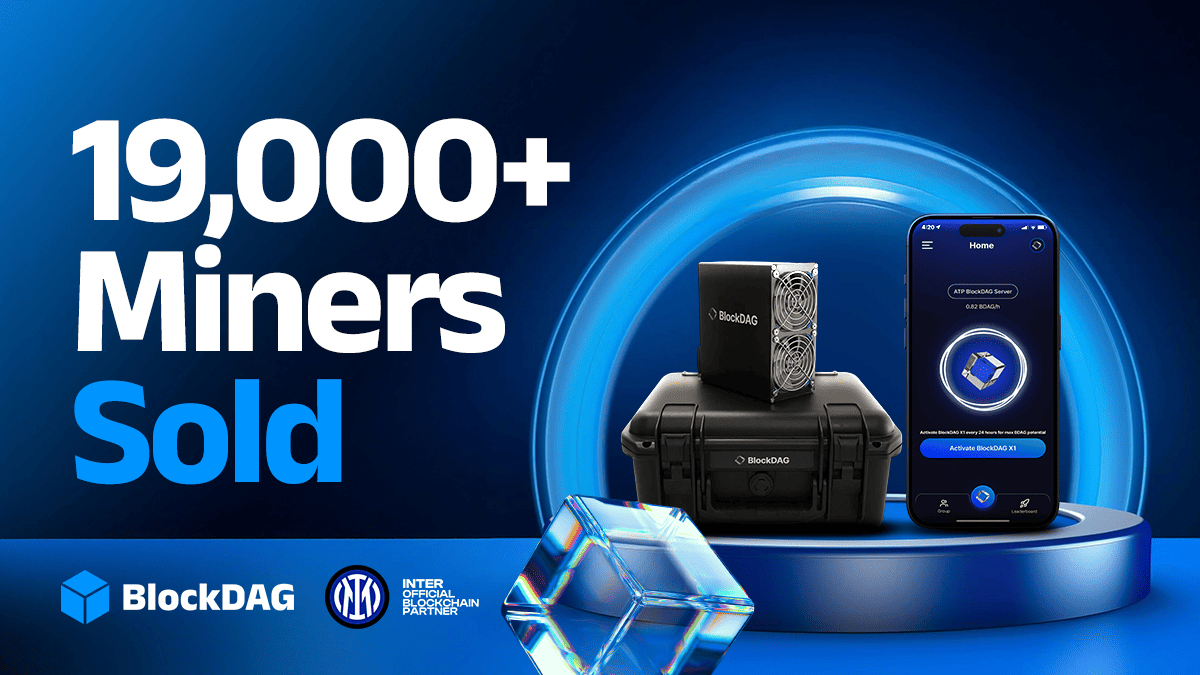
BlockDAG is positioning itself around a simple question: whether mobile mining can be paired with a broader network and token distribution. Tap-to-mine apps have previously attracted large user bases, though outcomes have varied by project. BlockDAG promotes its X1 mobile miner and, according to project materials, reports more than 2.5 million active users. The project says users can earn BDAG credits through participation once the network is live; these details should be treated as project-reported and subject to execution risk.
The project’s token sale is also a major focus of its messaging. BlockDAG states that it has raised more than $383 million and sold more than 25 billion BDAG. It also references pricing by “batch” (including a price of $0.0276 in batch 29 at the time of the campaign) and a $600 million funding cap; however, these figures and any implied outcomes are not independently verified here. The project has also mentioned planned or expected exchange listings, including references to platforms such as MEXC and BitMart, but listings and liquidity are not guaranteed and can change.

Beyond fundraising figures, BlockDAG describes an ecosystem that includes custom mining rigs (X10, X30, X100), gamified promotions such as “Buyer Battles,” and an educational academy. The project has also referenced partnerships with sports franchises including the Seattle Seawolves and Orcas. As with similar announcements across the sector, readers should rely on primary sources for confirmation and consider that timelines and deliverables may shift.
Overall, BlockDAG is one example of an early-stage project combining product claims, marketing initiatives, and a token sale narrative, alongside stated adoption metrics.
Stellar (XLM): Focus on Cross-Border Payments
Stellar is commonly associated with cross-border payments and tokenized value transfer. Its network is designed to enable fast, low-cost transfers, which can be relevant in regions where traditional remittances are slow or expensive. Stellar has also been linked to various enterprise and fintech collaborations over time; readers should verify the current status and scope of any specific partnerships through official sources.
While Stellar is not positioned as a general-purpose smart-contract platform in the same way as some newer blockchains, its focus remains centered on money movement and payment-oriented infrastructure.
Algorand (ALGO): Proof-of-Stake Network and Institutional Experiments
Algorand is a proof-of-stake blockchain that emphasizes transaction finality and decentralization. It is often discussed in the context of reliability and sustainability. Algorand has been cited in connection with government or institutional experiments, including CBDC-related pilots and registry-style projects; adoption levels and outcomes can vary widely by jurisdiction and program.

As with any network, price performance and adoption are not assured, but Algorand’s continued development and efforts to support real-world use cases are part of why it remains on many watchlists.
Hedera (HBAR): Governance Model and Enterprise Use Cases
Hedera uses hashgraph consensus and is designed for high-throughput, low-fee transactions. A notable aspect is its governance structure, which includes a council model that has publicly listed members such as Google, IBM, Boeing, and LG (membership can change over time).
HBAR is often discussed for applications such as data verification, payments, and other enterprise-focused deployments. As with other platforms, the extent of production usage and long-term demand depends on real adoption, governance decisions, and broader market conditions.
Final Thoughts
These four projects represent different approaches to utility: Stellar is often associated with payments, Algorand emphasizes proof-of-stake infrastructure and institutional pilots, and Hedera highlights a council governance model alongside enterprise use cases.
BlockDAG’s visibility in this list is largely driven by its marketing around a token sale and claimed participation metrics (including the project-reported $383 million raised and 2.5 million app users). Readers should treat these as project statements, not guarantees of future performance, and consider the risks that apply to early-stage tokens and fundraising events.
This article contains information about a cryptocurrency token sale. This outlet is not affiliated with the project mentioned. This article is for informational purposes only and does not constitute financial or investment advice.

