


Activity around meme tokens continues to draw attention across crypto communities, with some projects emphasizing community building, token mechanics, and optional staking features. Tokens such as Ponke and Cat in a Dog’s World have attracted discussion in this segment. Another project, BullZilla ($BZIL), has announced plans for a staged token sale.
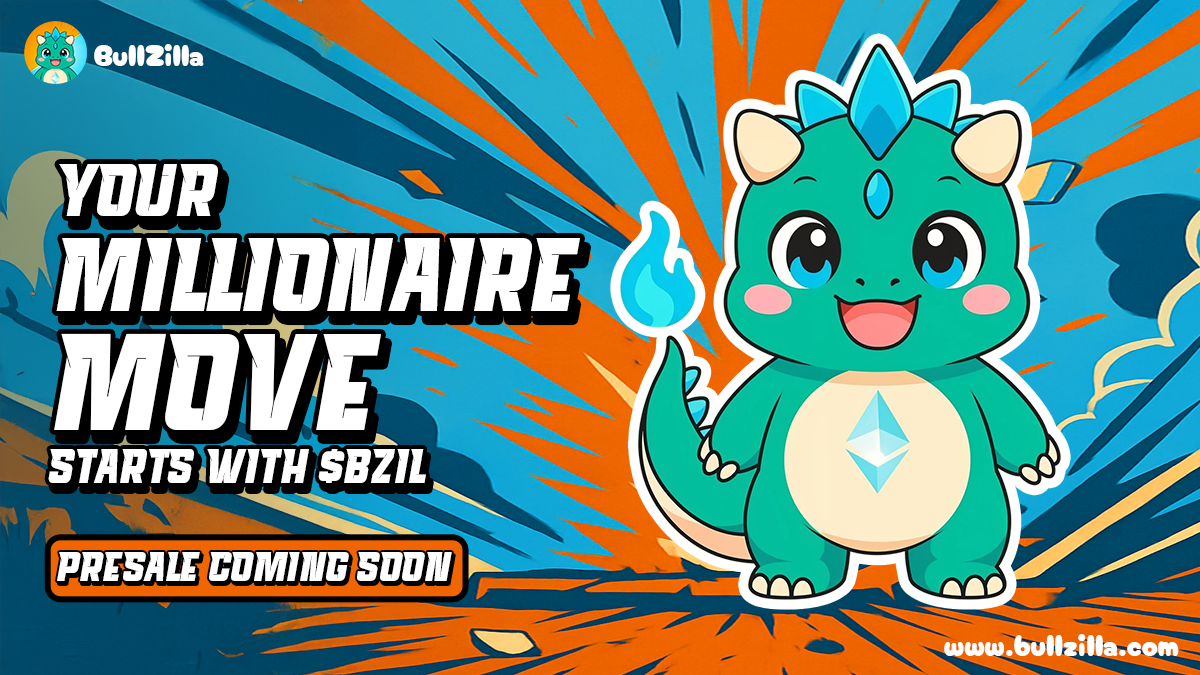
According to the project, its token sale is scheduled to start on August 29, 2025. The team describes a staged format in which the token price can adjust between rounds, based on time and funding milestones. As with any token fundraising event, details such as pricing, supply changes, and staking terms are project-reported and may change.
BullZilla: A Token Powered by Myth and Mechanics
BullZilla is described by the team as an Ethereum-based (ERC-20) meme token. Project materials outline a 24-stage token sale and a pricing model in which each stage has a higher price than the previous one. The project also describes “Roar Burn” events intended to reduce the token supply between stages.
| Feature | Details |
| Token sale stages | 24 stages with staged pricing (project-reported) |
| Price mechanism | Project states price may change every 48 hours or after $100K raised |
| Roar Burn | Project describes a burn event at each stage to reduce supply |
| HODL Furnace | Project describes optional staking with rates stated as “up to 70% APY” (terms and risks may apply) |
Phase II: Presale Mutation Begins (Q3 2025)
In project communications, “Phase II” refers to a period in which staged pricing and supply changes continue under the same time- or funding-based triggers (for example, every 48 hours or once $100K is raised). The project also states that “Roar Burn” events would continue to reduce supply between stages.
- Staged price adjustments: The project states the token price may increase as stages progress
- Burn mechanism: The project describes burns intended to reduce circulating supply
HODL Furnace: Rewarding Long-Term Commitment
BullZilla describes a staking feature called the “HODL Furnace.” The project states staking may offer yields of up to 70% APY, though rates can change and participation may involve smart-contract, liquidity, and other risks. Project materials also reference marketing incentives, including referrals.
Launch Price and Project-Reported Structure
The project lists a launch-stage price of $0.00527 and outlines a multi-stage token sale with periodic price changes based on time or funds raised.
| Stage | Price |
| Stage 1 | $0.00527 (project-reported) |
| Subsequent stages | Project states price may change every 48 hours or after $100K raised |
The Myth Becomes Reality
Project messaging frames the combination of staged pricing, burns, staking, and community activity as central to BullZilla’s positioning within the meme-token market. As with similar initiatives, outcomes are uncertain and depend on execution, market conditions, and user adoption.
Ponke: A Community-Driven Meme Coin
Ponke is an ERC-20 meme token that has built an online following around meme culture and community engagement. Like many meme tokens, discussion around Ponke often centers on social traction and community activity, alongside any utility the project may describe.
Market interest in meme tokens can change quickly, and token performance can be volatile. Readers should verify any claims directly through primary sources and consider the risks associated with highly speculative assets.
Cat in a Dog’s World: A Meme Coin Focused on Token Mechanics
Cat in a Dog’s World has been discussed in the meme-coin segment for its emphasis on token mechanics such as burns and reward features, as described in project materials. Approaches like deflationary supply models and staking incentives can affect token dynamics, but they do not guarantee outcomes.
As with other meme tokens, participation and long-term viability depend on a range of factors, including transparency, liquidity, security, and broader market conditions.
Conclusion
Ponke, Cat in a Dog’s World, and BullZilla illustrate the range of approaches used by meme-token projects, from community-led branding to token mechanics such as burns and staking. Anyone evaluating these tokens should review documentation, understand the risks, and avoid relying on promotional claims when assessing potential participation.
For More Information:
Follow BZIL on X (Formerly Twitter)
Frequently Asked Questions for BullZilla’s Token Sale
What is BullZilla’s Progressive Token Sale Model?
The project describes a staged token sale model in which the token price may change after certain milestones, such as every $100K raised or every 48 hours.
How Does the Roar Burn Mechanism Affect Supply?
According to the project, “Roar Burn” events are intended to reduce token supply between stages. The market impact of any burn mechanism is uncertain and depends on multiple factors.
What is the HODL Furnace?
The HODL Furnace is the project’s name for an optional staking feature. The project states staking may offer yields of up to 70% APY, subject to terms, change, and risk.
Is BullZilla on Ethereum?
Project materials describe BullZilla as an ERC-20 token on the Ethereum blockchain.
How is BullZilla Different from Other Meme Coins?
The team positions BullZilla around staged pricing, supply reduction events, and staking features. Whether these elements differentiate the token in practice depends on execution and market response.
What is LaunchZilla?
LaunchZilla is described by the project as a community-led launch system associated with the token sale process.
Glossary:
Progressive token sale – A model where a token’s sale price changes across stages based on predefined milestones.
Token burn – The process of permanently removing tokens from circulation.
HODL Furnace – The project’s term for a staking feature that may distribute rewards to participants.
ERC-20 – A standard for creating tokens on the Ethereum blockchain.
Referral system – A marketing feature that may provide incentives for directing new participants to a token sale.
Roarblood Vault – A term used in project materials for a community-related vault associated with staking and participation.
Staking APY – A quoted annual percentage yield for staking rewards; figures are variable and not guaranteed.
Supply scarcity – A reduction in available supply, which can influence token dynamics but does not guarantee outcomes.
Community vesting – A mechanism where tokens may be distributed over time based on project-defined conditions.
Ethereum smart contracts – Self-executing contracts with terms implemented in code on the Ethereum network.
This article is for informational purposes only and does not constitute financial or investment advice. This outlet is not affiliated with the project mentioned.

