

When observers evaluate emerging Layer 1 blockchains, much of the attention goes to funding, partnerships, and headline growth. But the long-term durability of any blockchain depends on its technical backbone. At BlockDAG, that work is led by Jeremy Harkness, the Chief Technology Officer whose experience includes blockchain, AI, decentralized systems, and data engineering. The team says its focus is on engineering and network design rather than short-term price narratives.
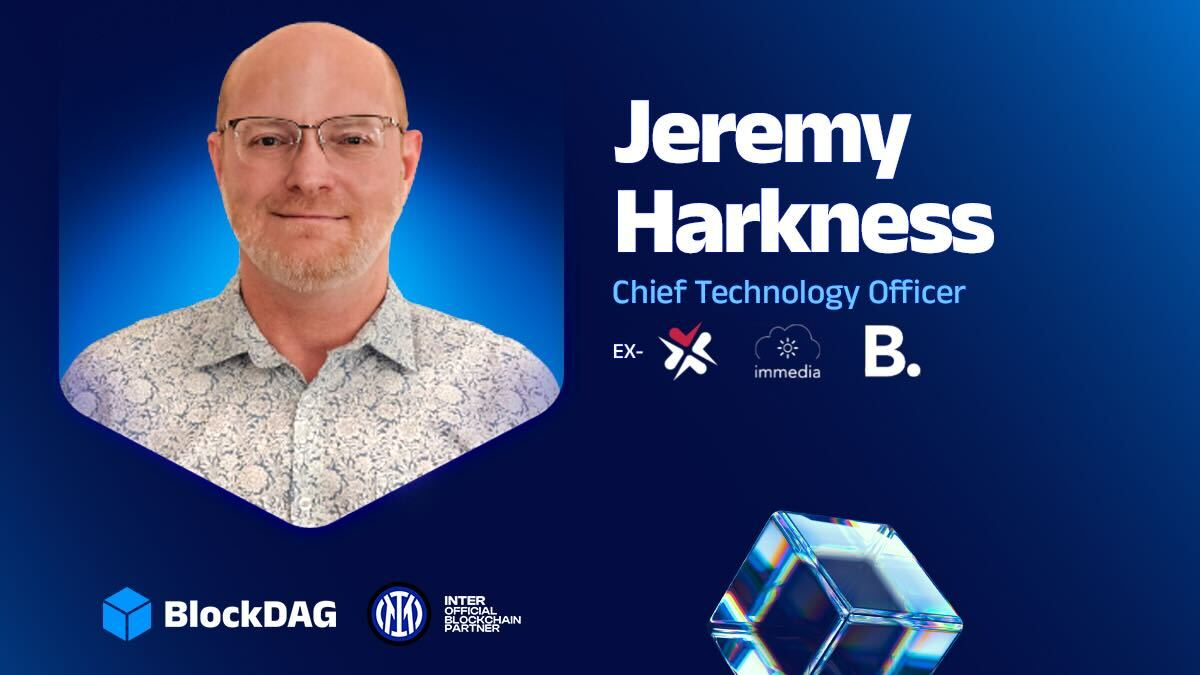
Harkness’s professional background spans both start-up environments and larger organizations. The project describes him as a lead who has guided technical teams through complex engineering challenges, a skillset it considers relevant for a network that must iterate quickly while maintaining stability.
His work in decentralized system design and high-volume data scaling is reflected in BlockDAG’s stated architecture. According to the project, the network uses a hybrid Proof-of-Work and Directed Acyclic Graph model and is designed to handle up to 10 blocks per second. As with any early-stage network, performance and scalability claims typically depend on implementation details and real-world conditions.
Building Depth, Not Just Headlines
In a sector where many projects rely heavily on marketing, BlockDAG says it has emphasized ecosystem depth and developer activity. The team reports more than 4,500 developers working on 300+ decentralized applications ahead of mainnet launch.
Supporters argue that pre-launch application development can be a useful indicator of builder interest, though it does not guarantee long-term usage or adoption. BlockDAG is expected to launch with applications that are already under development, rather than relying solely on forward-looking roadmaps.
Another initiative highlighted by the project is the X1 Miner app, which it says allows users to mine BDAG coins from mobile devices. BlockDAG reports more than 2.5 million users have downloaded and used the app.
BlockDAG also says it has sold 19,000 ASIC miners, representing $7.7 million in hardware sales. These figures are project-reported and should be treated as informational rather than a forecast of network demand or token performance.
Preparing for Adoption
Harkness has also emphasized Ethereum Virtual Machine (EVM) compatibility, which is intended to allow developers to port Ethereum-based applications with fewer changes. This approach can reduce development friction, though practical outcomes typically depend on tooling, documentation, and network reliability over time.
BlockDAG says it has raised more than $370 million through a token sale. The project describes the sale as structured in batches; at the time of writing, it lists Batch 29 priced at $0.0276. Token-sale pricing and participation details are set by the project and may change.
Why Leadership Matters Now
In a market where projects can be influenced by short-term narratives, BlockDAG’s supporters point to Harkness’s engineering-first approach as a differentiator. Whether that translates into sustained network usage will ultimately depend on execution, security, developer retention, and real-world demand after launch.
BlockDAG’s technical roadmap, including its claimed PoW/DAG design, developer tooling, and EVM compatibility, will be evaluated over time as the network matures and additional independent data becomes available.

Website (for reference): https://blockdag.network
Telegram (for reference): https://t.me/blockDAGnetworkOfficial
This article references a cryptocurrency token sale. This outlet is not affiliated with the project mentioned. This article is for informational purposes only and does not constitute financial or investment advice.

