

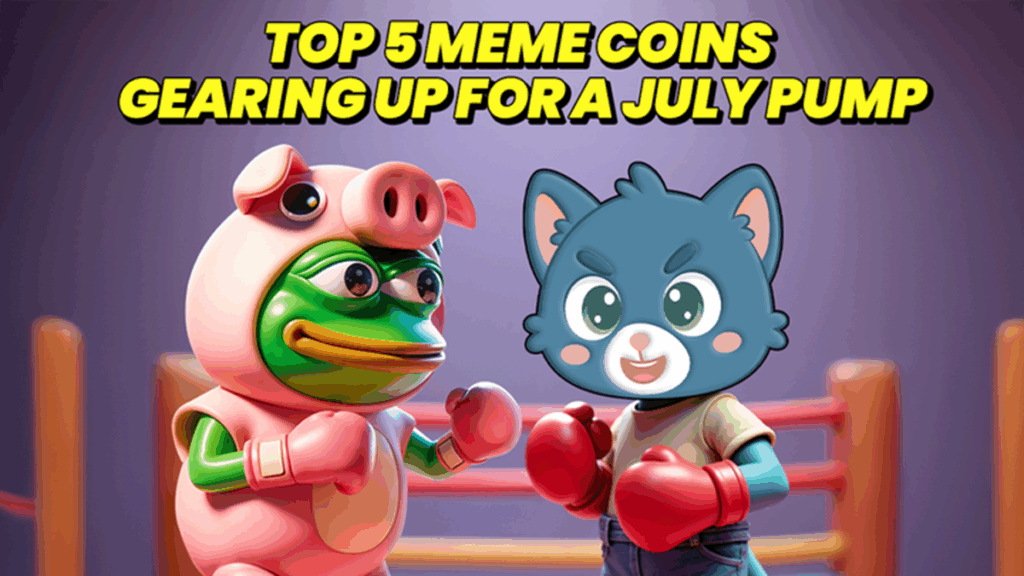
Which meme coin will still be around a year from now? In a market where tokens can move sharply in short periods, long-term outcomes are uncertain. Meme coins remain a volatile sector, and some projects say they aim to add utility or structured supply mechanisms beyond branding and community activity.
Over the past 24 hours, Cheems has posted a 2.41% price increase, reaching $0.0002610, amid higher trading activity and social media discussion. Peanut the Squirrel saw a 1.9% decline to $0.2651 after encountering resistance levels. As with many meme coins, short-term price action does not necessarily indicate longer-term performance.
Meanwhile, the project behind Troller Cat is running a staged token sale and says it has raised over $400,000. The project also promotes measures such as audits, team verification, and planned supply mechanisms; these claims are described in project materials and should be independently verified.
Troller Cat ($TCAT): Balloon Hoax theme and project overview
Troller Cat’s current token-sale theme, “Stage 14: Balloon Boy Hoax,” references the 2009 incident that drew significant media attention. In the project’s branding, Troller Cat is depicted in a balloon harness, presented as a satirical take on viral news cycles.
The project lists a current token-sale price of $0.00009667 and states that it has raised over $400,000 with more than 1,500 holders across a planned 26-stage sale. Figures about fundraising, pricing, and participation are project-reported and may change.
Troller Cat also says it has completed a smart-contract audit and team identity checks (KYC). While these steps can be relevant for risk assessment, they are not a guarantee of outcomes, and readers may wish to review the underlying reports and terms directly.
Liquidity approach described by the project
The project states that it plans a 2-year liquidity lock. Such mechanisms are sometimes used to restrict immediate access to liquidity, though they do not eliminate trading risk or broader market volatility.
Project materials also describe a model in which ad revenue may be used for buybacks and token burns. If implemented as described, buybacks and burns would reduce circulating supply, but the impact depends on execution, demand, and overall market conditions.
Cheems ($CHEEMS): Meme Roots, Market Moves
Cheems rose 2.41% in the past 24 hours to $0.0002610. The move coincided with renewed meme-coin discussion and social engagement, though short-term catalysts can fade quickly.
Cheems remains a recognizable meme-coin brand. Trading volume increased after an influencer post circulated, and the uptick brought Cheems back into active discussion. The price was described as facing resistance around the $0.0002750 area, though technical levels can shift rapidly.
As with many meme coins, longer-term sustainability depends on factors beyond sentiment, including ongoing development and utility. Public information and roadmaps can change, and market conditions may outweigh project-specific factors.
Peanut the Squirrel ($PNUT): From Surge to Stumble
Peanut the Squirrel fell by 1.9% in the past 24 hours, dropping to $0.2651 after meeting resistance around the $0.272 range. Short-term pullbacks are common in smaller tokens and may reflect changing liquidity and trader positioning.
Volume has begun to taper off slightly, and technical indicators show a flattening RSI, suggesting consolidation may be setting in. Discussion across forums can be a factor for meme tokens, but it is not a reliable indicator of future price movement.
Peanut the Squirrel continues to rely on brand recognition and community activity. Any sustained shift in participation would typically depend on updates from the project, broader market interest, and liquidity conditions.
Conclusion
Meme-coin performance can change quickly, and comparisons between projects are inherently limited by differences in liquidity, maturity, and available disclosures. Troller Cat promotes a staged token sale and describes audits, team checks, and supply-related mechanisms, while Cheems and Peanut the Squirrel have recently seen short-term price moves that may be driven by sentiment and trading activity.
Any figures related to fundraising, pricing, stages, and planned mechanisms should be treated as project-reported and not as a forecast of results.
This article is for informational purposes only and does not constitute financial or investment advice.
This outlet is not affiliated with the project mentioned.
For More Information:
Website (project): https://www.trollercat.io/
Transaction/participation page (project): https://www.trollercat.io/buy-now/
FAQs
- What is the current price of Troller Cat?
The project lists $0.00009667 during Stage 14 of its planned 26-stage token sale. - How much has Troller Cat raised so far?
The project reports over $400,000 from more than 1,500 holders. - Is Troller Cat audited and KYC-verified?
The project says a smart-contract audit and team identity checks have been completed; readers can review any published reports for details. - What does the project say supports its longer-term plans?
Project materials reference a roadmap, a 2-year liquidity lock, and supply-related mechanisms such as buybacks and burns, though implementation and market impact are uncertain. - How does the referral program work?
The project describes a referral incentive tied to participation thresholds and bonus tokens. Terms and eligibility can change, and readers should consult the project’s official documentation.
Glossary of Key Terms
- Presale Stage – A phased token sale with multiple pricing stages, as defined by a project.
- KYC (Know Your Customer) – A verification process intended to confirm identity, which some projects apply to team members or participants.
- Audit – A third-party review of smart-contract code; scope and quality can vary by provider.
- Liquidity Lock – A mechanism that restricts access to liquidity for a set period, depending on the implementation.
- Burn Mechanism – A process in which tokens are sent to an irrecoverable address to reduce supply, if executed.
- Referral Code – A marketing incentive some projects use to track referrals and distribute bonuses.
- Resistance Level – A price zone where upward movement may slow due to sell pressure, often discussed in technical analysis.
Press releases or guest posts published by Crypto Economy have been submitted by companies or their representatives. Crypto Economy is not part of any of these agencies, projects or platforms. At Crypto Economy we do not give investment advice, if you are going to invest in any of the promoted projects you should do your own research.

